
 Wildlife
of Kenya
Bush Duiker
Antelopes & Other Bovids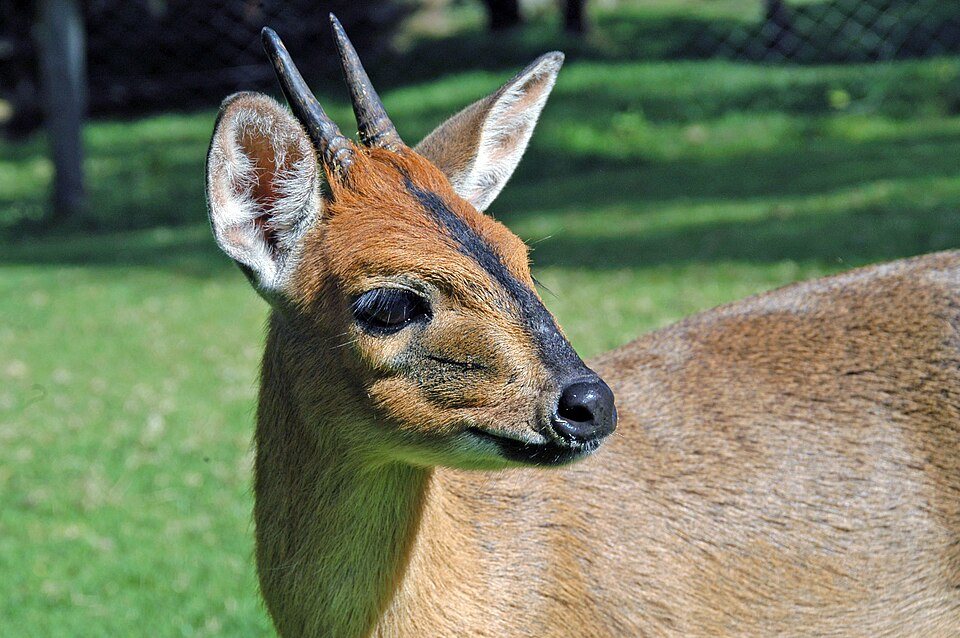
Photo: Chuckupd at English Wikipedia · Public domain
Sylvicapra grimmia
Conservation status: Unknown
Basic stats
Diet
Leaves, flowers, fruit and tubers; also insects, frogs, small birds, mammals and carrion
Habitat
Savanna, woodland and hilly country with cover, sea level to over 4,300m
Range
Sub-Saharan Africa, excluding the Horn and central and west African rainforests
Litter size
1 fawn
Gestation period
6–7.5 months (165 days in AnAge)
Size
Height about 50cm
Weight
12–25kg
The common or bush duiker is a small antelope and the only member of its genus. It occurs throughout Africa south of the Sahara except the Horn of Africa and the rainforests of the central and western parts. Colour varies widely among 14 subspecies, from chestnut in the forests of Angola to grizzled gray in the northern savannas and light brown in arid areas. It grows to about 50cm in height and generally weighs 12–25kg, with females larger and heavier. Only the male has horns, up to 11cm long (Wikipedia, general species account).
It uses mixed woodland and savanna from sea level to over 4,300m on Mount Kenya, needing cover such as shrubs, thickets or woodland, and avoiding rainforest, desert and short open grassland. It is diurnal, trending crepuscular, though Wikipedia says it becomes more nocturnal near settlements. It is mostly solitary, and males mark and defend territories with preorbital gland secretions. The diet is wide, taking leaves, flowers, fruit and tubers as well as insects, frogs, small birds and mammals and carrion. Breeding is year-round, with one fawn after 6–7.5 months (GBIF description, Bovidae; Wikipedia, general species account).
Where to see Bush Duiker in Kenya
GBIF records grouped by protected area. They show where the species has been reported, not that it is there now, and they are not population counts.
Recorded in 3 protected areas (1906–2026).
- Aberdare National Park: 19 records (1906–2026)
- Chyulu Hills: 13 records (2015)
- Mount Kenya National Park: 3 records (1906–2024)
Quick answers
- What does the Bush Duiker eat?
- Leaves, flowers, fruit and tubers; also insects, frogs, small birds, mammals and carrion
- What habitat does the Bush Duiker live in?
- Savanna, woodland and hilly country with cover, sea level to over 4,300m
- Where is the Bush Duiker found?
- Sub-Saharan Africa, excluding the Horn and central and west African rainforests
- What is the litter size of the Bush Duiker?
- 1 fawn
- How long is the gestation period of the Bush Duiker?
- 6–7.5 months (165 days in AnAge)
- How big is the Bush Duiker?
- Height about 50cm
- How much does the Bush Duiker weigh?
- 12–25kg