
 Wildlife
of Kenya
Cape Buffalo
Antelopes & Other Bovids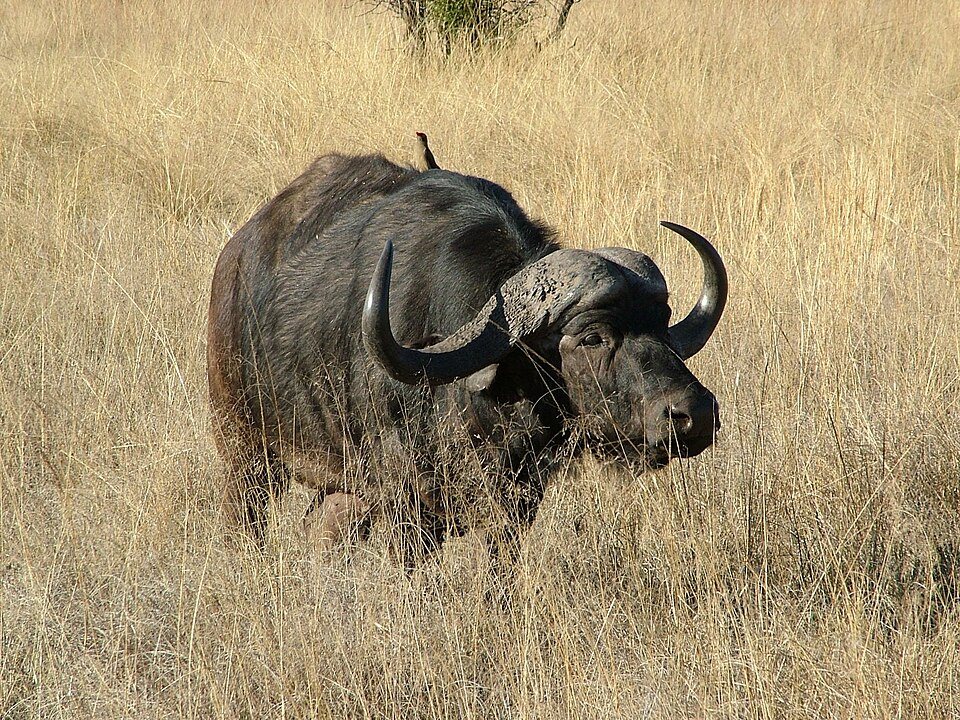
Photo: Paul M Rae · CC BY 2.5 (May be cropped or resized)
Syncerus caffer
Conservation status: Unknown
Basic stats
Diet
Grass and other fibre-rich plants
Habitat
Wooded and open savanna, swamp and floodplain near water, including montane forest above 3,000m
Range
Sub-Saharan Africa; Cape buffalo in East and Southern Africa
Litter size
1 calf
Gestation period
About 331–340 days
Weight
About 580–700kg (EltonTraits, COMBINE, AnAge)
The African buffalo is a large, heavily built bovine of sub-Saharan Africa, with a broad head and torso, a strong neck and large horns. Males have a bony plate or boss between the horns. The fur ranges from rusty to black, and the tail ends in a dark, hairy tuft. Four subspecies are recognised, among them the Cape buffalo of East and Southern Africa. Adult mass is about 580kg in EltonTraits, 646kg in COMBINE and 700kg in AnAge (Wikipedia, general species account).
It lives in woodland, savanna, forest, grassland, shrubland and wetland, and is most abundant in well-watered savanna, swamp and floodplain, with a permanent water source within about 20–40km. On Mount Kenya it occurs in montane forest above 3,000m. It is a grazer, feeding mainly on grass. Herds range from a few animals to over a thousand, usually adult females and young with some adult males. In Lake Manyara, buffalo grazed from about 10:00 to 14:00. Gestation is about 331–340 days and a single calf is born (GBIF description, Bovidae; Wikipedia, general species account).
Where to see Cape Buffalo in Kenya
GBIF records grouped by protected area. They show where the species has been reported, not that it is there now, and they are not population counts.
Recorded in 30 protected areas (1931–2026). The 8 with the most records:
- Lake Nakuru National Park: 152 records (1989–2022)
- Masai Mara: 27 records (1977–2023)
- Ol Pejeta Conservancy: 25 records (2008–2025)
- Mukutan Conservancy (former Ol Ari Nyiro): 19 records (2008)
- Amboseli National Park: 17 records (1935–2026)
- Chyulu Hills: 16 records (2015)
- Tsavo East National Park: 13 records (1989–2026)
- Tsavo West National Park: 13 records (1989–2015)
Quick answers
- What does the Cape Buffalo eat?
- Grass and other fibre-rich plants
- What habitat does the Cape Buffalo live in?
- Wooded and open savanna, swamp and floodplain near water, including montane forest above 3,000m
- Where is the Cape Buffalo found?
- Sub-Saharan Africa; Cape buffalo in East and Southern Africa
- What is the litter size of the Cape Buffalo?
- 1 calf
- How long is the gestation period of the Cape Buffalo?
- About 331–340 days
- How much does the Cape Buffalo weigh?
- About 580–700kg (EltonTraits, COMBINE, AnAge)