
 Wildlife
of Kenya
Guenther's Dik-dik
Antelopes & Other Bovids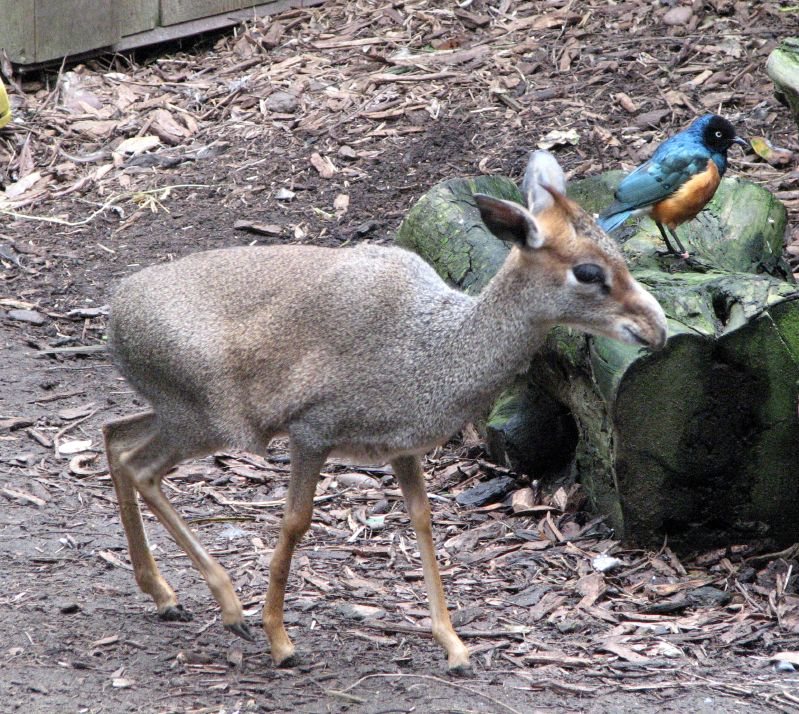
Photo: Just chaos · CC BY 2.0 (May be cropped or resized)
Madoqua guentheri
Conservation status: Unknown
Basic stats
Diet
Leaves, flowers, stems, fruits and seeds of non-grasses
Habitat
Thornbush thicket, savanna grassland and riverine woodland
Range
Ethiopia, northern and eastern Kenya, Somalia, southeastern Sudan and northeastern Uganda
Litter size
1 calf
Gestation period
About 178 days
Weight
3–5kg
Günther's dik-dik is a small antelope of the arid zones of East Africa and one of the smallest hoofed mammals, weighing 3–5kg when fully grown. The coat is yellowish-grey to reddish-brown, the hooves black, the head small with a long neck, and the large ears are white inside. The belly, chin, breast, throat and inner thighs are cream or white, and the tail is short, about 3–5cm. Males have horns of about 9.8cm, while females are larger and hornless. Four subspecies have been proposed on size and coat features (Wikipedia, general species account).
It lives in lowland thicket vegetation in thornbush, savanna grassland and riverine woodland, in Ethiopia, northern and eastern Kenya, Somalia, southeastern Sudan and northeastern Uganda, and avoids the coast. It is a browser, feeding on leaves, flowers, stems, fruits and seeds close to the ground, and is mainly diurnal. The species is monogamous, a single calf is born at a time, and breeding is not seasonal. Gestation is about 178 days in both AnAge and COMBINE. It is hunted for meat, but not commercially (Wikipedia, general species account).
Where to see Guenther's Dik-dik in Kenya
GBIF records grouped by protected area. They show where the species has been reported, not that it is there now, and they are not population counts.
Recorded in 9 protected areas (2008–2026). The 8 with the most records:
- Mpala Ranch: 38 records (2008–2026)
- Ol Jogi Conservancy: 7 records (2015–2026)
- Kalama Community Conservancy: 5 records (2019–2024)
- Buffalo Springs National Reserve: 4 records (2023–2025)
- Loisaba Conservancy: 4 records (2008–2026)
- Nalowuon Section of Namunyak Conservancy: 4 records (2008)
- Meru National Park: 3 records (2022)
- Kalepo: 3 records (2008)
Quick answers
- What does the Guenther's Dik-dik eat?
- Leaves, flowers, stems, fruits and seeds of non-grasses
- What habitat does the Guenther's Dik-dik live in?
- Thornbush thicket, savanna grassland and riverine woodland
- Where is the Guenther's Dik-dik found?
- Ethiopia, northern and eastern Kenya, Somalia, southeastern Sudan and northeastern Uganda
- What is the litter size of the Guenther's Dik-dik?
- 1 calf
- How long is the gestation period of the Guenther's Dik-dik?
- About 178 days
- How much does the Guenther's Dik-dik weigh?
- 3–5kg