
 Wildlife
of Kenya
Impala
Antelopes & Other Bovids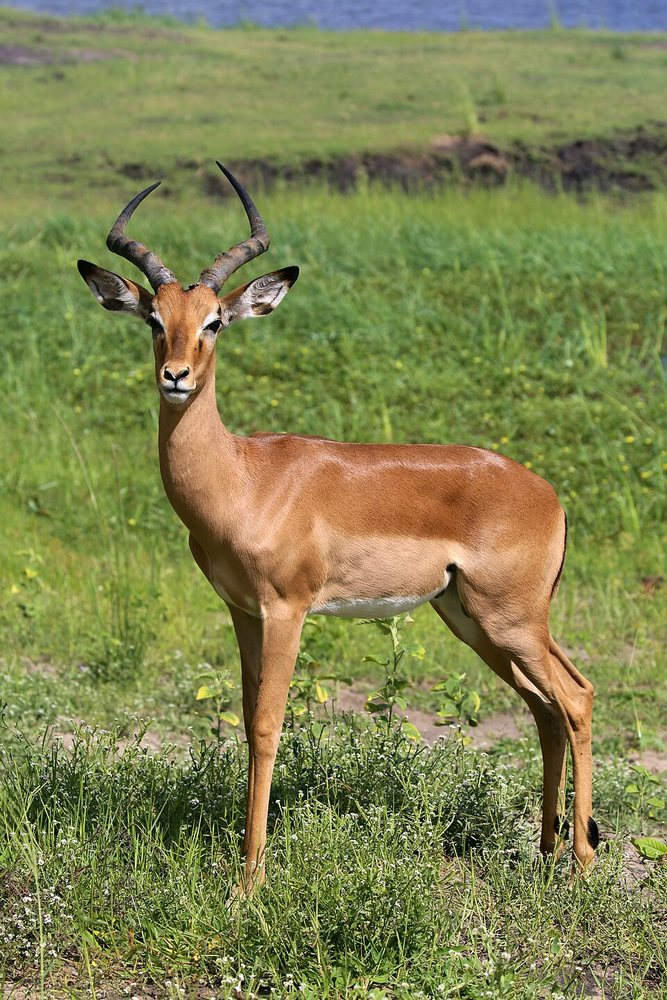
Photo: flowcomm · CC BY 2.0 (May be cropped or resized)
Aepyceros melampus
Conservation status: Unknown
Basic stats
Diet
Grasses, herbs, fruits and acacia pods
Habitat
Woodland and woodland–savanna edges near water
Range
Eastern and southern Africa
Litter size
1 calf
Gestation period
6–7 months
Size
Shoulder height 75–92cm (males), 70–85cm (females); head and body about 130cm
Weight
53–76kg (males), 40–53kg (females)
The impala is a medium-sized, slender antelope of eastern and southern Africa. Its glossy coat is reddish brown on the back and tan on the flanks, set against a white underbelly (Wikipedia, general species account). Males stand about 75–92cm at the shoulder and weigh 53–76kg, while females stand 70–85cm and weigh 40–53kg. Only males carry horns, which are slender, lyre-shaped and 45–92cm long. White rings circle the eyes, the black-tipped ears are 17cm long, black streaks run from the rump onto the upper hindlegs, and the bushy white tail carries a black stripe. Two subspecies exist, the common impala and the larger, darker black-faced impala (Wikipedia, general species account).
Impala are active mainly by day and form three kinds of group: territorial males, bachelor herds and female herds. They are known for two characteristic leaps used against predators. They graze and browse, taking grasses, herbs, fruits and acacia pods when available. The rut lasts about three weeks near the end of the wet season. After a gestation of six to seven months a single calf is born and hidden in cover (Wikipedia, general species account). The species lives in woodland and at woodland–savanna edges near water, and the black-faced impala is confined to southwestern Angola and northwestern Namibia (Wikipedia, general species account).
Where to see Impala in Kenya
GBIF records grouped by protected area. They show where the species has been reported, not that it is there now, and they are not population counts.
Recorded in 49 protected areas (1954–2026). The 8 with the most records:
- Lake Nakuru National Park: 181 records (1989–2026)
- Masai Mara: 92 records (1989–2026)
- Ol Pejeta Conservancy: 79 records (2009–2026)
- Nairobi National Park: 52 records (1954–2026)
- Ol Jogi Conservancy: 52 records (2008–2024)
- Mpala Ranch: 48 records (2008–2025)
- Buffalo Springs National Reserve: 36 records (1985–2026)
- Loisaba Conservancy: 34 records (2008–2026)
Quick answers
- What does the Impala eat?
- Grasses, herbs, fruits and acacia pods
- What habitat does the Impala live in?
- Woodland and woodland–savanna edges near water
- Where is the Impala found?
- Eastern and southern Africa
- What is the litter size of the Impala?
- 1 calf
- How long is the gestation period of the Impala?
- 6–7 months
- How big is the Impala?
- Shoulder height 75–92cm (males), 70–85cm (females); head and body about 130cm
- How much does the Impala weigh?
- 53–76kg (males), 40–53kg (females)