
 Wildlife
of Kenya
Plains Zebra
Zebras & Other Equids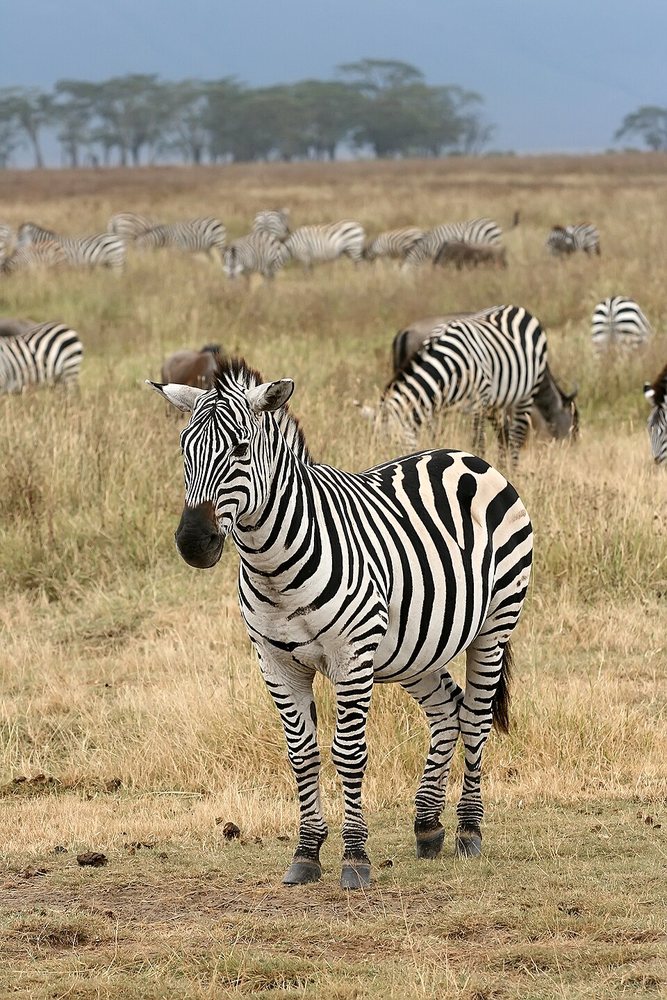
Photo: Muhammad Mahdi Karim · GFDL 1.2 (May be cropped or resized)
Equus quagga
Conservation status: Unknown
Basic stats
Diet
Grasses and other plant material
Habitat
Grassland, steppe, savanna and woodland, from sea level to 4,300m; needs water daily
Range
Southern and eastern Africa south of the Sahara
Litter size
1
Gestation period
About 12 months
Size
Head and body 217–246cm; shoulder height 127–140cm; tail 47–57cm
Weight
220–322kg (males), 175–250kg (females)
The plains zebra is the most widespread zebra and is intermediate in size between Grévy's and the mountain zebra. It stands 127–140cm at the shoulder, with a head and body of 217–246cm and a tail of 47–57cm. Males weigh 220–322kg and females 175–250kg. It is stocky with short legs, an erect mane and bold black and white stripes, broader than in the other two species, vertical on the front of the body and tending horizontal on the hindquarters (Wikipedia, general species account; GBIF description, Equidae).
Plains zebras range over grassland, steppe, savanna and woodland between sea level and 4,300m on Mount Kenya, avoiding deserts, dense woodland and permanent wetlands. They must drink daily, so they stay within half a day's walk of water. They form harems of a single stallion, several mares and their recent young, plus bachelor groups. A single foal is born after about twelve months and nurses for about six months (GBIF description, Equidae; Wikipedia, general species account).
Where to see Plains Zebra in Kenya
GBIF records grouped by protected area. They show where the species has been reported, not that it is there now, and they are not population counts.
Recorded in 53 protected areas (1987–2026). The 8 with the most records:
- Ol Pejeta Conservancy: 163 records (2008–2025)
- Lake Nakuru National Park: 124 records (1989–2022)
- Lewa Wildlife Conservancy: 81 records (2008–2022)
- Chyulu Hills: 69 records (2015)
- ADC Mutara: 63 records (2008–2012)
- Loldaiga Hills Conservancy: 58 records (2008–2012)
- Kirimon Community Conservancy: 56 records (2012)
- Ole Naishu: 53 records (2008–2012)
Quick answers
- What does the Plains Zebra eat?
- Grasses and other plant material
- What habitat does the Plains Zebra live in?
- Grassland, steppe, savanna and woodland, from sea level to 4,300m; needs water daily
- Where is the Plains Zebra found?
- Southern and eastern Africa south of the Sahara
- What is the litter size of the Plains Zebra?
- 1
- How long is the gestation period of the Plains Zebra?
- About 12 months
- How big is the Plains Zebra?
- Head and body 217–246cm; shoulder height 127–140cm; tail 47–57cm
- How much does the Plains Zebra weigh?
- 220–322kg (males), 175–250kg (females)