
 Wildlife
of Kenya
Ground Pangolin
Pangolins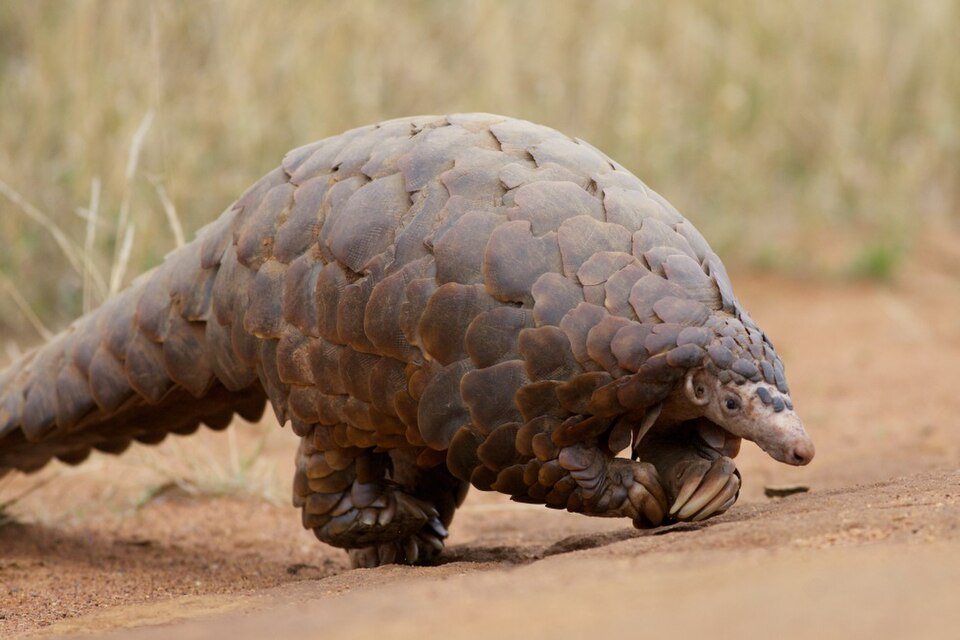
Photo: U.S. Fish and Wildlife Service Headquarters · CC BY 2.0 (May be cropped or resized)
Smutsia temminckii
Conservation status: Unknown
Basic stats
Diet
Ants and termites
Habitat
Savannah woodland with moderate scrub; bushveld, thornbush and floodplain grassland
Range
Southern and eastern Africa
Gestation period
130–150 days
The ground pangolin, also called Temminck's pangolin, Cape pangolin or steppe pangolin, is in the genus Smutsia of the family Manidae and is one of four African pangolin species, the only one found in southern and eastern Africa. Its body is covered in overlapping keratin scales, and it rolls into a ball when threatened. It walks on its hind legs, with five toes on each hind foot and three long central claws on each forelimb, used for breaking into ant and termite colonies. Its jaws lack teeth, so it relies on a muscular stomach with stones to grind prey, and its tongue is longer than its body (Wikipedia, general species account).
The ground pangolin prefers savannah woodland with moderate scrub and is also found in bushveld, thornbush and floodplain grassland, with its suitable range likely shaped by the termites and ants it eats. It is solitary and only interacts with others to mate, living in deep burrows with large semispherical chambers big enough for a person to crawl into. Gestation lasts about 130–150 days, and a single young is usually born each year, though twins have been reported. Newborns measure 15–18cm and weigh 340–425g with their eyes open, and from about four weeks old they ride on the mother's back or tail (Wikipedia, general species account; GBIF description, Manidae).
Quick answers
- What does the Ground Pangolin eat?
- Ants and termites
- What habitat does the Ground Pangolin live in?
- Savannah woodland with moderate scrub; bushveld, thornbush and floodplain grassland
- Where is the Ground Pangolin found?
- Southern and eastern Africa
- How long is the gestation period of the Ground Pangolin?
- 130–150 days