
 Wildlife
of Kenya
Lesser Kudu
Antelopes & Other Bovids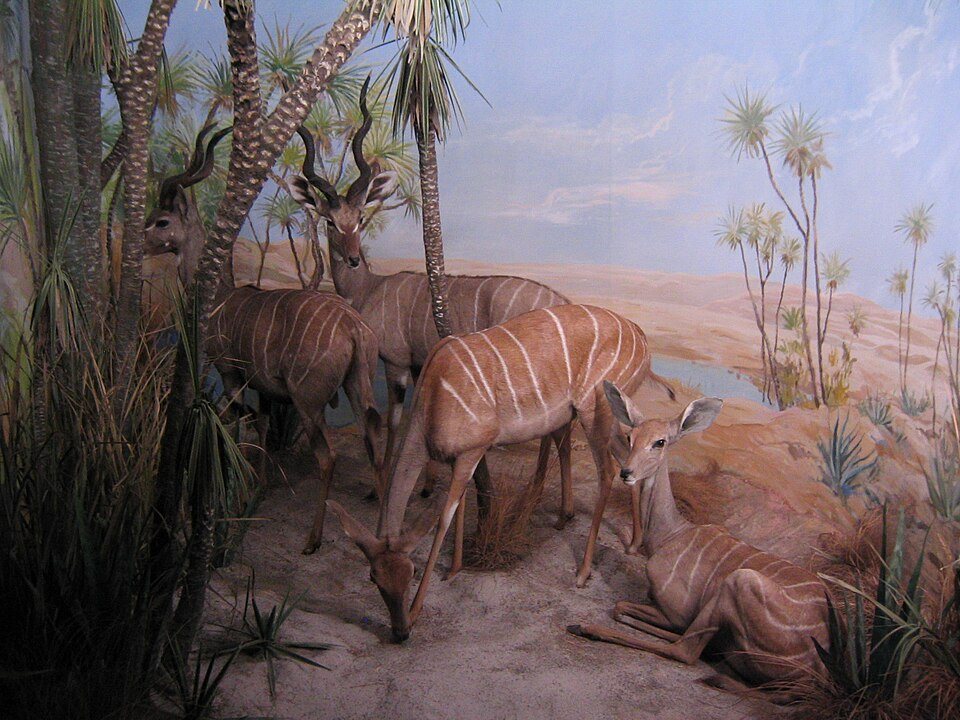
Photo: No machine-readable author provided. Gdr assumed (based on copyright claims). · CC BY-SA 3.0 (May be cropped or resized)
Tragelaphus imberbis
Conservation status: Unknown
Basic stats
Diet
Foliage of tall bushes, trees and herbaceous perennials
Habitat
Dry bushland bordering arid grassland, scrubland and light open forest
Range
East Africa: Ethiopia, Kenya, Somalia, South Sudan, Tanzania, Uganda
Litter size
1
Gestation period
About 235 days (AnAge, COMBINE)
Size
Head and body 110–140cm; shoulder height 95–105cm (males), 90–100cm (females)
Weight
92–108kg (males), 56–70kg (females)
The lesser kudu is a medium-sized, spiral-horned antelope of East Africa with large rounded ears. Head and body length is about 110–140cm. Males stand 95–105cm at the shoulder and weigh 92–108kg, while females are 90–100cm tall and weigh 56–70kg. Only males bear horns, 50–70cm long with two to two-and-a-half twists. Females and juveniles are rufous, and males turn yellowish grey or darker after about two years. One long white stripe runs along the back, with 11–14 stripes branching down the sides (Wikipedia, general species account).
The lesser kudu browses foliage from tall bushes, trees and herbaceous perennials. It lives in dry bushland bordering arid grassland, and also in scrubland and light open forest. It is native to Ethiopia, Kenya, Somalia, South Sudan, Tanzania and Uganda. It is mainly crepuscular, not territorial, and shelters in dense thicket soon after sunrise. Gestation lasts about 235 days, and a single calf is born (Wikipedia, general species account; AnAge; COMBINE).
Where to see Lesser Kudu in Kenya
GBIF records grouped by protected area. They show where the species has been reported, not that it is there now, and they are not population counts.
Recorded in 7 protected areas (1989–2026).
- Meru National Park: 10 records (2013–2025)
- Kinna Community Conservancy: 10 records (2008)
- Sera Community Conservancy: 8 records (2008)
- Tsavo East National Park: 7 records (2003–2016)
- Tsavo West National Park: 6 records (1989–2023)
- Mramba Proposed conservancy: 3 records (2022–2026)
- Nakuprat-Gotu Community Wildlife Conservancy: 3 records (2008)
Quick answers
- What does the Lesser Kudu eat?
- Foliage of tall bushes, trees and herbaceous perennials
- What habitat does the Lesser Kudu live in?
- Dry bushland bordering arid grassland, scrubland and light open forest
- Where is the Lesser Kudu found?
- East Africa: Ethiopia, Kenya, Somalia, South Sudan, Tanzania, Uganda
- What is the litter size of the Lesser Kudu?
- 1
- How long is the gestation period of the Lesser Kudu?
- About 235 days (AnAge, COMBINE)
- How big is the Lesser Kudu?
- Head and body 110–140cm; shoulder height 95–105cm (males), 90–100cm (females)
- How much does the Lesser Kudu weigh?
- 92–108kg (males), 56–70kg (females)