
 Wildlife
of Kenya
African Savanna Elephant
Elephants & Rhinos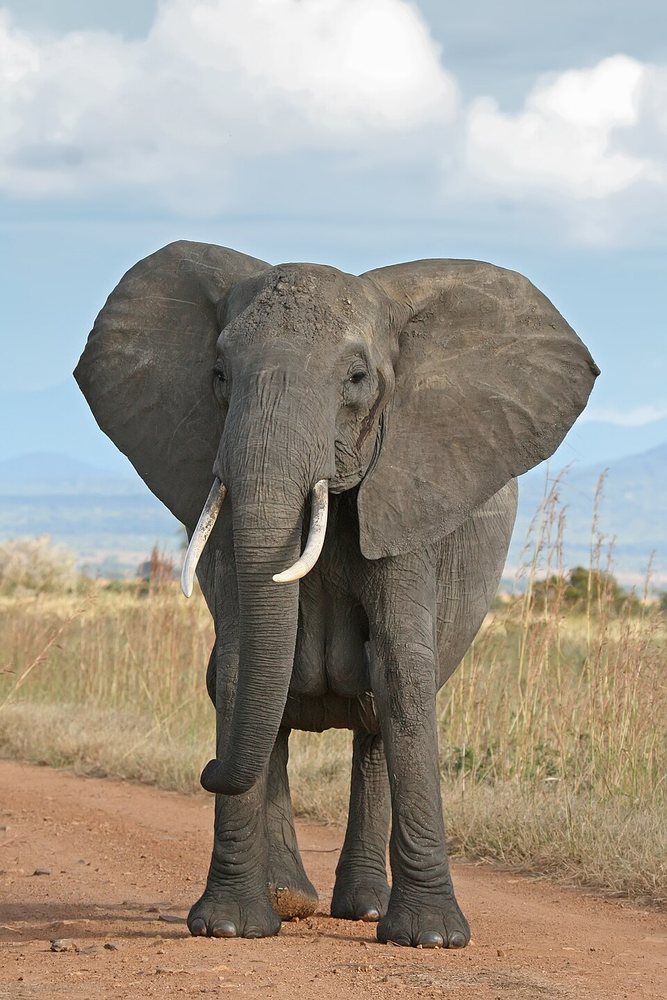
Photo: Muhammad Mahdi Karim Facebook The making of this document was supported by Wikimedia CH. (Submit your project!) For all the files concerned, please see the category Supported by Wikimedia CH. العربية ∙ বাংলা ∙ čeština ∙ Deutsch ∙ English ∙ Esperanto ∙ español ∙ français ∙ galego ∙ हिन्दी ∙ magyar ∙ italiano ∙ 日本語 ∙ македонски ∙ Nederlands ∙ português do Brasil ∙ rumantsch ∙ русский ∙ sicilianu ∙ slovenščina ∙ தமிழ் ∙ українська ∙ 中文 ∙ +/− · GFDL 1.2 (May be cropped or resized)
Loxodonta africana
Conservation status: Unknown
Basic stats
Diet
Grasses, herbs, leaves, bark and fruit
Habitat
Grassland, woodland, wetland, scrub and open forest
Litter size
Usually 1 calf
Gestation period
About 670 days
Weight
Adult bulls average roughly 5.2–6.9 tonnes; females are smaller
The African savanna elephant is the largest living land animal. It has very large triangular ears, a concave back, curved tusks and a long trunk ending in two finger-like tips. Bulls are much larger than cows. Wrinkled grey skin holds water and mud after bathing, helping protect the animal from heat and insects (COMBINE, Soria et al. 2021; Wikipedia, general species account).
Family herds are led by experienced females and include related cows and calves; mature bulls are more often solitary or in loose bachelor groups. Elephants eat grasses, herbs, bark, leaves and fruit and travel widely between food and water. Amboseli is famous for long-studied families, while Tsavo, Samburu, Laikipia, Mount Kenya and the Aberdares also hold important populations. Kenya national status is recorded here as unknown.
Where to see African Savanna Elephant in Kenya
GBIF records grouped by protected area. They show where the species has been reported, not that it is there now, and they are not population counts.
Recorded in 40 protected areas (1906–2026). The 8 with the most records:
- Sera Community Conservancy: 121 records (2008)
- Buffalo Springs National Reserve: 43 records (2003–2025)
- Masai Mara: 38 records (1989–2023)
- Loisaba Conservancy: 35 records (2008)
- Mukutan Conservancy (former Ol Ari Nyiro): 34 records (2008)
- Samburu National Reserve: 34 records (2008–2022)
- Tsavo East National Park: 31 records (1989–2026)
- Ol Pejeta Conservancy: 30 records (2008–2025)
Quick answers
- What does the African Savanna Elephant eat?
- Grasses, herbs, leaves, bark and fruit
- What habitat does the African Savanna Elephant live in?
- Grassland, woodland, wetland, scrub and open forest
- What is the litter size of the African Savanna Elephant?
- Usually 1 calf
- How long is the gestation period of the African Savanna Elephant?
- About 670 days
- How much does the African Savanna Elephant weigh?
- Adult bulls average roughly 5.2–6.9 tonnes; females are smaller