
 Wildlife
of Kenya
White Rhinoceros
Elephants & Rhinos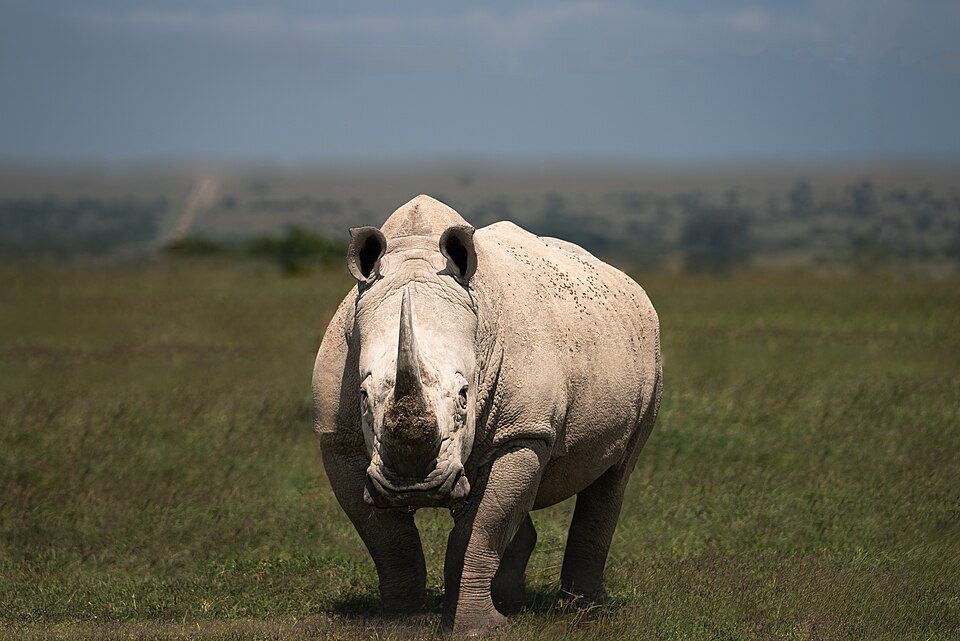
Photo: Payamfarahani · CC BY-SA 4.0 (May be cropped or resized)
Ceratotherium simum
Conservation status: Unknown
Basic stats
Diet
Grazes grasses
Habitat
Grassland and open savanna with water and shade
Litter size
1 calf
Gestation period
About 16 months
Weight
Females commonly around 1.6 tonnes; large males may exceed 2 tonnes
The white rhinoceros is a huge, square-lipped grazer with a long head held low to the ground, a pronounced shoulder hump and two horns. Its name does not describe colour: the skin is grey. The broad, straight-edged mouth separates it from the pointed, grasping upper lip of the black rhinoceros, even at a distance (Wikipedia, general species account; COMBINE, Soria et al. 2021).
White rhinos feed mainly on short grasses and are more social than black rhinos; females and young may form loose groups, while adult males defend territories. Kenya's animals occur chiefly in intensively protected conservancies and fenced reserves, including Ol Pejeta, Lewa and Lake Nakuru. Some are managed or reintroduced populations. A sourced Kenya national Red List category has not been recorded in this guide, so status is unknown.
Where to see White Rhinoceros in Kenya
GBIF records grouped by protected area. They show where the species has been reported, not that it is there now, and they are not population counts.
Recorded in 7 protected areas (2003–2025).
- Lewa Wildlife Conservancy: 16 records (2008–2022)
- Ol Pejeta Conservancy: 15 records (2008–2025)
- Solio Game Park: 14 records (2008)
- Lake Nakuru National Park: 7 records (2003–2023)
- Meru National Park: 6 records (2013–2025)
- Nairobi National Park: 6 records (2003–2022)
- Mugie Conservancy;Mugie Wildlife Conservancy: 6 records (2008)
Quick answers
- What does the White Rhinoceros eat?
- Grazes grasses
- What habitat does the White Rhinoceros live in?
- Grassland and open savanna with water and shade
- What is the litter size of the White Rhinoceros?
- 1 calf
- How long is the gestation period of the White Rhinoceros?
- About 16 months
- How much does the White Rhinoceros weigh?
- Females commonly around 1.6 tonnes; large males may exceed 2 tonnes