
 Wildlife
of Kenya
Leopard
Cats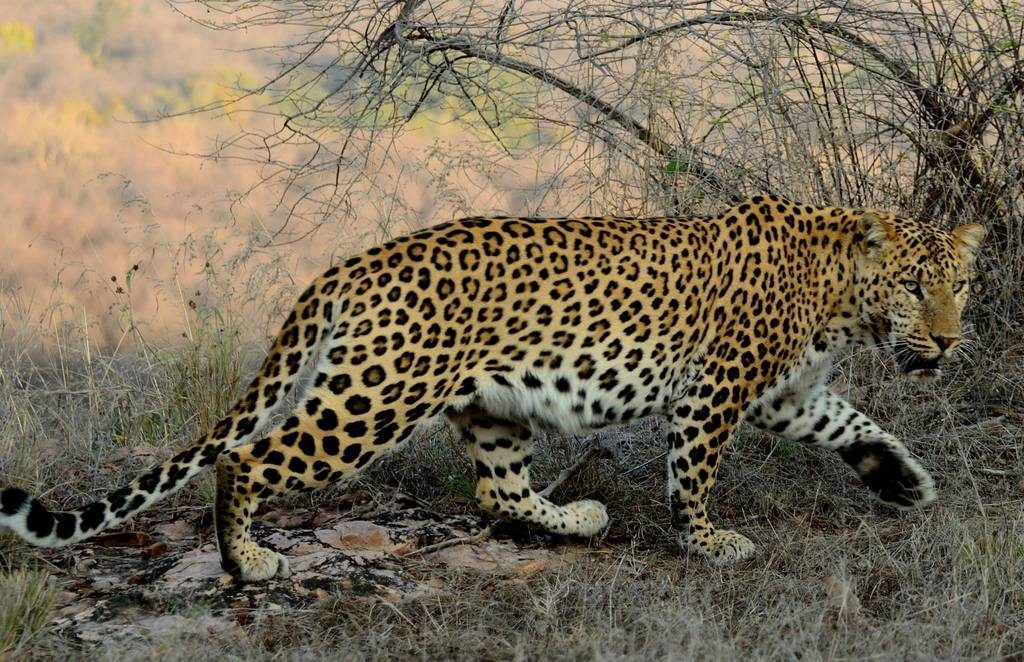
Photo: Raja bandi · CC BY 4.0 (May be cropped or resized)
Panthera pardus
Conservation status: Unknown
Basic stats
Diet
Opportunistic predator, especially small and medium mammals
Habitat
Forest, savanna, woodland, rocky country and arid scrub
Litter size
Usually 2 cubs
Gestation period
About 97 days
Size
Head and body 92–183cm; tail 66–102cm
Weight
Males commonly 31–72kg; females 21–43kg
The leopard is a muscular, adaptable cat with a golden coat patterned in dark rosettes and spots. Its rosettes normally lack the central dots seen in jaguars, and the long tail is ringed toward the tip. Individuals vary from pale in dry country to deep gold in forest; melanistic animals are commonly called black panthers (COMBINE, Soria et al. 2021; Wikipedia, general species account).
Usually solitary and most active from dusk through night, a leopard stalks and ambushes prey and may haul a kill into a tree. It occupies a wider range of habitats than Kenya's other big cats, from Mara river woodland and Tsavo scrub to the Aberdares and coastal forest. It is famously elusive even where common. Kenya national conservation status is not sourced in this guide and is therefore unknown.
Where to see Leopard in Kenya
GBIF records grouped by protected area. They show where the species has been reported, not that it is there now, and they are not population counts.
Recorded in 10 protected areas (1987–2026). The 8 with the most records:
- Masai Mara: 17 records (2006–2026)
- Lake Nakuru National Park: 16 records (1996–2003)
- Buffalo Springs National Reserve: 9 records (2006–2025)
- Kitengela triangle unformal conservation area: 6 records (2019)
- Mara North Conservancy: 6 records (2010–2022)
- Nairobi National Park: 4 records (1987–2019)
- Meru National Park: 3 records (2013–2022)
- Tsavo East National Park: 3 records (1989–2016)
Quick answers
- What does the Leopard eat?
- Opportunistic predator, especially small and medium mammals
- What habitat does the Leopard live in?
- Forest, savanna, woodland, rocky country and arid scrub
- What is the litter size of the Leopard?
- Usually 2 cubs
- How long is the gestation period of the Leopard?
- About 97 days
- How big is the Leopard?
- Head and body 92–183cm; tail 66–102cm
- How much does the Leopard weigh?
- Males commonly 31–72kg; females 21–43kg