
 Wildlife
of Kenya
Black Rhinoceros
Elephants & Rhinos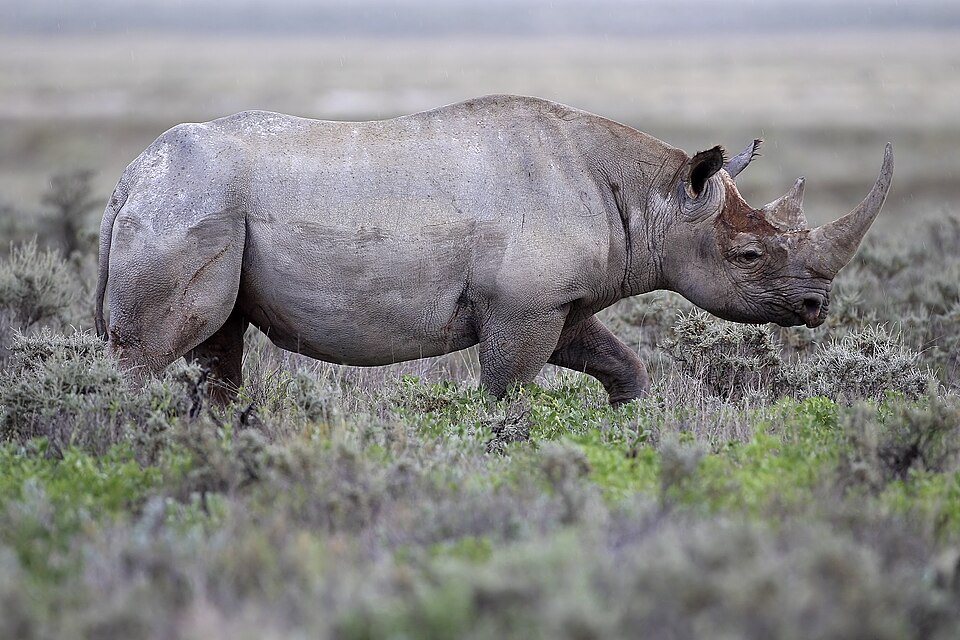
Photo: Yathin S Krishnappa · CC BY-SA 3.0 (May be cropped or resized)
Diceros bicornis
Conservation status: Unknown
Basic stats
Diet
Browses leaves, shoots and woody plants
Habitat
Bushland, woodland, savanna and semi-arid scrub
Litter size
1 calf
Gestation period
About 15 months
Weight
Adults commonly 800–1,400kg
The black rhinoceros is smaller and more compact than the white rhinoceros, with a pointed, prehensile upper lip used to grasp leaves and twigs. It carries two horns and usually holds its head higher because it browses rather than grazes. Skin colour varies with the soil and mud in which an animal wallows (Wikipedia, general species account; COMBINE, Soria et al. 2021).
Adults are usually solitary, although females may associate with calves and neighbours overlap around water. They browse woody vegetation and often feed in cooler hours. Kenya protects black rhinos in guarded parks and conservancies including Ol Pejeta, Lewa, Nairobi, Lake Nakuru and Tsavo West. Exact access rules and sightings change with management.
Where to see Black Rhinoceros in Kenya
GBIF records grouped by protected area. They show where the species has been reported, not that it is there now, and they are not population counts.
Recorded in 4 protected areas (2003–2026).
- Chyulu Hills: 10 records (2015)
- Ol Pejeta Conservancy: 8 records (2015–2026)
- Lake Nakuru National Park: 4 records (2003–2017)
- Lewa Wildlife Conservancy: 3 records (2022)
Quick answers
- What does the Black Rhinoceros eat?
- Browses leaves, shoots and woody plants
- What habitat does the Black Rhinoceros live in?
- Bushland, woodland, savanna and semi-arid scrub
- What is the litter size of the Black Rhinoceros?
- 1 calf
- How long is the gestation period of the Black Rhinoceros?
- About 15 months
- How much does the Black Rhinoceros weigh?
- Adults commonly 800–1,400kg