
 Wildlife
of Kenya
Black-headed Heron
Storks, Herons, Ibises & Flamingos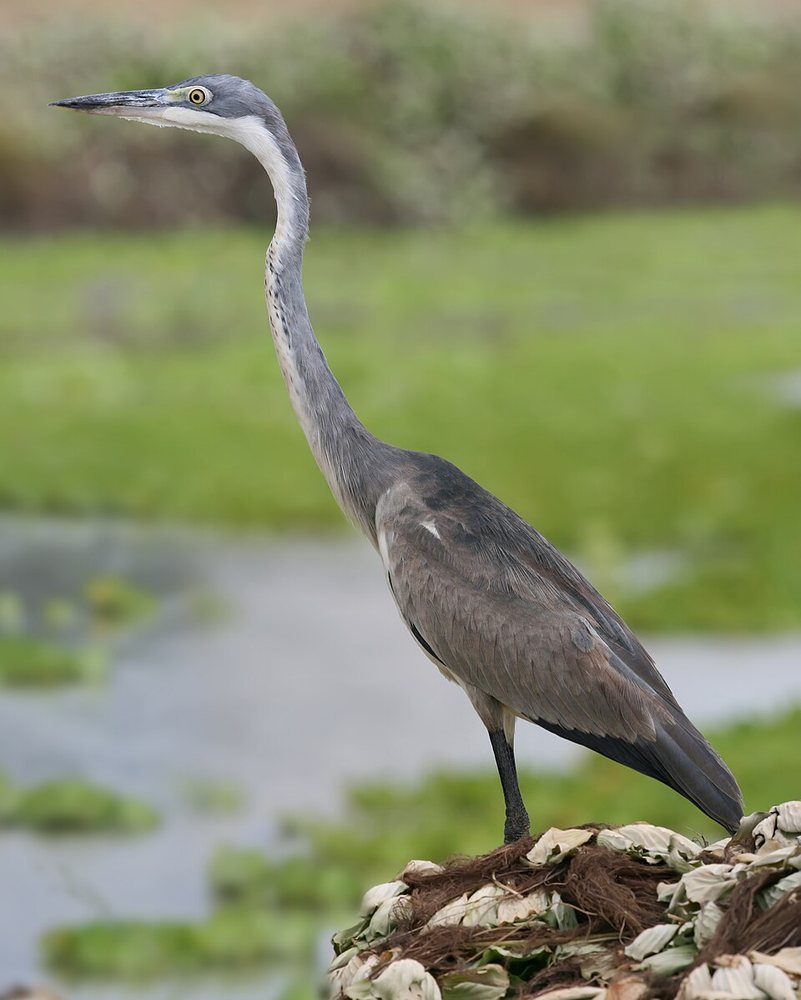
Photo: Muhammad Mahdi Karim Facebook The making of this document was supported by Wikimedia CH. (Submit your project!) For all the files concerned, please see the category Supported by Wikimedia CH. العربية ∙ বাংলা ∙ čeština ∙ Deutsch ∙ English ∙ Esperanto ∙ español ∙ français ∙ galego ∙ हिन्दी ∙ magyar ∙ italiano ∙ 日本語 ∙ македонски ∙ Nederlands ∙ português do Brasil ∙ rumantsch ∙ русский ∙ sicilianu ∙ slovenščina ∙ தமிழ் ∙ українська ∙ 中文 ∙ +/− · GFDL 1.2 (May be cropped or resized)
Ardea melanocephala
Conservation status: Unknown
Basic stats
Diet
Fish, frogs, insects, small mammals, and birds
Habitat
Shallow wetlands, trees, reedbeds, and cliffs
Range
Sub-Saharan Africa and Madagascar
Clutch size
2–4 eggs
Size
About 85cm
The Black-headed Heron occurs through much of sub-Saharan Africa and Madagascar; most remain resident, though some West African birds move north during the rainy season. It stands about 85 cm tall and has a wingspan near 150 cm, grey upperparts, paler underparts, and a powerful dusky bill; a loud croak is its call. In flight, white lining beneath the wings is conspicuous. (Wikipedia, general species account)
It breeds in wet-season colonies in trees, reedbeds, or cliffs, building a bulky stick nest and laying two to four eggs. While often hunting in shallow water for fish or frogs, it also takes large insects, small mammals, and birds on land, waiting motionless or stalking slowly. It flies slowly with its neck drawn back, like other herons and bitterns. (Wikipedia, general species account)
Where to see Black-headed Heron in Kenya
GBIF records grouped by protected area. They show where the species has been reported, not that it is there now, and they are not population counts.
Recorded in 128 protected areas (1930–2026). The 8 with the most records:
- Masai Mara: 2,836 records (1971–2026)
- Nairobi National Park: 2,033 records (1970–2026)
- Mara Triangle: 1,417 records (1971–2026)
- Lake Nakuru National Park: 1,144 records (1972–2026)
- Buffalo Springs National Reserve: 525 records (1969–2026)
- Samburu National Reserve: 468 records (1970–2026)
- Tsavo East National Park: 460 records (1970–2025)
- Tsavo West National Park: 350 records (1966–2026)
Quick answers
- What does the Black-headed Heron eat?
- Fish, frogs, insects, small mammals, and birds
- What habitat does the Black-headed Heron live in?
- Shallow wetlands, trees, reedbeds, and cliffs
- Where is the Black-headed Heron found?
- Sub-Saharan Africa and Madagascar
- How many eggs does the Black-headed Heron lay?
- 2–4 eggs
- How big is the Black-headed Heron?
- About 85cm