
 Wildlife
of Kenya
Beisa Oryx
Antelopes & Other Bovids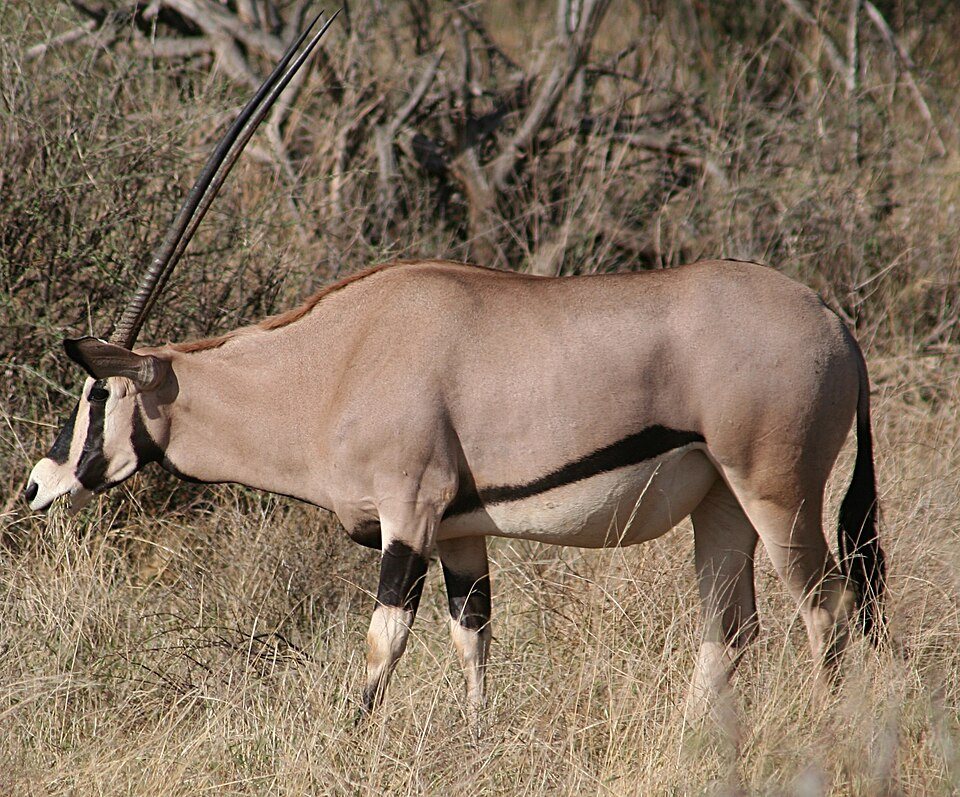
Photo: ChrisHodgesUK · CC BY-SA 3.0 (May be cropped or resized)
Oryx beisa
Conservation status: Unknown
Basic stats
Diet
Grasses, herbs and browse
Habitat
Arid and semi-arid grassland, bush and open woodland
Litter size
1 calf
Gestation period
About 8.5 months
The beisa oryx is a large, pale antelope with a black side stripe, bold black-and-white face pattern and two very long, nearly straight horns carried by both sexes. The neck is thick, the tail tuft black and the legs strongly marked. It is built for hot, dry landscapes and can raise its body temperature to reduce water loss (Wikipedia, general species account; MDD range data).
Oryx feed on grasses when rain permits and switch to herbs, browse and moisture-rich plants in dry periods. Herds move widely through semi-arid country, while adult males may defend territories. In Kenya the species is characteristic of Samburu, Buffalo Springs, Shaba and the wider northern rangelands, reaching Tsavo and Turkana. No sourced Kenya national Red List classification is attached, so status is unknown.
Where to see Beisa Oryx in Kenya
GBIF records grouped by protected area. They show where the species has been reported, not that it is there now, and they are not population counts.
Recorded in 15 protected areas (2003–2026). The 8 with the most records:
- Buffalo Springs National Reserve: 31 records (2003–2025)
- Shurr Community Conservancy: 20 records (2008)
- Mugie Conservancy;Mugie Wildlife Conservancy: 15 records (2008)
- Sera Community Conservancy: 13 records (2008)
- Nakuprat-Gotu Community Wildlife Conservancy: 12 records (2008–2023)
- Loisaba Conservancy: 9 records (2008)
- Melako Community Conservancy: 9 records (2008)
- Samburu National Reserve: 8 records (2008–2023)
Quick answers
- What does the Beisa Oryx eat?
- Grasses, herbs and browse
- What habitat does the Beisa Oryx live in?
- Arid and semi-arid grassland, bush and open woodland
- What is the litter size of the Beisa Oryx?
- 1 calf
- How long is the gestation period of the Beisa Oryx?
- About 8.5 months