
 Wildlife
of Kenya
White-bellied Pangolin
Pangolins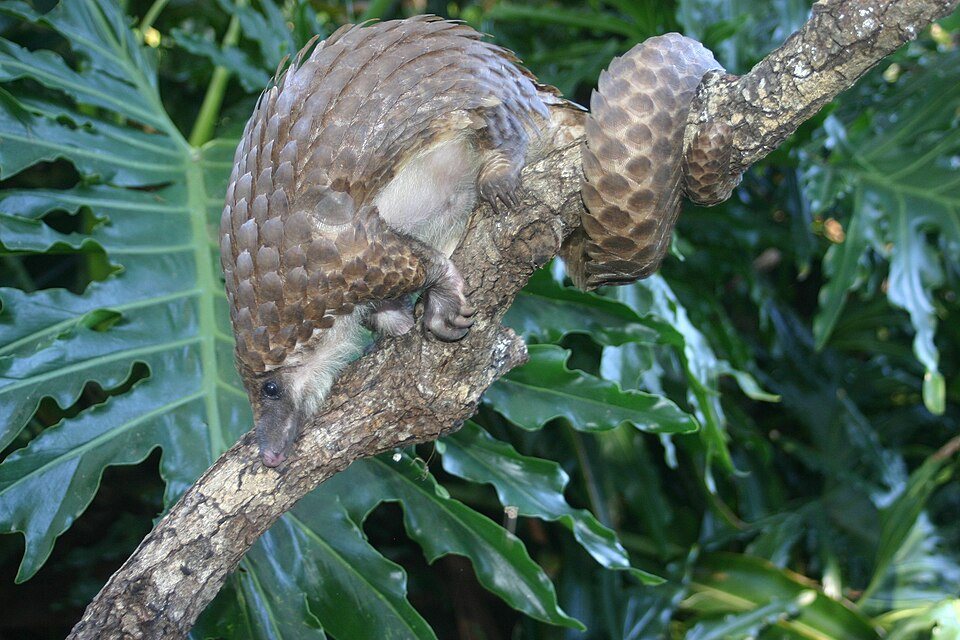
Photo: EdgeOfMidnight · CC BY-SA 4.0 (May be cropped or resized)
Phataginus tricuspis
Conservation status: Unknown
Basic stats
Habitat
Lowland tropical moist forest, savanna-forest mosaics, cultivated and fallow land
Range
Guinea to northern Angola and northwestern Zambia, east to southwestern Kenya
Size
Head and body 33–43cm; tail 49–62cm
The white-bellied pangolin is a relatively small pangolin, one of eight living species and the commonest of Africa's forest pangolins. Its head and body measure 33–43cm and its tail 49–62cm. Its scales are dark brown to brownish yellow, each with three points that give the species its name, and they cover the body except the face, underbelly and inner legs. The scales are made of keratin, like fingernails. The head is small with an elongated snout, and each short foot has five long, curved claws (Wikipedia, general species account).
Its range runs from Guinea across much of West and Central Africa to southwestern Kenya, northern Angola and northwestern Zambia. It is semiarboreal and generally nocturnal, living in lowland tropical moist forest and in savanna-forest mosaics. It prefers cultivated and fallow ground, where it is less heavily hunted. It walks on all fours or upright, using its prehensile tail for balance, and can climb trees even where there are no branches. When threatened, it can roll into a ball, and a mother with young wraps herself around them. In place of teeth it has a gizzard-like stomach kept full of stones and sand (Wikipedia, general species account).
Quick answers
- What habitat does the White-bellied Pangolin live in?
- Lowland tropical moist forest, savanna-forest mosaics, cultivated and fallow land
- Where is the White-bellied Pangolin found?
- Guinea to northern Angola and northwestern Zambia, east to southwestern Kenya
- How big is the White-bellied Pangolin?
- Head and body 33–43cm; tail 49–62cm