
 Wildlife
of Kenya
Greater Long-fingered Bat
Bats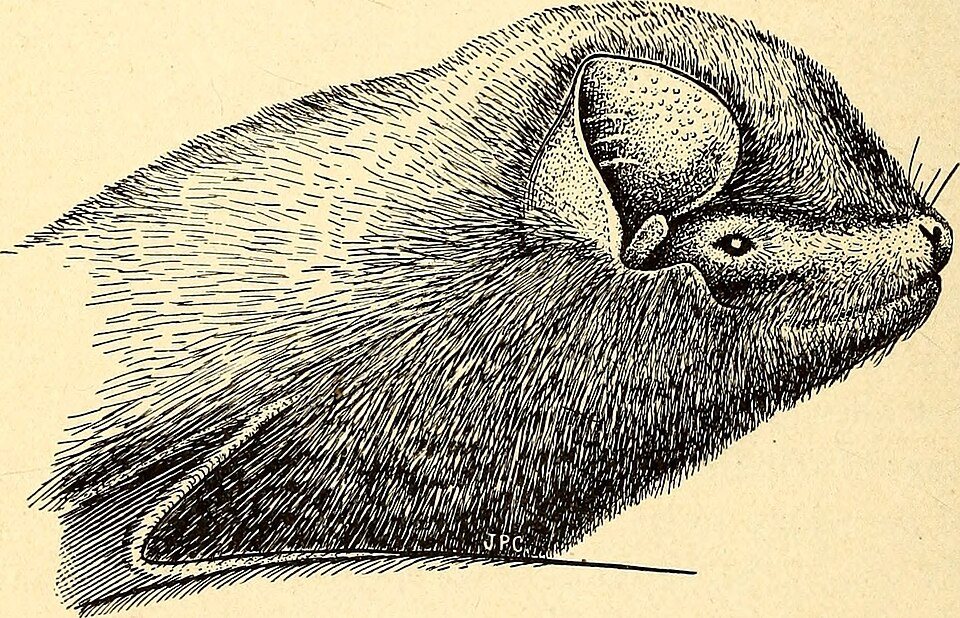
Photo: Allen, J. A., Lang, H., & Chapin, J. P. · Public domain
Miniopterus inflatus
Conservation status: Unknown
Basic stats
Diet
Fish caught by trawling
Habitat
Lowland and montane rainforest, and arid open savanna
Range
Cameroon, Gabon, Kenya, Namibia and other African countries
The Greater Long-fingered Bat, Miniopterus inflatus, belongs to the family Miniopteridae and was first described by O. Thomas in 1903. It roosts in caves and is among only three bat species recognised as fish catchers. The species carries the blood parasite Polychromophilus melanipherus naturally, and that parasite is related to organisms that cause malaria. Its inner ear has an adaptation that improves echolocation in complicated settings such as caves and closed forest (Wikipedia, general species account; GBIF description, Miniopteridae).
It occurs across Cameroon, Gabon, Kenya, Namibia and several other African countries. Habitats include lowland and upland rainforest, and apparently arid open Acacia savanna, where mean annual rainfall is under 300mm in Namibia. It is most often associated with montane rainforests, such as those in Gabon at roughly 500–600m and on Mount Cameroon up to 2200m. In north-eastern Gabon mating occurs in early July, births take place in October, and gestation and lactation together last about 6 months (GBIF description, Miniopteridae).
Where to see Greater Long-fingered Bat in Kenya
GBIF records grouped by protected area. They show where the species has been reported, not that it is there now, and they are not population counts.
Recorded in 3 protected areas (1963–2016).
- Kagamega Forest: 232 records (1963–2016)
- Mount Elgon National Park: 10 records (1972)
- Menengai Crater: 3 records (1963–1972)
Quick answers
- What does the Greater Long-fingered Bat eat?
- Fish caught by trawling
- What habitat does the Greater Long-fingered Bat live in?
- Lowland and montane rainforest, and arid open savanna
- Where is the Greater Long-fingered Bat found?
- Cameroon, Gabon, Kenya, Namibia and other African countries