
 Wildlife
of Kenya
Mauritian Tomb Bat
Bats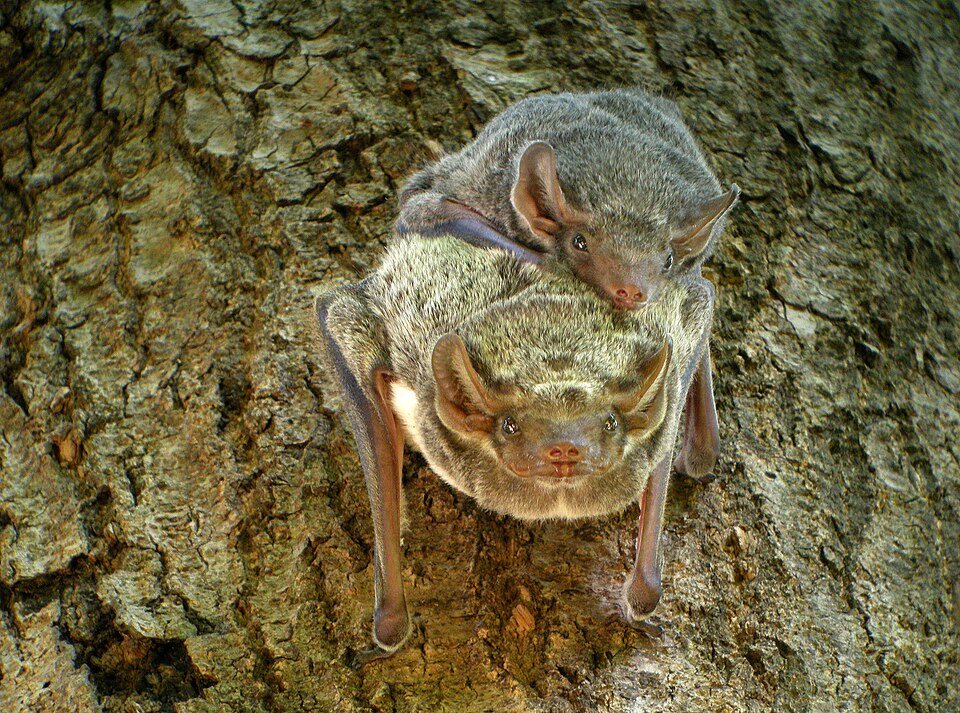
Photo: Frank Vassen · CC BY 2.0 (May be cropped or resized)
Taphozous mauritianus
Conservation status: Unknown
Basic stats
Diet
Moths, butterflies and termites
Habitat
Dry scrub to semi-tropical savanna, often roosting on building walls and tree trunks
Range
Much of Africa south of the Sahara, plus Madagascar
Litter size
Usually one
The Mauritian tomb bat is a sac-winged bat in the family Emballonuridae with a completely white underside and a grizzled upper coat of browns, greys and whites that gives a salt-and-pepper look. Its fur is short and sleek, its wing membranes are beige and mostly translucent, and its conical face is covered in thin hair, with bare skin below and in front of the eyes. The eyes measure 2–3mm and the ears are triangular and erect with rounded edges. Sexes look alike, and juveniles are greyer than the lighter adults. Its wings shorten when it is at rest, which helps it crawl (Wikipedia, general species account).
Its range covers much of Africa south of the Sahara and Madagascar, along with many surrounding islands. It lives in dry scrub through to semi-tropical savanna, and also in moist savanna, woodland and riverside forest, often in cool, dry places, and it has been found roosting under the eaves of houses. Nocturnal, it feeds on moths, butterflies and termites and helps keep insect pests down, including insects that carry human disease. It is not prone to large roosts, and groups of around five are usually seen on building walls or tree trunks. It breeds once or twice a year and usually rears one young, though twins are occasionally reported (Wikipedia, general species account; GBIF description, Emballonuridae).
Quick answers
- What does the Mauritian Tomb Bat eat?
- Moths, butterflies and termites
- What habitat does the Mauritian Tomb Bat live in?
- Dry scrub to semi-tropical savanna, often roosting on building walls and tree trunks
- Where is the Mauritian Tomb Bat found?
- Much of Africa south of the Sahara, plus Madagascar
- What is the litter size of the Mauritian Tomb Bat?
- Usually one