
 Wildlife
of Kenya
Natal Long-fingered Bat
Bats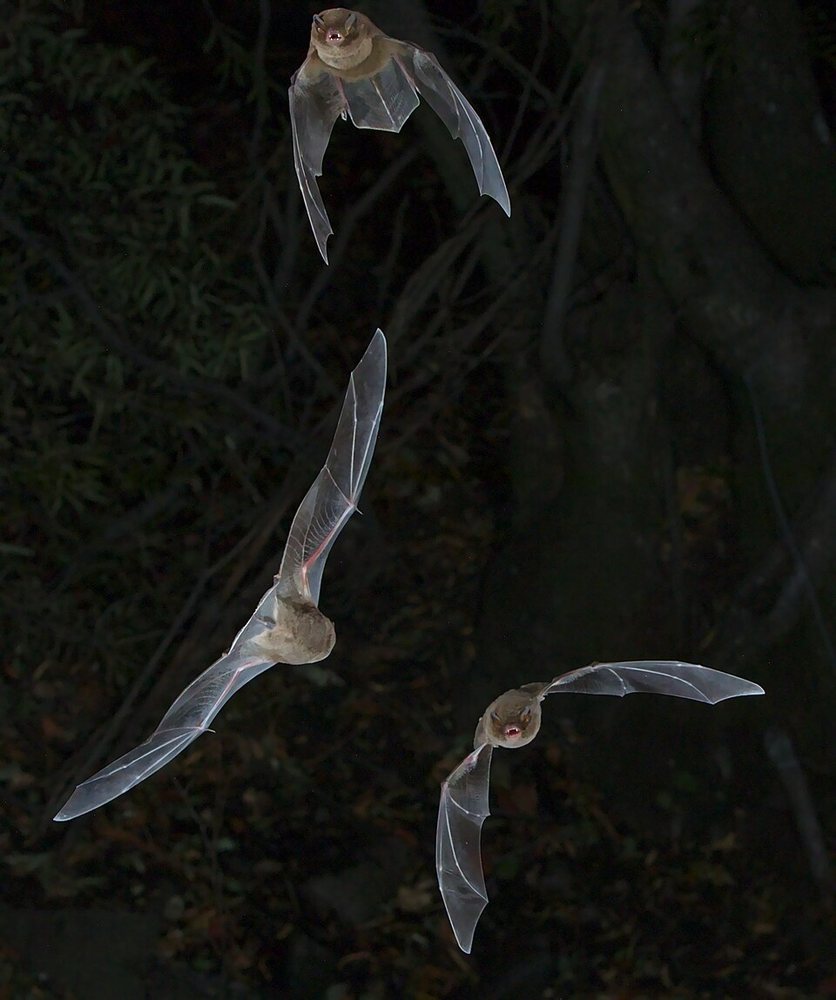
Photo: Derek Keats from Johannesburg, South Africa · CC BY 2.0 (May be cropped or resized)
Miniopterus natalensis
Conservation status: Unknown
Basic stats
Diet
Mainly insects, occasionally fish
Habitat
Savanna, shrubland, fynbos, caves and hot deserts
Range
Southern and eastern Africa, from Angola to South Africa
The Natal Long-fingered Bat, Miniopterus natalensis, is a vesper bat in the family Miniopteridae, first described by A. Smith in 1833. While it normally preys on insects, it can occasionally catch fish, reaching deeper into the water as a fish dives. Photoperiod, the length of daylight, acts as a cue for migration, and bat activity increases when the night shortens (Wikipedia, general species account; GBIF description, Miniopteridae).
It lives in dry and moist savanna, Mediterranean-type shrubby vegetation, caves and hot deserts, from sea level to about 2200m. In South Africa it uses fynbos and bushveld up to about 1000m, while wet Afromontane forest at 2200m is used in Rwanda and on Mount Kilimanjaro in Tanzania. It also uses arid open acacia, thorn and mopane savanna. It forms metapopulations across large territories, using several shelters such as caves through the year according to energy needs, food supply and roost temperature (Wikipedia, general species account; GBIF description, Miniopteridae).
Where to see Natal Long-fingered Bat in Kenya
GBIF records grouped by protected area. They show where the species has been reported, not that it is there now, and they are not population counts.
Recorded in 6 protected areas (1970–2016).
- Kagamega Forest: 75 records (2014)
- Tsavo West National Park: 53 records (2012)
- Chyulu Hills: 28 records (2012)
- Soysambu Conservancy: 23 records (2008–2016)
- Mount Elgon National Park: 21 records (1970–2006)
- Mount Kenya National Reserve: 14 records (2013–2014)
Quick answers
- What does the Natal Long-fingered Bat eat?
- Mainly insects, occasionally fish
- What habitat does the Natal Long-fingered Bat live in?
- Savanna, shrubland, fynbos, caves and hot deserts
- Where is the Natal Long-fingered Bat found?
- Southern and eastern Africa, from Angola to South Africa