
 Wildlife
of Kenya
Black Stork
Storks, Herons, Ibises & Flamingos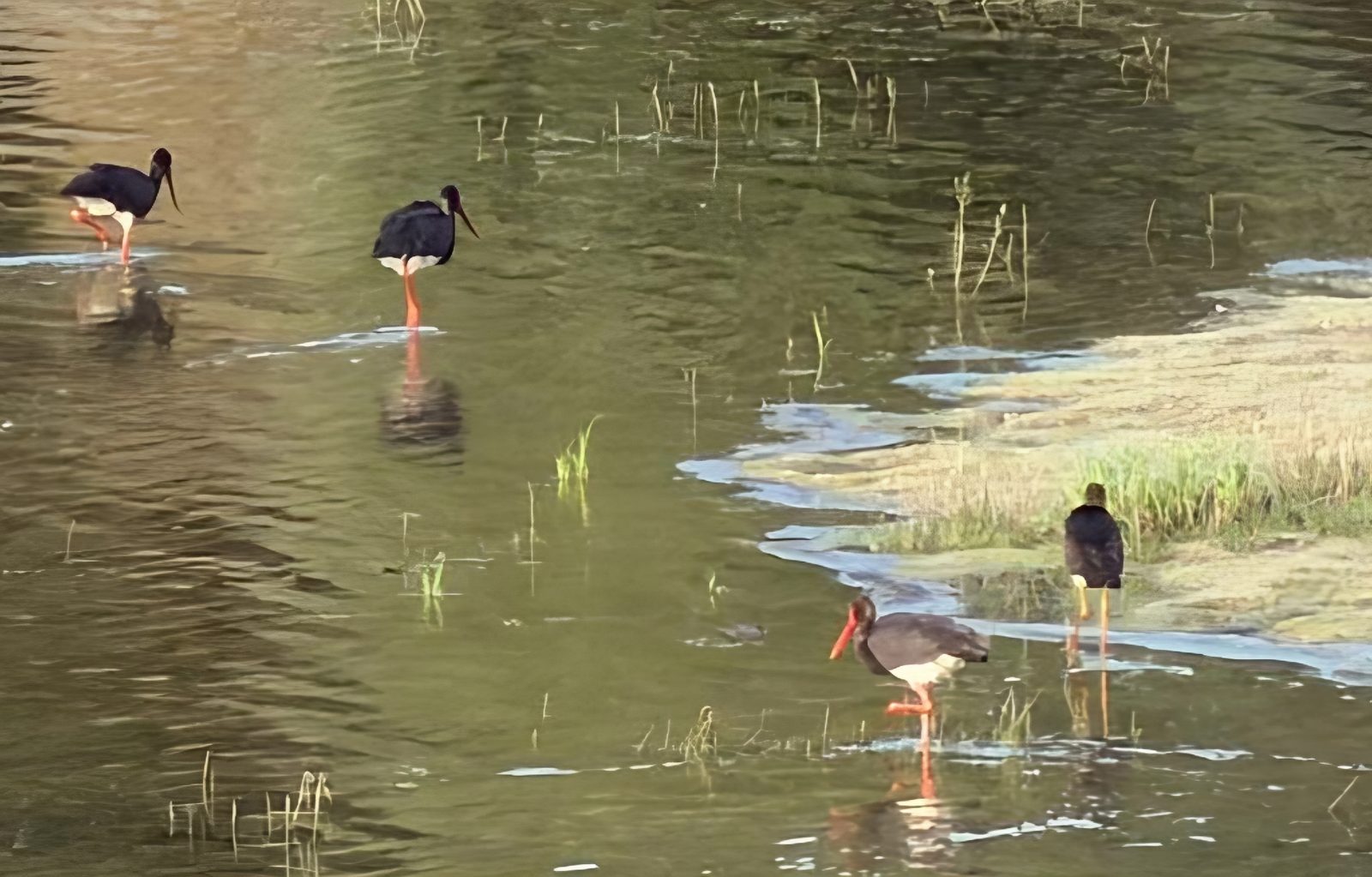
Photo: (c) Gianluca Congi🪶🦆🌲, some rights reserved (CC BY-SA) · CC-BY-SA (May be cropped or resized)
Ciconia nigra
Conservation status: Unknown
Basic stats
Diet
Mostly fish, with amphibians, insects and other small animals
Habitat
Mature forest near rivers, marshes and shallow inland waters
Range
Breeds across parts of Europe and temperate Asia; migratory populations winter in sub-Saharan Africa and the Indian subcontinent
Clutch size
2–5 eggs
Incubation period
32–38 days
Size
95–100cm
Wingspan
145–155cm
Weight
Averages about 2926g
The Black Stork is a large, wary stork with glossy black upperparts, white underparts, long red legs and a straight red bill. Juveniles are browner and less iridescent, with grey-green bare parts. The sexes look alike, though males average larger. In flight the neck is fully extended, and on the ground the bird walks slowly while searching shallow water. Adults measure 95–100 cm, span 145–155 cm and average about 2,926 g (Wikipedia, general species account; AVONET, Tobias et al. 2022).
Across its range, the species breeds in scattered forested areas of Europe and temperate Asia. Most populations migrate to sub-Saharan Africa or the Indian subcontinent, while a southern African population remains resident. Rivers, marshes and other inland waters provide feeding sites for fish, amphibians, insects and additional small prey. Pairs build large nests in mature trees, or occasionally on rock ledges. Two to five eggs are incubated by both parents for 32–38 days (Wikipedia, general species account; EltonTraits, Wilman et al. 2014).
Where to see Black Stork in Kenya
GBIF records grouped by protected area. They show where the species has been reported, not that it is there now, and they are not population counts.
Recorded in 37 protected areas (1973–2024). The 8 with the most records:
- Nairobi National Park: 452 records (1973–2024)
- Masai Mara: 159 records (1982–2024)
- Lake Nakuru National Park: 97 records (1991–2024)
- Mara Triangle: 47 records (1987–2024)
- Mpala Ranch: 39 records (2004–2024)
- Ol Pejeta Conservancy: 39 records (1995–2024)
- Aberdare National Park: 33 records (1980–2023)
- Tsavo East National Park: 26 records (1977–2024)
Quick answers
- What does the Black Stork eat?
- Mostly fish, with amphibians, insects and other small animals
- What habitat does the Black Stork live in?
- Mature forest near rivers, marshes and shallow inland waters
- Where is the Black Stork found?
- Breeds across parts of Europe and temperate Asia; migratory populations winter in sub-Saharan Africa and the Indian subcontinent
- How many eggs does the Black Stork lay?
- 2–5 eggs
- How long are the eggs of the Black Stork incubated?
- 32–38 days
- How big is the Black Stork?
- 95–100cm
- What is the wingspan of the Black Stork?
- 145–155cm
- How much does the Black Stork weigh?
- Averages about 2926g