
 Wildlife
of Kenya
Thomson's Gazelle
Antelopes & Other Bovids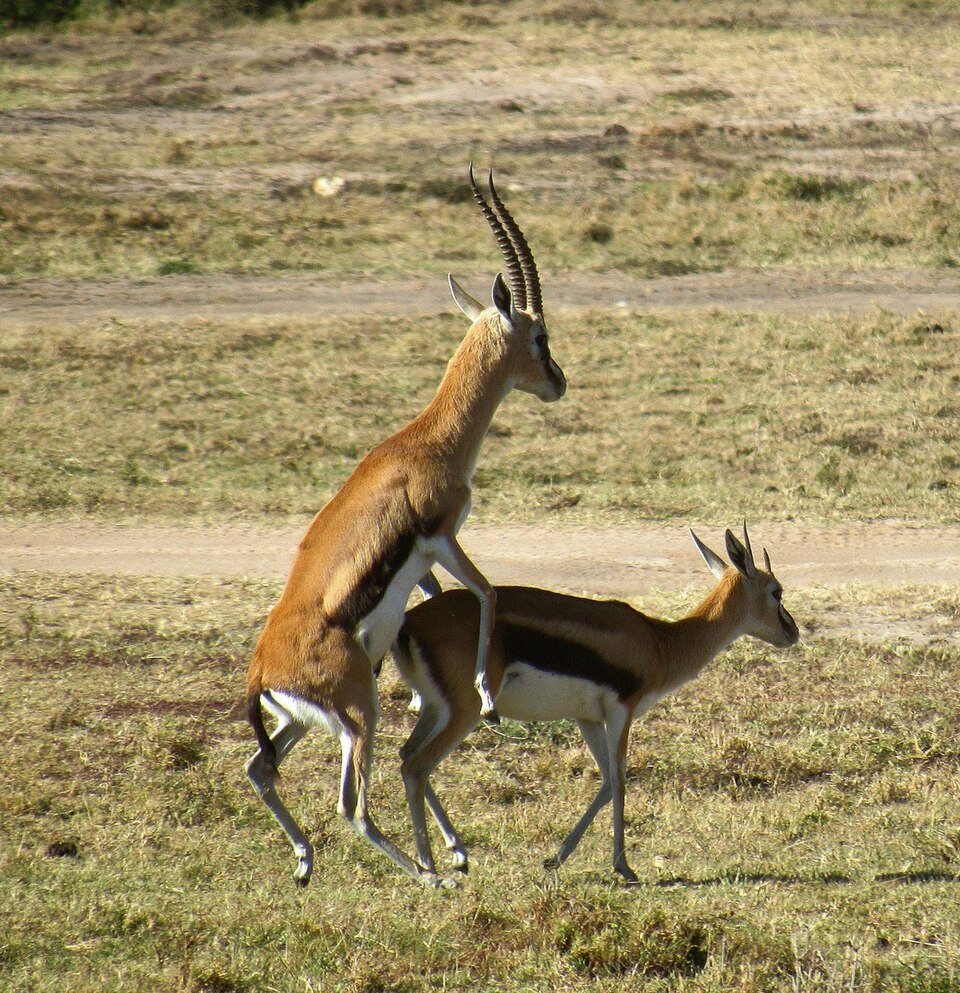
Photo: Светлана Царахова · CC0
Eudorcas thomsonii
Conservation status: Unknown
Basic stats
Diet
Fresh grasses in the wet season; more browse in the dry season
Habitat
Short grassland on firm dry ground, savanna
Range
Kenya and Tanzania, especially the Serengeti
Litter size
1 fawn
Gestation period
About 170 days
Size
Shoulder height 60–70cm; tail 15–27cm
Weight
20–35kg (males), 15–25kg (females)
Thomson's gazelle is a relatively small gazelle, 60–70cm at the shoulder. Males weigh 20–35kg and females 15–25kg. The face has white eye rings, black stripes from the eye corner to the nose, rufous stripes from the horns to the nose and a dark nose patch. The coat is sandy brown to rufous with a black band across the flanks and a buff band above it, and short black streaks mark the white rump. The black tail is 15–27cm. Both sexes carry ringed horns, 25–43cm in males and 7–15cm in females. Grant's gazelle is larger and its white rump patch reaches above the tail (Wikipedia, general species account).
It lives in the savannas and grasslands of Kenya and Tanzania, and is especially common in the Serengeti. It prefers short grassland on firm, dry ground, favouring Cynodon, Harpachne and Themeda grasses. It is a mixed feeder, eating mainly fresh grass in the wet seasons and more foliage and seeds of woody plants and forbs in the dry. Wikipedia reports speeds up to 80 kph, and names the cheetah as its main predator (Wikipedia, general species account). Gestation is about 170 days in both AnAge and COMBINE.
Where to see Thomson's Gazelle in Kenya
GBIF records grouped by protected area. They show where the species has been reported, not that it is there now, and they are not population counts.
Recorded in 27 protected areas (1908–2026). The 8 with the most records:
- Lake Nakuru National Park: 129 records (1989–2026)
- Masai Mara: 79 records (1985–2026)
- Amboseli National Park: 40 records (1989–2026)
- Ol Pejeta Conservancy: 26 records (2012–2026)
- Shurr Community Conservancy: 21 records (2012)
- Chyulu Hills: 18 records (2015)
- Segera Conservancy: 17 records (2012)
- Mugie Conservancy;Mugie Wildlife Conservancy: 13 records (2008–2012)
Quick answers
- What does the Thomson's Gazelle eat?
- Fresh grasses in the wet season; more browse in the dry season
- What habitat does the Thomson's Gazelle live in?
- Short grassland on firm dry ground, savanna
- Where is the Thomson's Gazelle found?
- Kenya and Tanzania, especially the Serengeti
- What is the litter size of the Thomson's Gazelle?
- 1 fawn
- How long is the gestation period of the Thomson's Gazelle?
- About 170 days
- How big is the Thomson's Gazelle?
- Shoulder height 60–70cm; tail 15–27cm
- How much does the Thomson's Gazelle weigh?
- 20–35kg (males), 15–25kg (females)