
 Wildlife
of Kenya
Greater Honeyguide
Barbets & Woodpeckers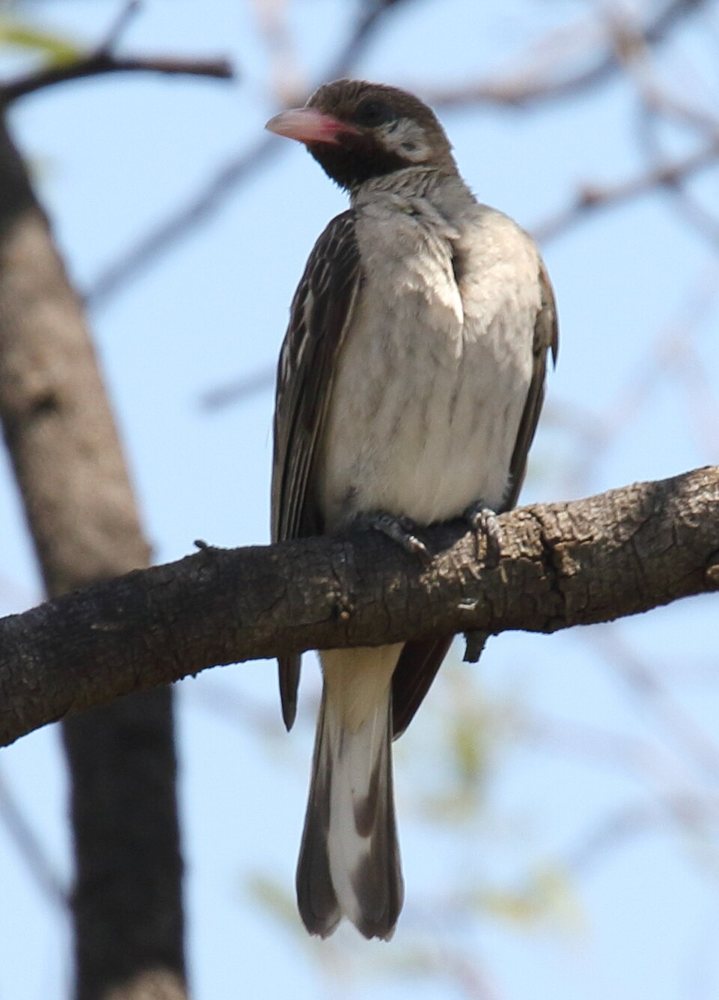
Photo: Dominic Sherony · CC BY-SA 2.0 (May be cropped or resized)
Indicator indicator
Conservation status: Unknown
Basic stats
Diet
Beeswax, insects and larvae
Habitat
Woodland
Range
Sub-Saharan Africa
Weight
About 50g
Greater Honeyguides are sturdy olive-brown birds with pale streaking, a stout bill and a broad head. They inhabit African woodland, where bee colonies and other insect prey occur among trees This species occurs in Sub-Saharan Africa, where Woodland is characteristic. Across Sub-Saharan Africa, it uses environments such as Woodland. AVONET gives Greater Honeyguide a culmen measurement of 17.6 mm. (Wikipedia, general species account; AVONET, Tobias et al. 2022)
They feed on beeswax, insects and bee larvae, and use calls or behavior associated with honey-hunting mammals and people. Their brood-parasitic nesting places eggs in the nests of other species Its diet includes Beeswax, insects and larvae, and it forages in Woodland. Descriptions link it to Woodland throughout Sub-Saharan Africa. The largest EltonTraits shares for Greater Honeyguide are nectar (60%) and invertebrates (20%). (Wikipedia, general species account; EltonTraits, Wilman et al. 2014)
Where to see Greater Honeyguide in Kenya
GBIF records grouped by protected area. They show where the species has been reported, not that it is there now, and they are not population counts.
Recorded in 77 protected areas (1955–2024). The 8 with the most records:
- Lake Nakuru National Park: 268 records (1969–2024)
- Masai Mara: 202 records (1973–2024)
- Arabuko-Sokoke Forest Reserve: 144 records (1968–2024)
- Mpala Ranch: 100 records (1996–2024)
- Nairobi National Park: 98 records (1973–2024)
- Mount Kenya National Reserve: 97 records (2006–2024)
- Buffalo Springs National Reserve: 73 records (1983–2024)
- Mara Triangle: 73 records (1993–2024)
Quick answers
- What does the Greater Honeyguide eat?
- Beeswax, insects and larvae
- What habitat does the Greater Honeyguide live in?
- Woodland
- Where is the Greater Honeyguide found?
- Sub-Saharan Africa
- How much does the Greater Honeyguide weigh?
- About 50g