
 Wildlife
of Kenya
Green-backed Honeybird
Barbets & Woodpeckers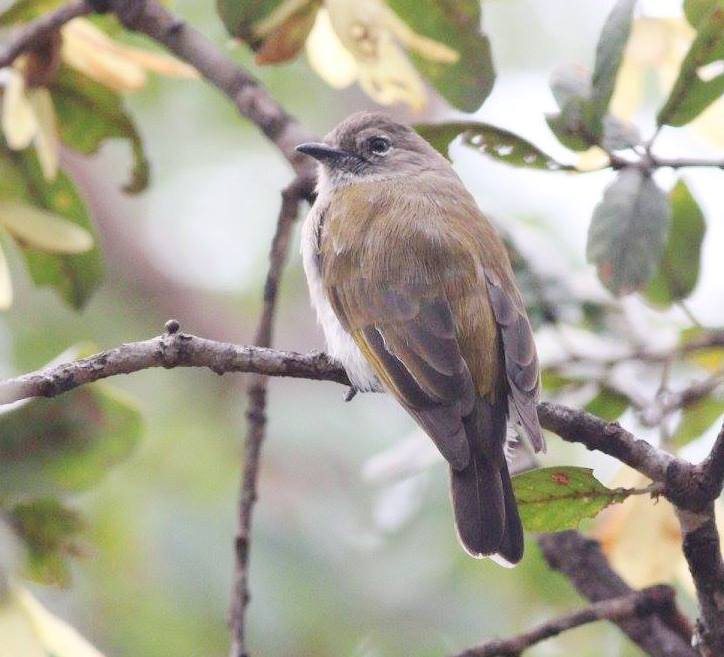
Photo: Maans Booysen, Birding Weto · CC BY-SA 4.0 (May be cropped or resized)
Prodotiscus zambesiae
Conservation status: Unknown
The green-backed honeybird parasitizes nests belonging to three white-eye species. It eats insects and sometimes consumes the waxy coating shed by scale insects. Adult males and females have ashy gray, at times white, underparts, considered an adaptation to their surroundings. The upperparts are gray-green; white marks both the outer tail feathers and their tips. (Wikipedia, general species account)
A white patch between the back and side can be lifted upright. The bird has black legs and bill. In Angola, individuals appear greener, less golden and darker overall than birds in other parts of the range. This color distinction is characteristic of the Angola population. (Wikipedia, general species account)
Where to see Green-backed Honeybird in Kenya
GBIF records grouped by protected area. They show where the species has been reported, not that it is there now, and they are not population counts.
Recorded in 10 protected areas (1980–2024). The 8 with the most records:
- Nairobi National Park: 221 records (1980–2024)
- Mount Kenya National Reserve: 81 records (2003–2024)
- Upper Imenti Forest Reserve: 19 records (1984–2024)
- Ol Donyo Sabuk National Park: 12 records (2015–2024)
- Silole Conservancy: 6 records (2008–2024)
- Lake Nakuru National Park: 5 records (2006–2024)
- Mount Kenya National Park: 5 records (2001–2021)
- Soysambu Conservancy: 4 records (2022–2024)