
 Wildlife
of Kenya
Forest Giant Squirrel
Rodents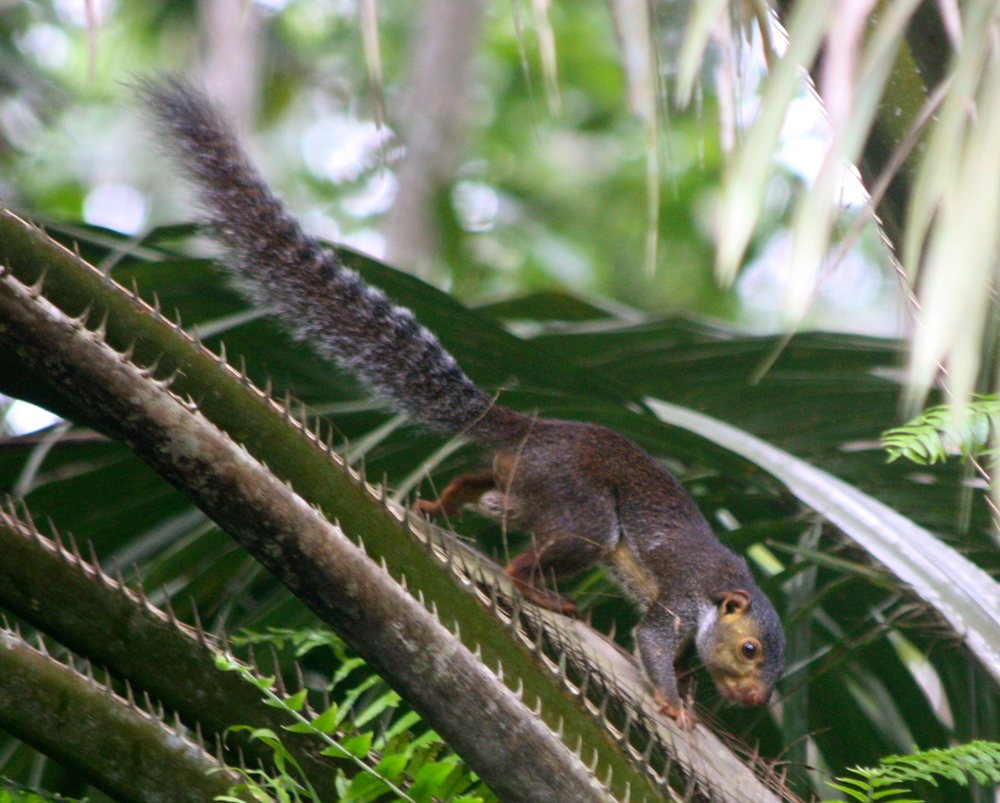
Photo: no rights reserved · CC0
Protoxerus stangeri
Conservation status: Unknown
Basic stats
Diet
Fruit and seeds of trees and lianas, with some other plant matter and few insects
Habitat
Primary, secondary and fringing forest, plantations and farmland with trees
Range
From Sierra Leone east to western Kenya, south to northern Angola and northern Tanzania
Litter size
Usually one or two young
The forest giant squirrel, also known as Stanger's squirrel, is the largest arboreal squirrel on the continent. Its large, round head has strong cheek muscles, and its short, stiff fur is medium brown grizzled with buff or yellow, with brownish hairs on the crown and nape tipped white for a frosted look. The ears are small, rounded and nearly hairless. The chest is white and the underparts are almost hairless, showing yellowish skin. The limbs are compact and strong, and the long bushy tail, barred black and white, is held horizontally when moving and hangs down when still (Wikipedia, general species account).
It lives across tropical western and central Africa, mostly in the upper canopy and only occasionally on the ground. It inhabits primary and secondary forest, fringing forest, plantations and gardens with trees. It is solitary and diurnal, foraging mainly for fruit and seeds, and it can crack the tough nuts of several tree species. Its home range covers a few hectares, and it tends to drive other squirrels away from feeding trees. Eagles and other large birds of prey take it. The nest is a tree cavity lined with leafy twigs, and the squirrel leaves at dawn and returns many hours later. Litters are usually one or two young (Wikipedia, general species account).
Quick answers
- What does the Forest Giant Squirrel eat?
- Fruit and seeds of trees and lianas, with some other plant matter and few insects
- What habitat does the Forest Giant Squirrel live in?
- Primary, secondary and fringing forest, plantations and farmland with trees
- Where is the Forest Giant Squirrel found?
- From Sierra Leone east to western Kenya, south to northern Angola and northern Tanzania
- What is the litter size of the Forest Giant Squirrel?
- Usually one or two young