
 Wildlife
of Kenya
Greater Cane Rat
Rodents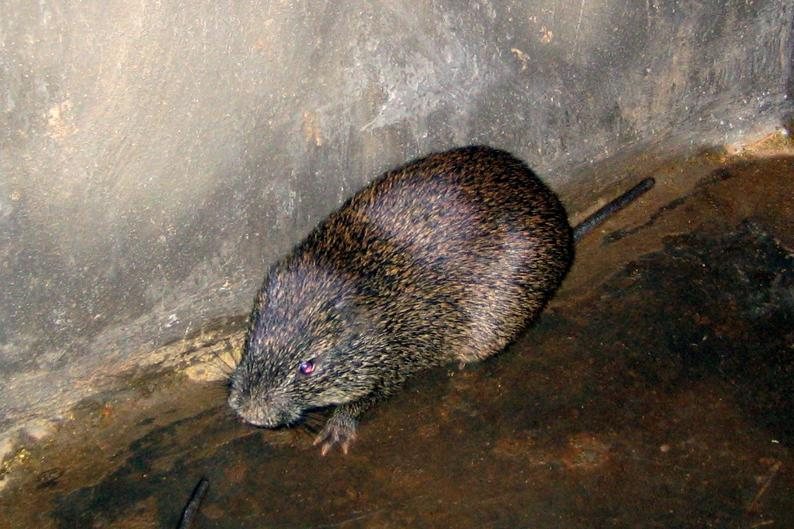
Photo: Thryonomys_swinderianus.jpg: rbairdpccam derivative work: Jacek555 · CC BY-SA 2.0 (May be cropped or resized)
Thryonomys swinderianus
Conservation status: Unknown
Basic stats
Diet
Grasses and crops such as maize, wheat, sugarcane and cassava
Habitat
Reed-beds, riverbanks, marshy areas and sugarcane fields
Range
Sub-Saharan Africa
Gestation period
About 155 days
Size
Head-body 43–60cm; tail 16–19.5cm
Weight
3.2–5.2kg
The greater cane rat, also called the grasscutter in parts of West Africa, is one of two cane rat species, which together form a small family of hystricognath rodents from Africa. Among African rodents only the Hystrix porcupines are bigger. Head-body length is 43–60cm and the tail 16–19.5cm. The usual weight is 3.2–5.2kg, with males averaging about 4.5kg and females 3.4–3.8kg, and some individuals reach 7–9kg. Its ears are rounded and its nose is short, with coarse, bristly fur, and the front paws are smaller than the back ones and bear three toes apiece (Wikipedia, general species account).
Greater cane rats live across Sub-Saharan Africa near reed-beds and riverbanks, and their habitat includes marshy areas, long-grass savanna and fields of sugarcane, maize and guinea corn, but they avoid rainforests, dry deserts and dry shrublands (GBIF description, Thryonomyidae). Nocturnal, they forage alone along trails through reeds and grass towards water, and they usually live in small family groups of up to about 12 members. They nest in grasses or dig burrows, and they are considered a crop pest because they feed on maize, wheat, sugarcane and cassava. People also hunt them as bushmeat, and captive rearing is beginning. Gestation lasts about 155 days, and individuals may live more than four years (AnAge; Wikipedia, general species account).
Quick answers
- What does the Greater Cane Rat eat?
- Grasses and crops such as maize, wheat, sugarcane and cassava
- What habitat does the Greater Cane Rat live in?
- Reed-beds, riverbanks, marshy areas and sugarcane fields
- Where is the Greater Cane Rat found?
- Sub-Saharan Africa
- How long is the gestation period of the Greater Cane Rat?
- About 155 days
- How big is the Greater Cane Rat?
- Head-body 43–60cm; tail 16–19.5cm
- How much does the Greater Cane Rat weigh?
- 3.2–5.2kg