
 Wildlife
of Kenya
Damara Woolly Bat
Bats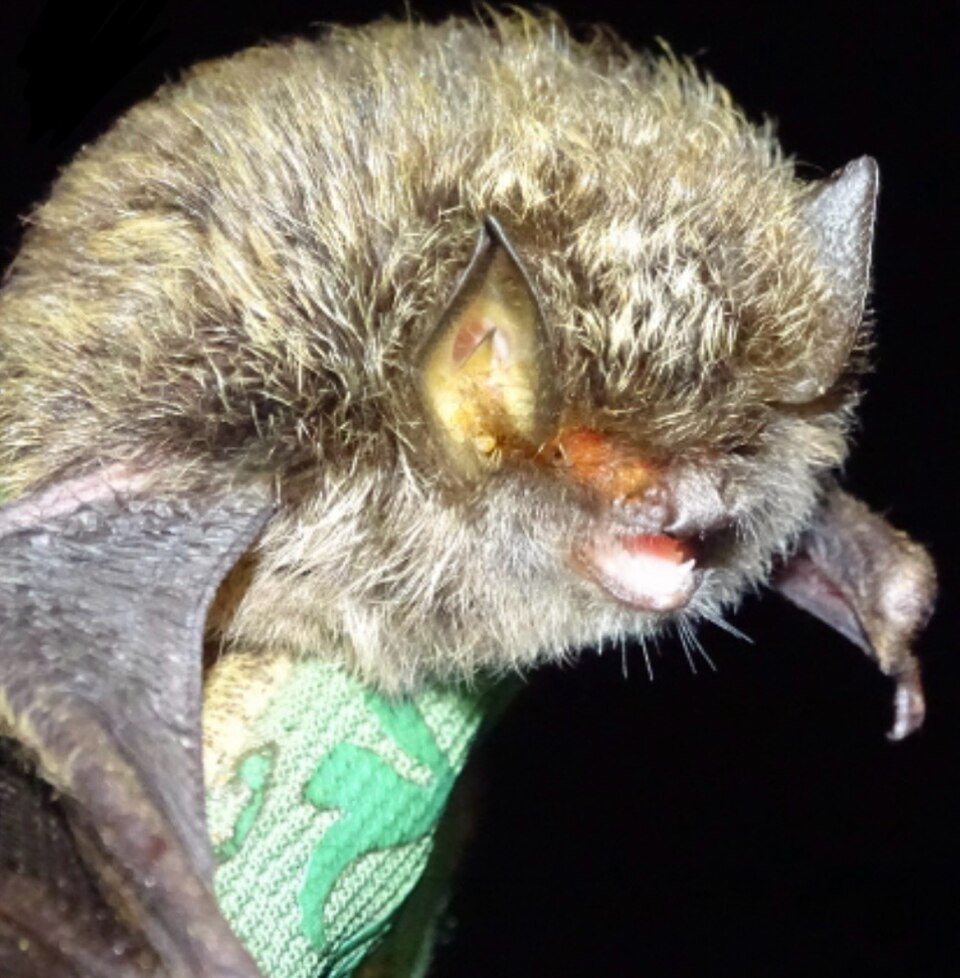
Photo: Unknown authorUnknown author · CC BY 4.0 (May be cropped or resized)
Kerivoula argentata
Conservation status: Unknown
Basic stats
Diet
Insects, probably taken near the ground in cluttered vegetation
Habitat
Moist savanna, woodland and coastal forest; evergreen and riverine forest
Range
Much of sub-Saharan Africa
Size
Head and body 34–50mm; tail 40–52mm; forearm 28–39mm
The Damara woolly bat is a nocturnal, insect-eating vesper bat in the family Vespertilionidae. Its coat is rich brown mixed with grizzled silver above and grey or whitish below, and its ears are proportionally large with rounded tips. A fringe of hair along the outer edge of the interfemoral membrane is distinctive to this species. Its head and body measure 34–50mm, its tail 40–52mm and its forearm 28–39mm. Its echolocation is a low-intensity call of about two milliseconds, with a low frequency peak near 90–118kHz, which lets it come within 3m of prey before the calls can be detected (Wikipedia, general species account; GBIF description, Vespertilionidae).
Its range covers much of sub-Saharan Africa, including Kenya, Malawi, Namibia, South Africa and Zimbabwe, and it occupies moist savanna, woodland and coastal forest. In southern Africa it seems confined to well-watered riverine areas in dry country. It tends to forage near the ground in habitats cluttered by vegetation. It uses abandoned nests of weaverbirds and scarlet-chested sunbirds, and in the Uzungwa Scarp Forest Reserve in Tanzania two lactating females were caught at the end of November (Wikipedia, general species account; GBIF description, Vespertilionidae).
Quick answers
- What does the Damara Woolly Bat eat?
- Insects, probably taken near the ground in cluttered vegetation
- What habitat does the Damara Woolly Bat live in?
- Moist savanna, woodland and coastal forest; evergreen and riverine forest
- Where is the Damara Woolly Bat found?
- Much of sub-Saharan Africa
- How big is the Damara Woolly Bat?
- Head and body 34–50mm; tail 40–52mm; forearm 28–39mm