
 Wildlife
of Kenya
Black Heron
Storks, Herons, Ibises & Flamingos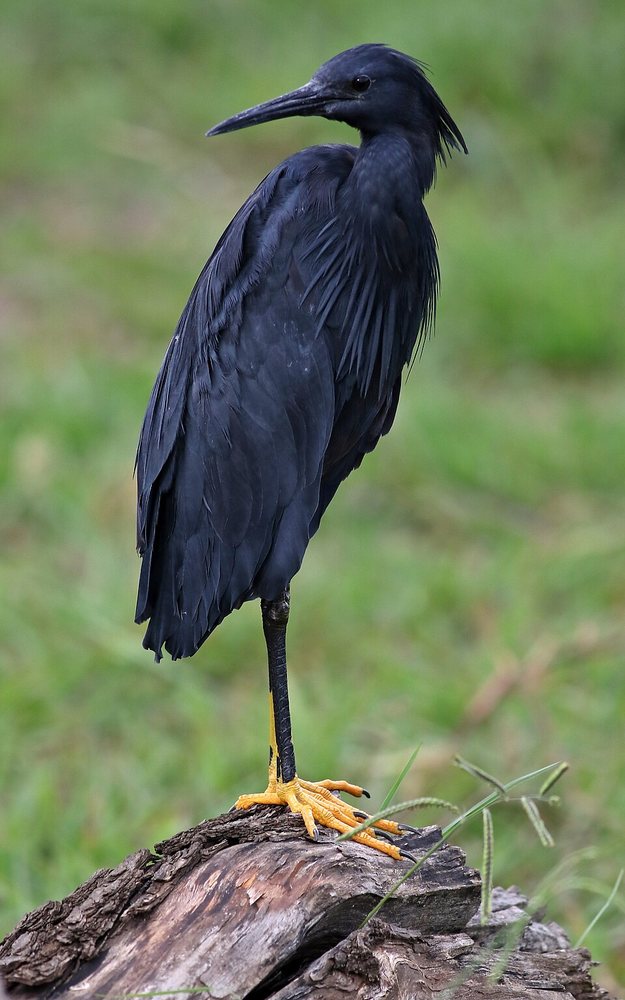
Photo: Derek Keats from Johannesburg, South Africa · CC BY 2.0 (May be cropped or resized)
Egretta ardesiaca
Conservation status: Unknown
Basic stats
Diet
Fish, aquatic insects, crustaceans, and amphibians (Wikipedia, general species account; EltonTraits, Wilman et al. 2014)
Habitat
Shallow open water, marshes, river edges, rice fields, and tidal flats (Wikipedia, general species account)
Range
Sub-Saharan Africa and Madagascar (Wikipedia, general species account)
Clutch size
3
Weight
324
Black Herons occur across much of Sub-Saharan Africa and Madagascar, and also in Madagascar. They prefer shallow open waters such as freshwater lake and pond margins, marshes, river edges, rice fields, and seasonally flooded grassland. Coastal birds use tidal rivers, creeks, alkaline lakes, and tidal flats. The average AVONET mass is 324 g (Wikipedia, general species account; AVONET, Tobias et al. 2022).
Small fish are the principal recorded prey, with aquatic insects, crustaceans, and amphibians also taken. The heron may spread its wings into a canopy that shades the water while it fishes, alone or in groups. Twig nests are placed over water in trees, bushes, or reed beds; clutches contain two to four pale-blue eggs (Wikipedia, general species account; EltonTraits, Wilman et al. 2014).
Where to see Black Heron in Kenya
GBIF records grouped by protected area. They show where the species has been reported, not that it is there now, and they are not population counts.
Recorded in 15 protected areas (1973–2026). The 8 with the most records:
- Amboseli National Park: 228 records (1983–2026)
- Lake Nakuru National Park: 90 records (1973–2024)
- Tsavo West National Park: 89 records (1981–2024)
- Mombasa Marine Reserve: 57 records (1988–2024)
- Crescent Island Widlife Sanctuary: 55 records (2005–2023)
- Watamu Marine National Park: 41 records (1973–2024)
- Tana Delta Community Conservancy: 11 records (2011–2024)
- Arabuko-Sokoke Forest Reserve: 8 records (1982–2024)
Quick answers
- What does the Black Heron eat?
- Fish, aquatic insects, crustaceans, and amphibians (Wikipedia, general species account; EltonTraits, Wilman et al. 2014)
- What habitat does the Black Heron live in?
- Shallow open water, marshes, river edges, rice fields, and tidal flats (Wikipedia, general species account)
- Where is the Black Heron found?
- Sub-Saharan Africa and Madagascar (Wikipedia, general species account)
- How many eggs does the Black Heron lay?
- 3
- How much does the Black Heron weigh?
- 324