
 Wildlife
of Kenya
African Civet
Hyenas, Mongooses, Civets & Mustelids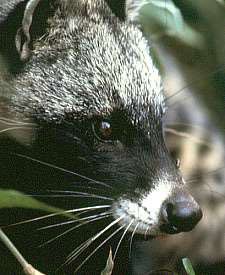
Photo: The original uploader was Baldhur at German Wikipedia. (Original text: http://www.atourhands.com/civet.html) · Public domain
Civettictis civetta
Conservation status: Unknown
Basic stats
Diet
Omnivorous: small vertebrates, invertebrates, eggs, carrion and plants
Habitat
Forest and open habitat with dense ground cover, up to 1,700m
Range
Sub-Saharan Africa
Litter size
About 2.3–2.5
Gestation period
About 65–68 days
Size
Head and body 67–84cm; tail 34–47cm; shoulder height about 40cm
Weight
11–15kg (7–20kg)
The African civet is the largest viverrid in Africa, with a head and body of 67–84cm, a tail of 34–47cm and a shoulder height of about 40cm. Weight averages 11–15kg within a range of 7–20kg. The coarse, wiry fur ranges from white to creamy yellow to reddish with dark brown to black stripes, spots and blotches, plus black bands across the eyes and neck and an erectile dorsal crest. The hindquarters are disproportionately large, and the long claws are semi-retractile (Wikipedia, general species account).
It lives in sub-Saharan Africa in woodland, secondary forest and open habitat with dense ground cover, often along rivers, sometimes in plantations or near settlements, up to 1,700m. It is nocturnal and solitary, sleeping by day in dense vegetation. It is an omnivorous generalist eating small vertebrates, invertebrates, eggs, carrion and plants, including toxic termites and millipedes. Gestation is about 65–68 days and litters average about 2.3–2.5 (GBIF description, Viverridae; Wikipedia, general species account; AnAge; COMBINE).
Quick answers
- What does the African Civet eat?
- Omnivorous: small vertebrates, invertebrates, eggs, carrion and plants
- What habitat does the African Civet live in?
- Forest and open habitat with dense ground cover, up to 1,700m
- Where is the African Civet found?
- Sub-Saharan Africa
- What is the litter size of the African Civet?
- About 2.3–2.5
- How long is the gestation period of the African Civet?
- About 65–68 days
- How big is the African Civet?
- Head and body 67–84cm; tail 34–47cm; shoulder height about 40cm
- How much does the African Civet weigh?
- 11–15kg (7–20kg)