
 Wildlife
of Kenya
Tsessebe
Antelopes & Other Bovids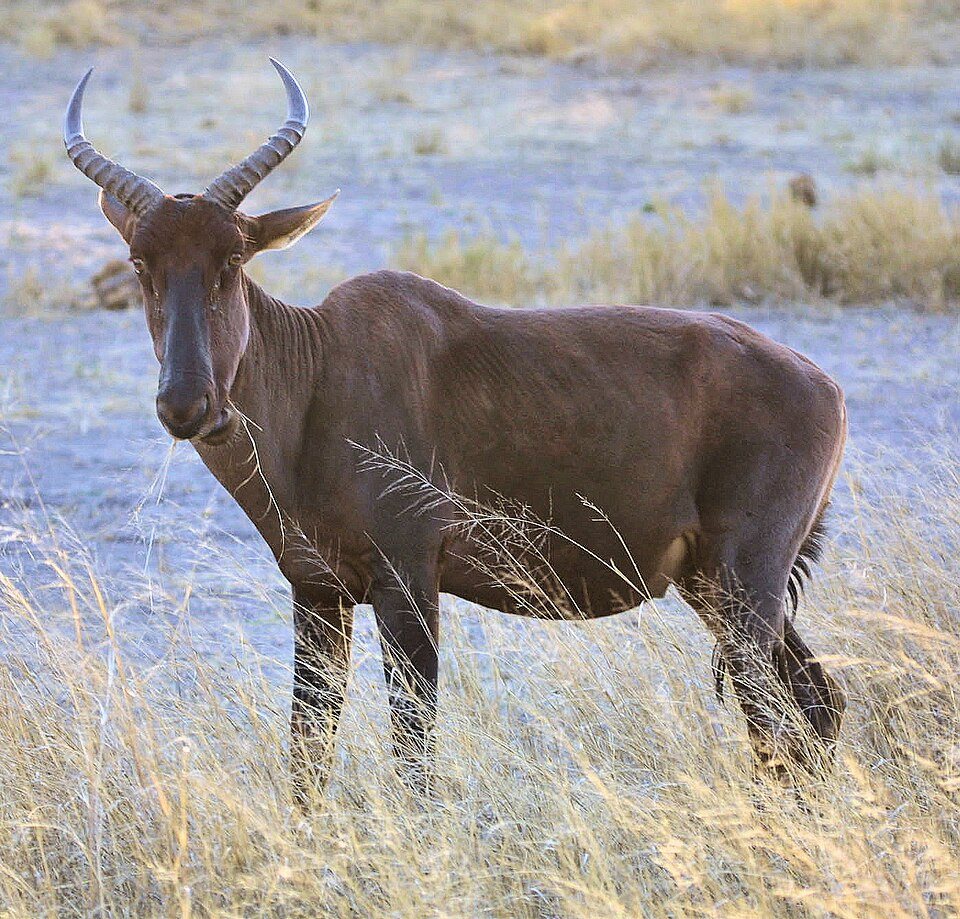
Photo: Paulmaz at English Wikipedia · CC BY-SA 3.0 (May be cropped or resized)
Damaliscus lunatus
Conservation status: Unknown
Basic stats
Diet
Grasses
Habitat
Grasslands on woodland edges and near water; floodplains in the dry season, open woodland in the rains
Range
Africa
Litter size
1 calf
Size
Head and body 150–210cm; shoulder height 100–130cm; tail 40–60cm
Weight
68–160kg
The tsessebe is the southern form of Damaliscus lunatus, a large African antelope also called topi, sassaby or tiang across its range. The body is chestnut or reddish brown, with a dark mask-like face, black tail tufts, greyish or bluish-black patches on the upper forelimbs and thighs, yellowish hindlimbs and a white belly. The head is elongated, there is a hump at the base of the neck, and the ringed horns are lyrate. Head and body measure 150–210cm, shoulder height is 100–130cm, and mass is 68–160kg, with males larger and darker than females (Wikipedia, general species account).
Western tsessebe live on grasslands, especially at woodland edges and near surface water. In the dry season they tend to use floodplains and in the rains they move into open woodland. They are very fast and can hold a heavy gallop, and they crawl under obstacles instead of jumping them. Groups are of three kinds: territorial males, herds of females with young, and bachelor groups. In northeastern Botswana herds average 3–6 animals and bachelor groups average eight, and 194 were counted together in the Mababe Depression. In Kruger, male territories average 2–4 km² and are marked with dung piles and gland secretions (GBIF description, Bovidae).
Quick answers
- What does the Tsessebe eat?
- Grasses
- What habitat does the Tsessebe live in?
- Grasslands on woodland edges and near water; floodplains in the dry season, open woodland in the rains
- Where is the Tsessebe found?
- Africa
- What is the litter size of the Tsessebe?
- 1 calf
- How big is the Tsessebe?
- Head and body 150–210cm; shoulder height 100–130cm; tail 40–60cm
- How much does the Tsessebe weigh?
- 68–160kg