
 Wildlife
of Kenya
Oribi
Antelopes & Other Bovids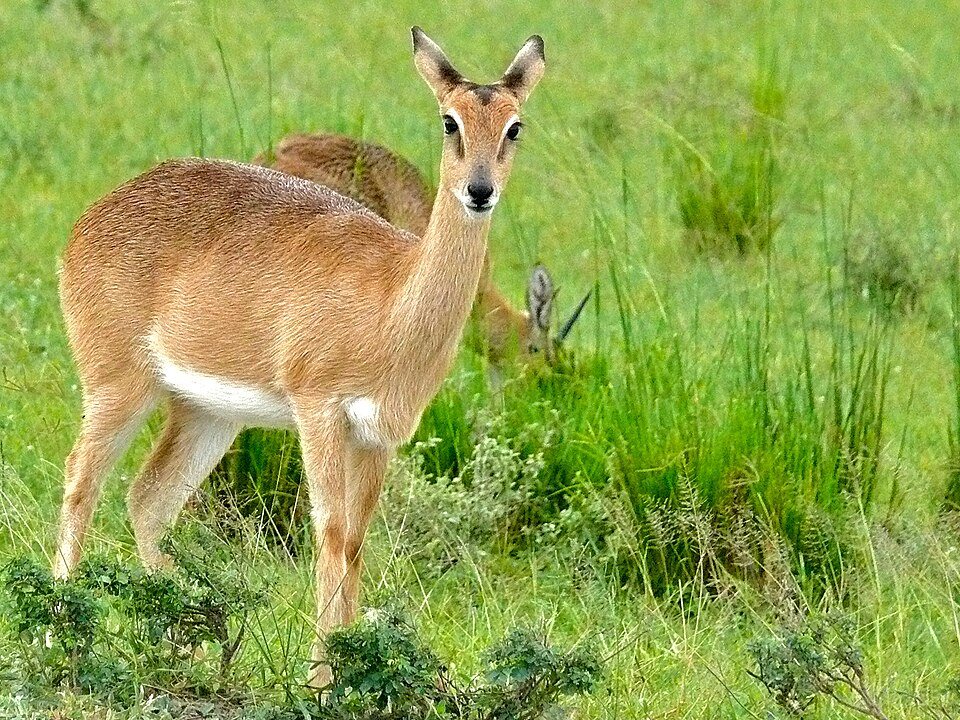
Photo: Bernard DUPONT from FRANCE · CC BY-SA 2.0 (May be cropped or resized)
Ourebia ourebi
Conservation status: Unknown
Basic stats
Diet
Mostly fresh grasses; some browse
Habitat
Savanna, floodplains and grasslands with 10–100cm grass, up to 2,000m
Range
Patchy from Senegal to Ethiopia and Eritrea, south to Angola and the Eastern Cape
Litter size
1 calf
Gestation period
6–7 months
Size
Shoulder height 50–67cm; head and body 92–110cm
Weight
12–22kg
The oribi is a small, slender antelope with a slightly raised back and long neck and limbs. It reaches about 50–67cm at the shoulder and weighs 12–22kg, with head and body of 92–110cm. The glossy coat is yellowish to rufous brown, contrasting with a white chin, throat, underparts and rump. The bushy tail is brown to black outside and white inside. Only males have horns, thin and straight, 8–18cm long, smooth at the tips and ringed at the base. It has at least six well-developed scent glands, and eight subspecies are identified (Wikipedia, general species account).
Oribi are active mainly by day and live in small herds of up to four, where males defend territories of 25–100 hectares. They are mostly grazers, preferring fresh grass, and occasionally browse. They can show polyandry, polygyny or polygynandry depending on habitat. Gestation lasts six to seven months and a single calf is born, with births peaking in November and December in southern Africa. Weaning takes four to five months. The species occurs patchily from Senegal to Ethiopia and Eritrea and south to Angola and the Eastern Cape (Wikipedia, general species account).
Quick answers
- What does the Oribi eat?
- Mostly fresh grasses; some browse
- What habitat does the Oribi live in?
- Savanna, floodplains and grasslands with 10–100cm grass, up to 2,000m
- Where is the Oribi found?
- Patchy from Senegal to Ethiopia and Eritrea, south to Angola and the Eastern Cape
- What is the litter size of the Oribi?
- 1 calf
- How long is the gestation period of the Oribi?
- 6–7 months
- How big is the Oribi?
- Shoulder height 50–67cm; head and body 92–110cm
- How much does the Oribi weigh?
- 12–22kg