
 Wildlife
of Kenya
Black-and-rufous Sengi
Aardvark & Elephant Shrews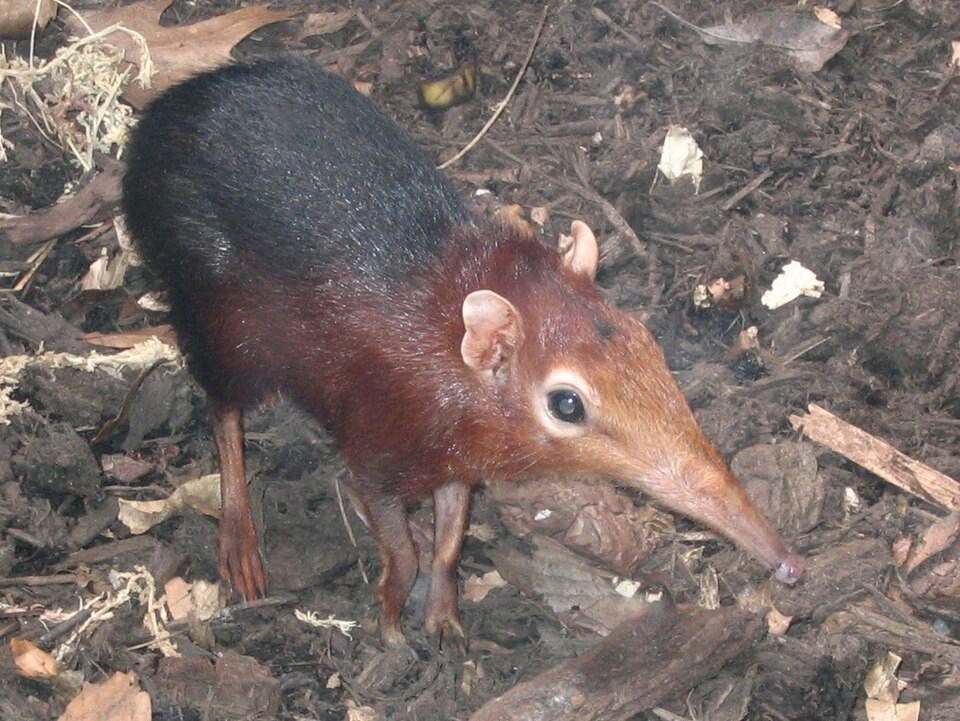
Photo: ZeWrestler · Public domain
Rhynchocyon petersi
Conservation status: Unknown
Basic stats
Diet
Invertebrates, mainly beetles, termites and centipedes
Habitat
Lowland montane and dense forests, often in small fragmented patches
Range
Kenya and Tanzania
Litter size
1–2
Gestation period
About 40 days
Size
Head-body 252–290mm, tail 218–252mm
Weight
450–700g
The black and rufous sengi, also called the Zanj sengi or Zanj elephant shrew, is one of 17 sengi species found only in Africa, and like other members of its genus it is relatively large, weighing 450–700g. Its shoulders are orange, rufous-orange or maroon depending on region, shading to black on the back and rump, and its head and snout are bright rufous. The tail is nearly hairless with orange-brown skin, and the ears are nearly hairless too. Head-body length is 252–290mm and tail 218–252mm (Wikipedia, general species account; GBIF description, Macroscelididae).
It lives in the lowland montane and dense forests of Kenya and Tanzania, typically in small, fragmented forest patches in the Eastern Arc Mountains, and the Chome Forest Reserve in Tanzania is one of its more undisturbed habitats. It digs insects such as beetles, termites and centipedes from the soil with its proboscis and licks them up with its tongue. Like most sengis, it lives in monogamous pairs defending territories measured in hectares, and it builds ground-level nests of dry leaf litter, often at the base of trees. Gestation lasts about 40 days, with litters of one or two semi-precocial young that stay in the nest for about two weeks before weaning (Wikipedia, general species account; GBIF description, Macroscelididae).
Quick answers
- What does the Black-and-rufous Sengi eat?
- Invertebrates, mainly beetles, termites and centipedes
- What habitat does the Black-and-rufous Sengi live in?
- Lowland montane and dense forests, often in small fragmented patches
- Where is the Black-and-rufous Sengi found?
- Kenya and Tanzania
- What is the litter size of the Black-and-rufous Sengi?
- 1–2
- How long is the gestation period of the Black-and-rufous Sengi?
- About 40 days
- How big is the Black-and-rufous Sengi?
- Head-body 252–290mm, tail 218–252mm
- How much does the Black-and-rufous Sengi weigh?
- 450–700g