
 Wildlife
of Kenya
African Yellow Bat
Bats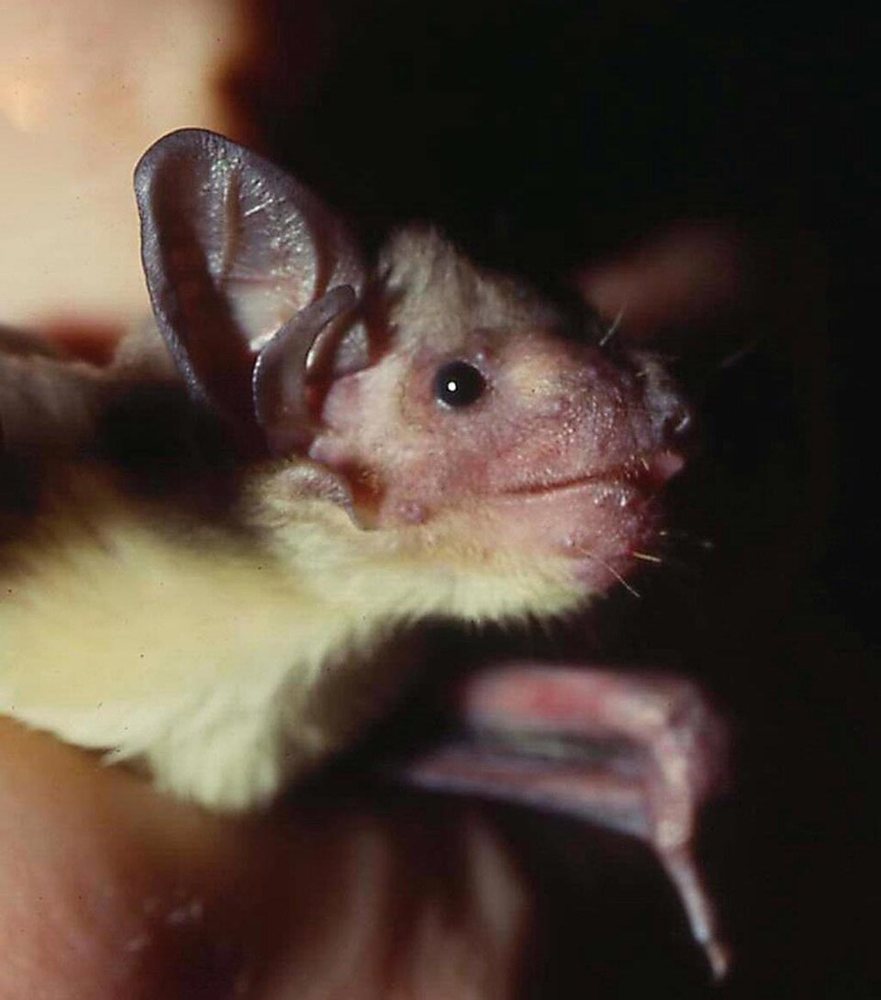
Photo: Susan Ellis, , Bugwood.org · CC BY 3.0 us (May be cropped or resized)
Scotophilus dinganii
Conservation status: Unknown
Basic stats
Diet
Mainly beetles, plus bugs, flies, termites, moths and lacewings
Habitat
Savanna, woodland and bushland, often roosting in houses
Range
Sub-Saharan Africa, from Senegal and Gambia to the Eastern Cape of South Africa
Litter size
Twins
Size
Body about 130mm; forearm 50–58mm
Weight
About 23g
The African yellow bat, also called the African yellow house bat or Dingan's bat, is one of fifteen species in the vesper bat genus Scotophilus. It is a medium-sized bat with a short, broad snout and clearly visible eyes. The back is light brown and the belly yellow, while the wings may be olive, grey or red and the interfemoral membrane is brown and translucent. Average total body length is about 130mm, the forearm measures 50–58mm, and average weight is about 23g (Wikipedia, general species account).
It is native to Sub-Saharan Africa, occurring from Senegal and Gambia east to Djibouti, Eritrea and Somalia and south to the Eastern Cape of South Africa (Wikipedia, general species account). GBIF reports it across nearly every habitat type south of the Sahara, among them woodland savanna, thicket, riverine forest and coastal and montane forest (GBIF description, Vespertilionidae). It roosts in tree hollows and in cracks in walls and roofs, often in houses, and mating takes place in southern Africa's autumn, with twins born in late November or early December (Wikipedia, general species account). Wikipedia says colonies rarely exceed 12, while GBIF reports groups of up to 20 (Wikipedia, general species account; GBIF description, Vespertilionidae).
Where to see African Yellow Bat in Kenya
GBIF records grouped by protected area. They show where the species has been reported, not that it is there now, and they are not population counts.
Recorded in 10 protected areas (1969–2014). The 8 with the most records:
- Kagamega Forest: 37 records (2014)
- Arabuko-Sokoke Forest Reserve: 23 records (2006)
- Tsavo East National Park: 17 records (1973–2008)
- Meru National Park: 14 records (2012–2013)
- Rukinga Conservancy: 11 records (1973–1976)
- Amboseli National Park: 8 records (2012)
- Watamu Marine National Park: 7 records (2006)
- Marungu Hill Conservancy: 4 records (1973)
Quick answers
- What does the African Yellow Bat eat?
- Mainly beetles, plus bugs, flies, termites, moths and lacewings
- What habitat does the African Yellow Bat live in?
- Savanna, woodland and bushland, often roosting in houses
- Where is the African Yellow Bat found?
- Sub-Saharan Africa, from Senegal and Gambia to the Eastern Cape of South Africa
- What is the litter size of the African Yellow Bat?
- Twins
- How big is the African Yellow Bat?
- Body about 130mm; forearm 50–58mm
- How much does the African Yellow Bat weigh?
- About 23g