
 Wildlife
of Kenya
African Straw-colored Fruit Bat
Bats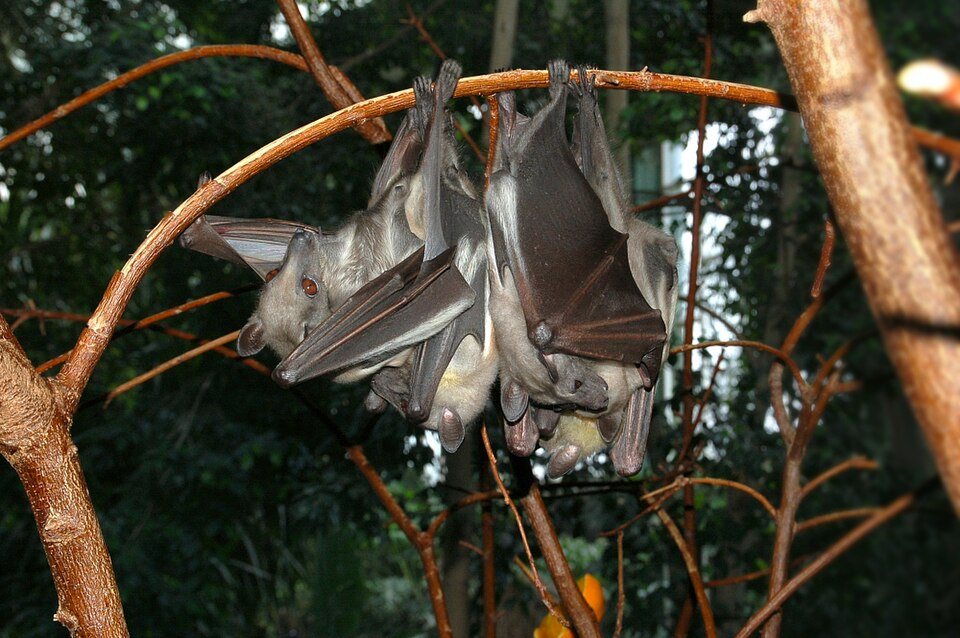
Photo: Fritz Geller-Grimm · CC BY-SA 2.5 (May be cropped or resized)
Eidolon helvum
Conservation status: Unknown
Basic stats
Diet
Wild: bark, flowers, leaves, nectar and fruit
Habitat
Forest and savanna, riverine and swamp forest, up to about 2000m
Range
Sub-Saharan Africa and the southwestern Arabian Peninsula
Litter size
1
Gestation period
275 days
The African straw-colored fruit bat, Eidolon helvum, is a large fruit bat in the family Pteropodidae and the most widely distributed African megabat. The name refers to the silky, yellowish straw-coloured fur, and its wings are black, with pale, tawny back hair. Males tend to be bright orange, while females are more yellowish, and males are larger than females. The bat has large cheeks, eyes and ears, a very large heart, and long, tapered wings, while its pouch-like cheeks are also large (Wikipedia, general species account; GBIF description, Pteropodidae).
It occurs across sub-Saharan Africa and the southwestern Arabian Peninsula, in forest and savanna zones. It is highly social, roosting in colonies of over 100,000, and at night smaller groups leave to find food. Up to ten million gather in Kasanka National Park, Zambia, between October and December. It eats bark, flowers, leaves, nectar and fruit in the wild, and it is a major seed disperser for the African teak. Mating runs from April to June, implantation is delayed until October, and births fall in February, with GBIF giving February to May and Wikipedia February and March (Wikipedia, general species account; GBIF description, Pteropodidae).
Quick answers
- What does the African Straw-colored Fruit Bat eat?
- Wild: bark, flowers, leaves, nectar and fruit
- What habitat does the African Straw-colored Fruit Bat live in?
- Forest and savanna, riverine and swamp forest, up to about 2000m
- Where is the African Straw-colored Fruit Bat found?
- Sub-Saharan Africa and the southwestern Arabian Peninsula
- What is the litter size of the African Straw-colored Fruit Bat?
- 1
- How long is the gestation period of the African Straw-colored Fruit Bat?
- 275 days