
 Wildlife
of Kenya
Spotted-necked Otter
Hyenas, Mongooses, Civets & Mustelids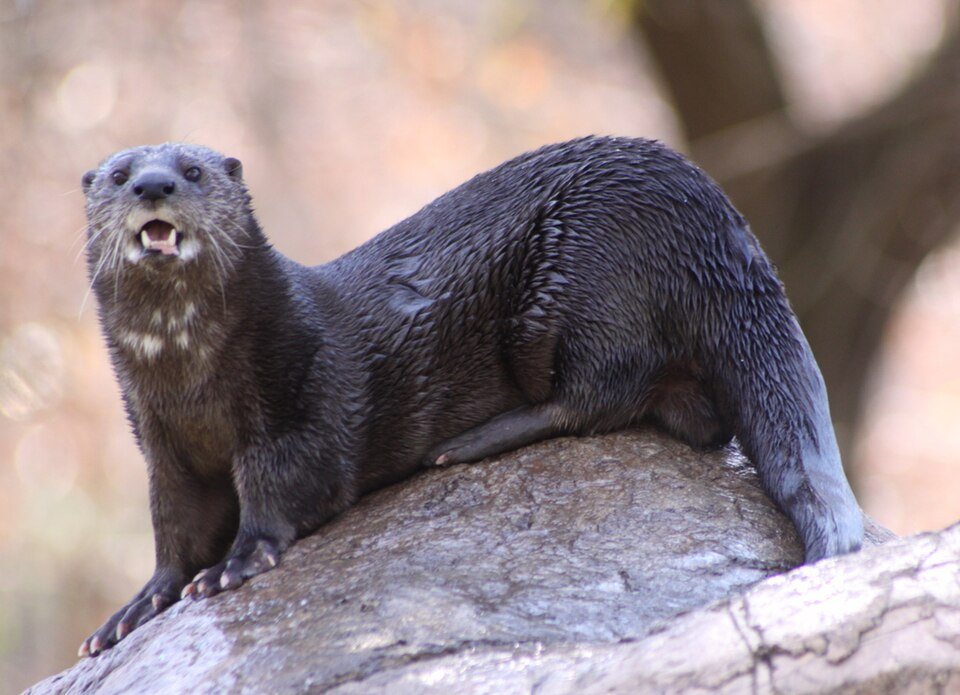
Photo: derekkeats · CC BY-SA 2.0 (May be cropped or resized)
Hydrictis maculicollis
Conservation status: Unknown
Basic stats
Diet
Mainly fish under 20cm; also frogs and small crustaceans
Habitat
Freshwater lakes and larger rivers
Range
Sub-Saharan Africa south of 10°N
Litter size
Up to 3 young
Gestation period
About 2 months
Size
Nose to rump 71–76cm (males), 57–61cm (females); tail 39–44cm
Weight
5.7–6.5kg (males), 3–4.7kg (females)
The spotted-necked otter is a relatively small otter of sub-Saharan Africa. It is usually chocolate to reddish brown with creamy or white blotches on the chest and throat. The head is broad with a short muzzle, small rounded ears and a bare nose pad. Males measure 71–76cm from nose to rump and weigh 5.7–6.5kg, while females are 57–61cm and weigh 3–4.7kg. The tail is long and muscular, 39–44cm in both sexes, and the paws are webbed (Wikipedia, general species account).
It lives in lakes and larger rivers across much of Africa south of 10°N, is common in Lake Victoria and across Zambia, and does not enter salt water. It seldom goes more than 10m from water. It is mostly diurnal, with peaks in early morning and late afternoon, and hunts alone by sight in short dives, taking mainly fish under 20cm and also frogs and small crustaceans. Groups of up to five occur, and it is not territorial. Litters are up to three after about two months (GBIF description, Mustelidae; Wikipedia, general species account).
Quick answers
- What does the Spotted-necked Otter eat?
- Mainly fish under 20cm; also frogs and small crustaceans
- What habitat does the Spotted-necked Otter live in?
- Freshwater lakes and larger rivers
- Where is the Spotted-necked Otter found?
- Sub-Saharan Africa south of 10°N
- What is the litter size of the Spotted-necked Otter?
- Up to 3 young
- How long is the gestation period of the Spotted-necked Otter?
- About 2 months
- How big is the Spotted-necked Otter?
- Nose to rump 71–76cm (males), 57–61cm (females); tail 39–44cm
- How much does the Spotted-necked Otter weigh?
- 5.7–6.5kg (males), 3–4.7kg (females)