
 Wildlife
of Kenya
Rufous-cheeked Nightjar
Nightjars & Swifts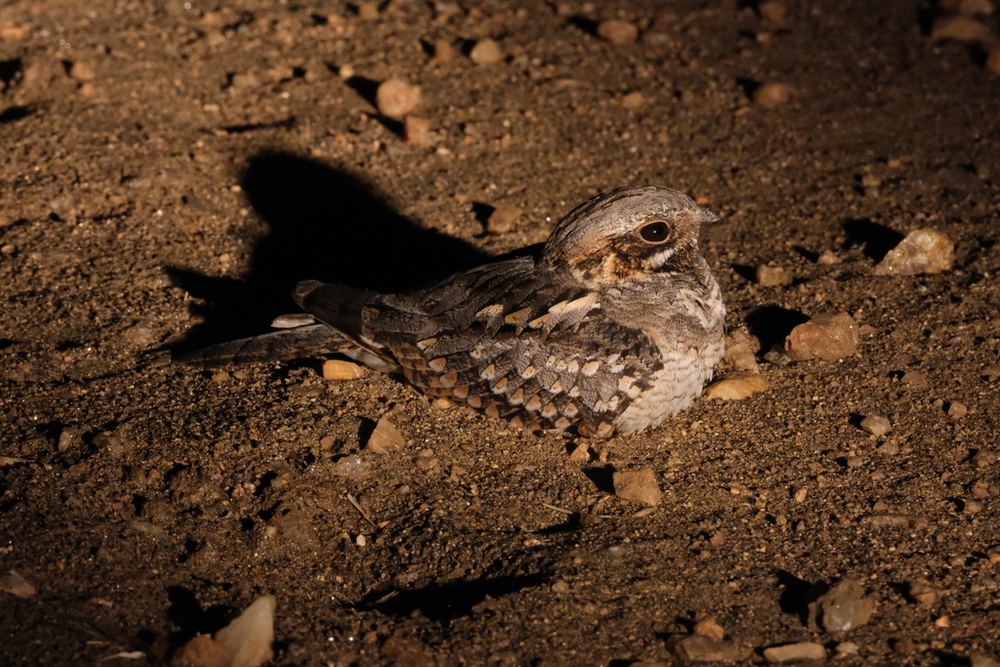
Photo: (c) le0p0ld_d, some rights reserved (CC BY) · CC BY (May be cropped or resized)
Caprimulgus rufigena
Conservation status: Unknown
Basic stats
Diet
Invertebrates
Habitat
Dry woodland, thorn scrub and semi-desert
Range
Southern and central Africa
Clutch size
Usually 2 eggs
Size
About 23–24cm
Weight
About 46–66g
Rufous-cheeked Nightjars are pale, cryptic birds about 23–24 cm long and 46–66 g. Dark-brown plumage is scattered with rufous spots and a subdued tawny collar; males carry white primary and tail marks, replaced by buff in females. Territorial songs open with soft coughs and continue as low sewing-machine churrs lasting several minutes (Wikipedia, general species account; Collins Birds of the World).
These migrants breed in southern African dry woodland, thornbush and semi-desert, then move north to central Africa outside the breeding season. Low perches provide launch points for catching beetles, moths, grasshoppers and other flying insects at dusk or by moonlight. Monogamous pairs lay usually two eggs on bare ground between September and November, and the sexes alternate guarding duties between night and day (Wikipedia, general species account; EltonTraits, Wilman et al. 2014).
Quick answers
- What does the Rufous-cheeked Nightjar eat?
- Invertebrates
- What habitat does the Rufous-cheeked Nightjar live in?
- Dry woodland, thorn scrub and semi-desert
- Where is the Rufous-cheeked Nightjar found?
- Southern and central Africa
- How many eggs does the Rufous-cheeked Nightjar lay?
- Usually 2 eggs
- How big is the Rufous-cheeked Nightjar?
- About 23–24cm
- How much does the Rufous-cheeked Nightjar weigh?
- About 46–66g