
 Wildlife
of Kenya
Common Swift
Nightjars & Swifts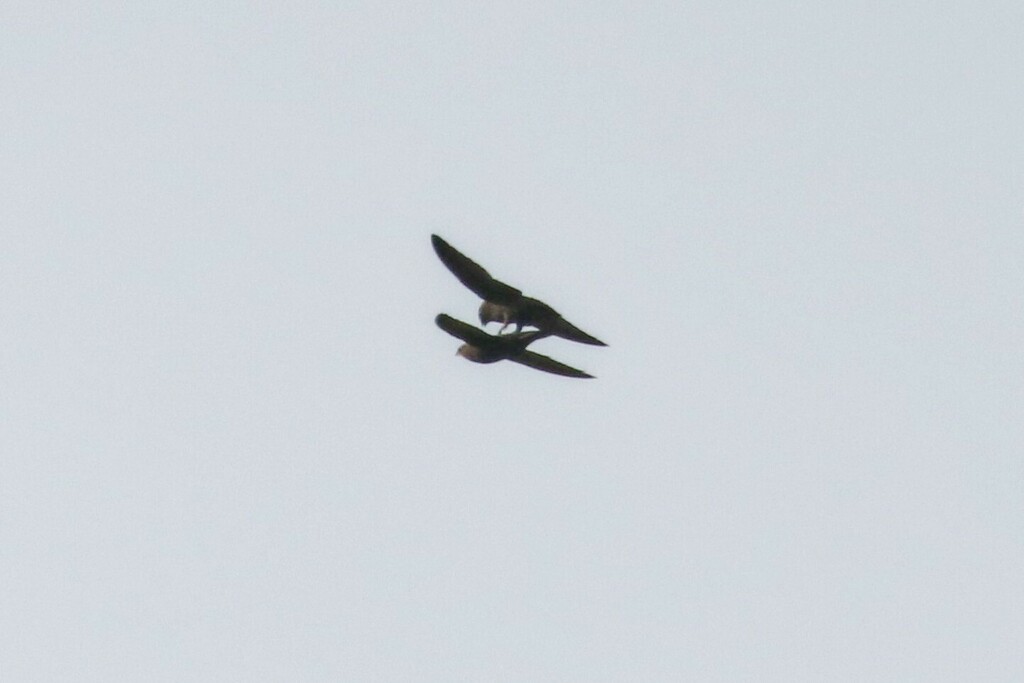
Photo: (c) Константин Селивёрстов, some rights reserved (CC BY) · CC BY 4.0 (May be cropped or resized)
Apus apus
Conservation status: Unknown
Basic stats
Diet
Flying invertebrates
Habitat
Aerial; nests in buildings, cliffs and tree cavities
Range
Breeds from Europe and North Africa across Asia; winters in equatorial and sub-equatorial Africa
Size
16–17cm
Wingspan
38–40cm
Weight
Averages about 38g
The Common Swift is a dark, highly aerial bird with very long, swept-back wings, a short forked tail and a small pale throat patch. It measures 16–17 cm and spans 38–40 cm. Its extremely short legs are used mainly for clinging to vertical surfaces, and the crescent-shaped silhouette separates it from superficially similar swallows and martins (Wikipedia, general species account).
The species catches invertebrates in flight and, outside the nesting period, can feed, drink, mate and sleep on the wing; some non-breeders remain airborne for months (Wikipedia, general species account). It nests in cavities in buildings, cliffs or trees, binding airborne material with saliva. Birds breed from Europe and North Africa across Asia, then migrate to equatorial and sub-equatorial Africa, making it strongly migratory (Wikipedia, general species account; AVONET, Tobias et al. 2022).
Where to see Common Swift in Kenya
GBIF records grouped by protected area. They show where the species has been reported, not that it is there now, and they are not population counts.
Recorded in 49 protected areas (1965–2025). The 8 with the most records:
- Nairobi National Park: 116 records (1977–2024)
- Tsavo West National Park: 109 records (1981–2024)
- Masai Mara: 68 records (1982–2024)
- Lake Nakuru National Park: 67 records (1981–2024)
- Tsavo East National Park: 56 records (1990–2024)
- Buffalo Springs National Reserve: 56 records (1965–2024)
- Amboseli National Park: 48 records (1983–2024)
- Samburu National Reserve: 36 records (1980–2024)
Quick answers
- What does the Common Swift eat?
- Flying invertebrates
- What habitat does the Common Swift live in?
- Aerial; nests in buildings, cliffs and tree cavities
- Where is the Common Swift found?
- Breeds from Europe and North Africa across Asia; winters in equatorial and sub-equatorial Africa
- How big is the Common Swift?
- 16–17cm
- What is the wingspan of the Common Swift?
- 38–40cm
- How much does the Common Swift weigh?
- Averages about 38g