
 Wildlife
of Kenya
Purple Indigobird
Weavers, Waxbills & Whydahs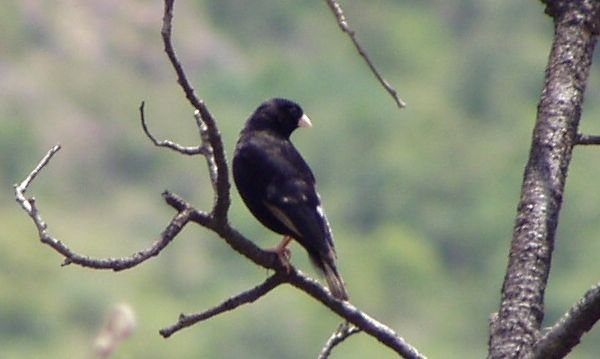
Photo: Alan Manson · CC BY-SA 2.0 (May be cropped or resized)
Vidua purpurascens
Conservation status: Unknown
Purple Indigobird occupies dry savanna and thornveld across parts of eastern and southern Africa, from Kenya and Tanzania west to Angola and south into Botswana and northeastern South Africa. The adult is about 12 cm long. Collins notes a white bill and legs and a purplish gloss on the male, while the species’ distribution also includes Zambia, Malawi, Mozambique and the Democratic Republic of the Congo. It is a seed-eating bird, with AVONET reporting a mean mass of 13 g. (Wikipedia, general species account; Collins Birds of the World; AVONET, Tobias et al. 2022; EltonTraits, Wilman et al. 2014)
This indigobird lays its eggs in the nest of Jameson’s Firefinch, making it a brood parasite. Males sing varied whistles, trills and chattering phrases, including mimicry of their host. They match song types with males in neighboring territories, linking vocal behavior to territory defense and mate attraction. The species is also called Dusky Indigobird, though that common name may refer to another Vidua. Its dry-country habitat and host relationship are defining parts of its ecology. (Wikipedia, general species account; Collins Birds of the World; AVONET, Tobias et al. 2022; EltonTraits, Wilman et al. 2014)