
 Wildlife
of Kenya
Dark-backed Weaver
Weavers, Waxbills & Whydahs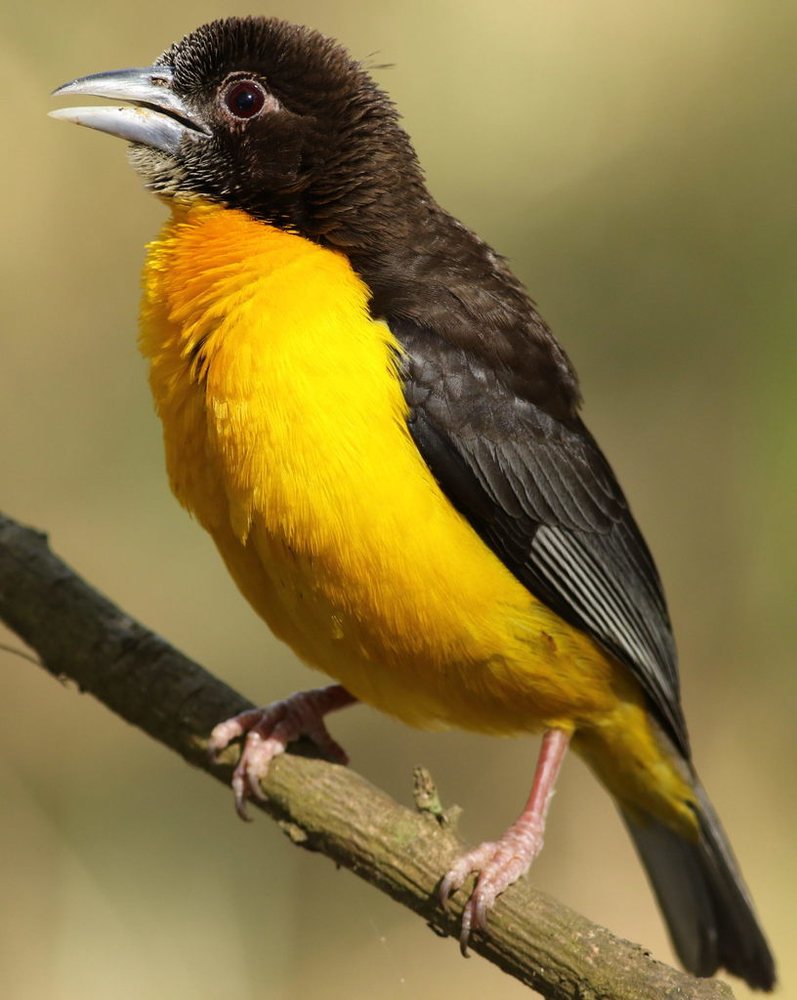
Photo: (c) Derek Keats, some rights reserved (CC BY) · CC-BY (May be cropped or resized)
Ploceus bicolor
Conservation status: Unknown
Basic stats
Diet
Seeds and insects
Habitat
Forest and woodland
Range
Central Africa
Weight
About 35g
Dark-backed Weavers are compact weavers with dark backs, yellow underparts and stout bills. They inhabit forest, woodland and dense edges in Central Africa, moving through foliage and tall grasses The species occurs in Central Africa and inhabits Forest and woodland. The species' distribution across Central Africa includes Forest and woodland. The AVONET entry gives Dark-backed Weaver a culmen length of 20.6 mm. (Wikipedia, general species account; AVONET, Tobias et al. 2022)
They feed on seeds and insects, often searching among grasses and branches. Pairs weave enclosed nests from strips of grass and suspend them from suitable branches over cover Its feeding ecology combines Seeds and insects with the cover of Forest and woodland. It occupies Forest and woodland settings in parts of Central Africa. EltonTraits places the two largest shares for Dark-backed Weaver at 60% invertebrates and 20% fruit. (Wikipedia, general species account; EltonTraits, Wilman et al. 2014)
Where to see Dark-backed Weaver in Kenya
GBIF records grouped by protected area. They show where the species has been reported, not that it is there now, and they are not population counts.
Recorded in 6 protected areas (1965–2025).
- Kagamega Forest: 1,643 records (1966–2025)
- Arabuko-Sokoke Forest Reserve: 900 records (1965–2024)
- Shimba Hills National Reserve: 140 records (1973–2024)
- South Nandi Forest Reserve: 34 records (2011–2024)
- Tana Delta Community Conservancy: 6 records (1973–2024)
- Ndera Community Conservancy: 5 records (1973–2021)
Quick answers
- What does the Dark-backed Weaver eat?
- Seeds and insects
- What habitat does the Dark-backed Weaver live in?
- Forest and woodland
- Where is the Dark-backed Weaver found?
- Central Africa
- How much does the Dark-backed Weaver weigh?
- About 35g