
 Wildlife
of Kenya
Cape White-eye
Cisticolas, Warblers & White-eyes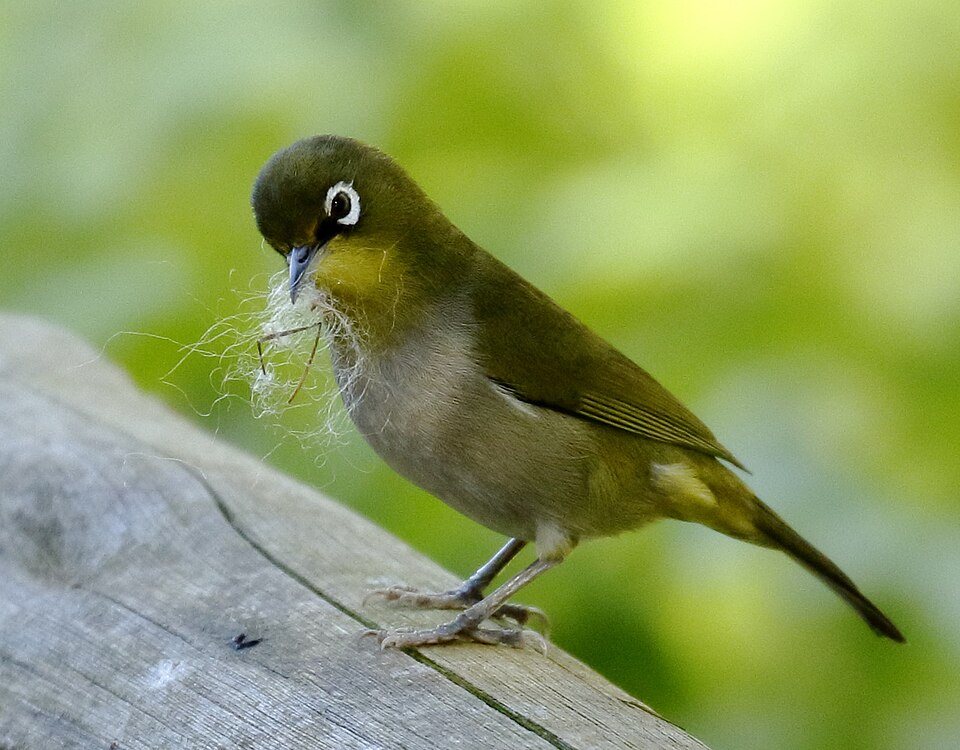
Photo: Hector Bottai · CC BY-SA 4.0 (May be cropped or resized)
Zosterops virens
Conservation status: Unknown
Basic stats
Diet
Insects, flowers, nectar, fruit and small grains
Habitat
Woodland, thickets, parks and gardens
Range
South Africa, Botswana, Lesotho, Eswatini and marginally Mozambique
Clutch size
2–3
Incubation period
11–12 days
Size
12cm
Cape White-eye is native to southern Africa and uses a wide range of well-watered settings, from suburbia, parks and gardens to wooded areas. About 12 cm in length, it has rounded wings, sturdy legs and a noticeable white feather ring around each eye. The upperparts are green, while the throat and vent are bright yellow. Breast and belly color varies between subspecies, from gray to greenish yellow. (Wikipedia, general species account; Collins Birds of the World)
Outside the breeding season, this sociable bird gathers in large flocks. Its cup-shaped tree nest holds two or three pale-blue, unspotted eggs; hatching follows 11–12 days of incubation, and juveniles fledge 12–13 days later. Breeding peaks from September through December. Insects are its main food, supplemented by fleshy flowers, nectar, fruit and small grains. Most populations remain in place, although some make minor seasonal movements. (Wikipedia, general species account; AVONET, Tobias et al. 2022; EltonTraits, Wilman et al. 2014)
Quick answers
- What does the Cape White-eye eat?
- Insects, flowers, nectar, fruit and small grains
- What habitat does the Cape White-eye live in?
- Woodland, thickets, parks and gardens
- Where is the Cape White-eye found?
- South Africa, Botswana, Lesotho, Eswatini and marginally Mozambique
- How many eggs does the Cape White-eye lay?
- 2–3
- How long are the eggs of the Cape White-eye incubated?
- 11–12 days
- How big is the Cape White-eye?
- 12cm