
 Wildlife
of Kenya
Eastern Olivaceous Warbler
Cisticolas, Warblers & White-eyes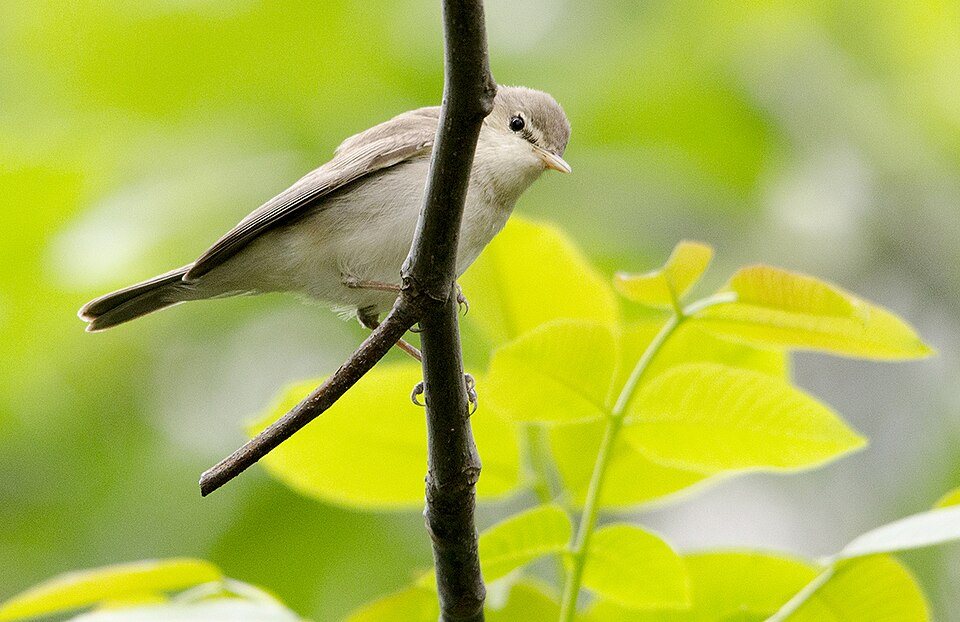
Photo: Zeynel Cebeci · CC BY-SA 4.0 (May be cropped or resized)
Iduna pallida
Conservation status: Unknown
Basic stats
Diet
Mainly insects, with fruit
Habitat
Dry open country with bushes or trees, including cultivation
Range
Breeds in southeastern Europe, the Middle East and western Asia; winters in Africa and Arabia
Clutch size
2–3 eggs
Weight
Averages about 9g
The Eastern Olivaceous Warbler is a plainly coloured bird with pale brown upperparts, whitish underparts, a strong pointed bill and grey legs. The sexes look alike, while young birds have a more buff-coloured belly. It often flicks its tail downward and delivers a fast, nasal, babbling song. The species averages about 9 g in mass (Wikipedia, general species account; AVONET, Tobias et al. 2022).
Breeding populations occur from southeastern Europe and the Middle East into western Asia, with a population in southeastern Morocco. The species migrates to sub-Saharan Africa or Arabia for winter. It inhabits dry, open country with bushes or scattered trees, including cultivated land. Insects make up much of its food, with fruit also represented in its diet. The nest is low in a bush or undergrowth and contains two or three eggs (Wikipedia, general species account; EltonTraits, Wilman et al. 2014).
Where to see Eastern Olivaceous Warbler in Kenya
GBIF records grouped by protected area. They show where the species has been reported, not that it is there now, and they are not population counts.
Recorded in 42 protected areas (1978–2024). The 8 with the most records:
- Tsavo West National Park: 287 records (1983–2024)
- Nairobi National Park: 179 records (1984–2024)
- Buffalo Springs National Reserve: 122 records (1981–2024)
- Tsavo East National Park: 112 records (1978–2024)
- Samburu National Reserve: 100 records (1981–2024)
- Amboseli National Park: 40 records (1983–2024)
- Mpala Ranch: 40 records (2000–2024)
- Lake Nakuru National Park: 33 records (1981–2024)
Quick answers
- What does the Eastern Olivaceous Warbler eat?
- Mainly insects, with fruit
- What habitat does the Eastern Olivaceous Warbler live in?
- Dry open country with bushes or trees, including cultivation
- Where is the Eastern Olivaceous Warbler found?
- Breeds in southeastern Europe, the Middle East and western Asia; winters in Africa and Arabia
- How many eggs does the Eastern Olivaceous Warbler lay?
- 2–3 eggs
- How much does the Eastern Olivaceous Warbler weigh?
- Averages about 9g