
 Wildlife
of Kenya
Blue Monkey
Primates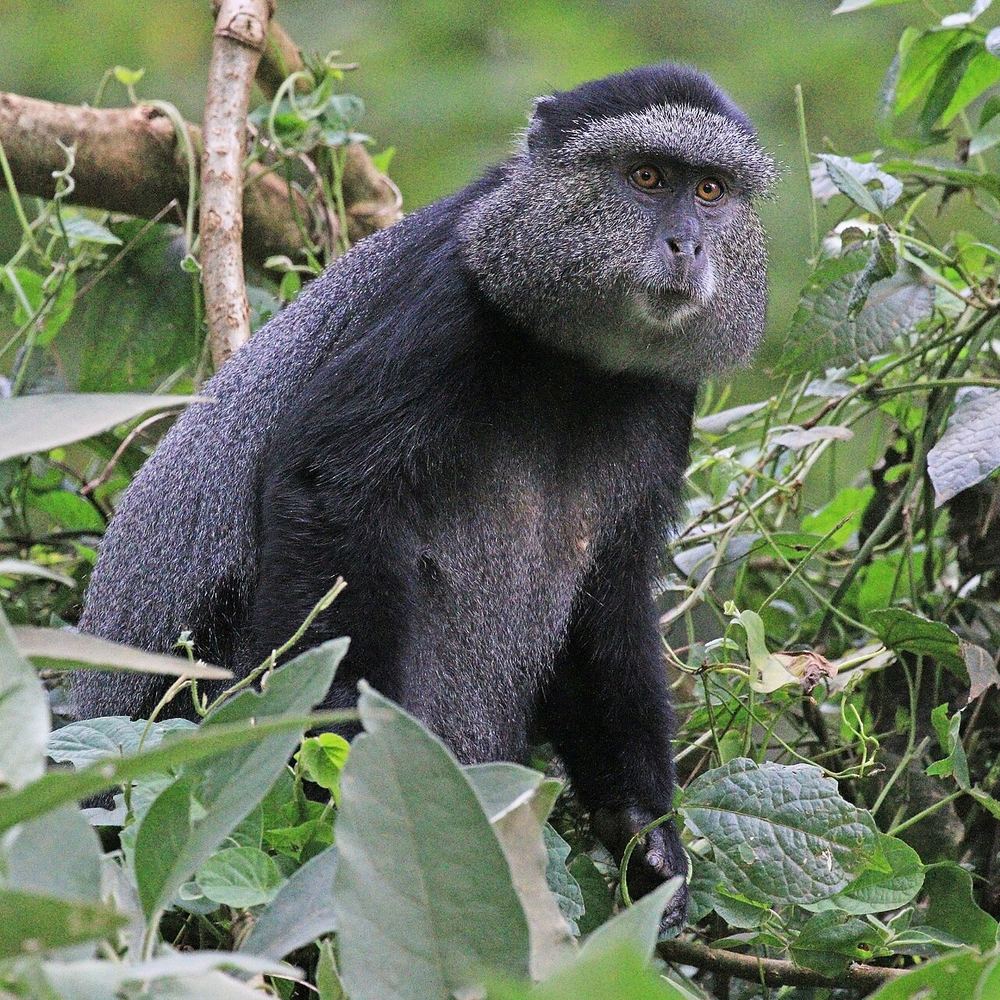
Photo: Charles J. Sharp · CC BY-SA 4.0 (May be cropped or resized)
Cercopithecus mitis
Conservation status: Unknown
Basic stats
Diet
Mainly fruit and leaves; also seeds, flowers, insects and fungi
Habitat
Evergreen, montane, bamboo, riparian, swamp and secondary forest and gallery forest, 750–3300m
Range
Central and East Africa, from the upper Congo basin to the East African Rift and south to northern Angola and Zambia, with populations further south to South Africa
Litter size
1 infant
Gestation period
5–6 months
Size
Head and body 46–71cm (males), 39–59cm (females); tail 60–95cm and 49–88cm
Weight
5.9–9kg (males), 2.7–5.5kg (females)
The blue monkey, or diademed monkey, is a large, variable guenon whose slaty-grey cast can look blue. It is mainly olive or grey, with a dark face, a pale diadem of dense fur on the forehead, a blackish cap, feet and front legs, long rounded pale cheek whiskers, and a tail carried high in a slight downward curve. Subspecies differ in mantle colour. Males are much larger, at 46–71 cm and 5.9–9 kg against 39–59 cm and 2.7–5.5 kg for females (GBIF description, Cercopithecidae; Wikipedia, general species account). Other names include Diademed Monkey, Gentle Monkey and Golden Monkey.
It is diurnal and arboreal, spending over half its time at 10–20 m and only about 3 percent on the ground. It lives in patriarchal groups of one male and several females, averaging 18 animals, with males dispersing and females staying in their birth groups; home ranges are 20–300 ha and daily movement averages 1,300 m. It eats mainly fruit and leaves with some invertebrates, and joins red-tailed monkeys for extra protection. Gestation is five to six months and usually one infant is born. Habitat covers many forest types at 750–3,300 m, and up to 3,800 m in the Rwenzori (GBIF description, Cercopithecidae; Wikipedia, general species account).
Where to see Blue Monkey in Kenya
GBIF records grouped by protected area. They show where the species has been reported, not that it is there now, and they are not population counts.
Recorded in 12 protected areas (1914–2026). The 8 with the most records:
- Ndera Community Conservancy: 34 records (1972–1976)
- Kagamega Forest: 32 records (1961–2025)
- Mount Kenya National Park: 13 records (1940–2024)
- Diani-Chale Marine Reserve: 13 records (2012–2025)
- Aberdare National Park: 12 records (1961–2026)
- Nairobi National Park: 8 records (2011–2024)
- Mount Kenya National Reserve: 7 records (2000–2026)
- Tsavo West National Park: 5 records (1914–2013)
Quick answers
- What does the Blue Monkey eat?
- Mainly fruit and leaves; also seeds, flowers, insects and fungi
- What habitat does the Blue Monkey live in?
- Evergreen, montane, bamboo, riparian, swamp and secondary forest and gallery forest, 750–3300m
- Where is the Blue Monkey found?
- Central and East Africa, from the upper Congo basin to the East African Rift and south to northern Angola and Zambia, with populations further south to South Africa
- What is the litter size of the Blue Monkey?
- 1 infant
- How long is the gestation period of the Blue Monkey?
- 5–6 months
- How big is the Blue Monkey?
- Head and body 46–71cm (males), 39–59cm (females); tail 60–95cm and 49–88cm
- How much does the Blue Monkey weigh?
- 5.9–9kg (males), 2.7–5.5kg (females)