
 Wildlife
of Kenya
Village Weaver
Weavers, Waxbills & Whydahs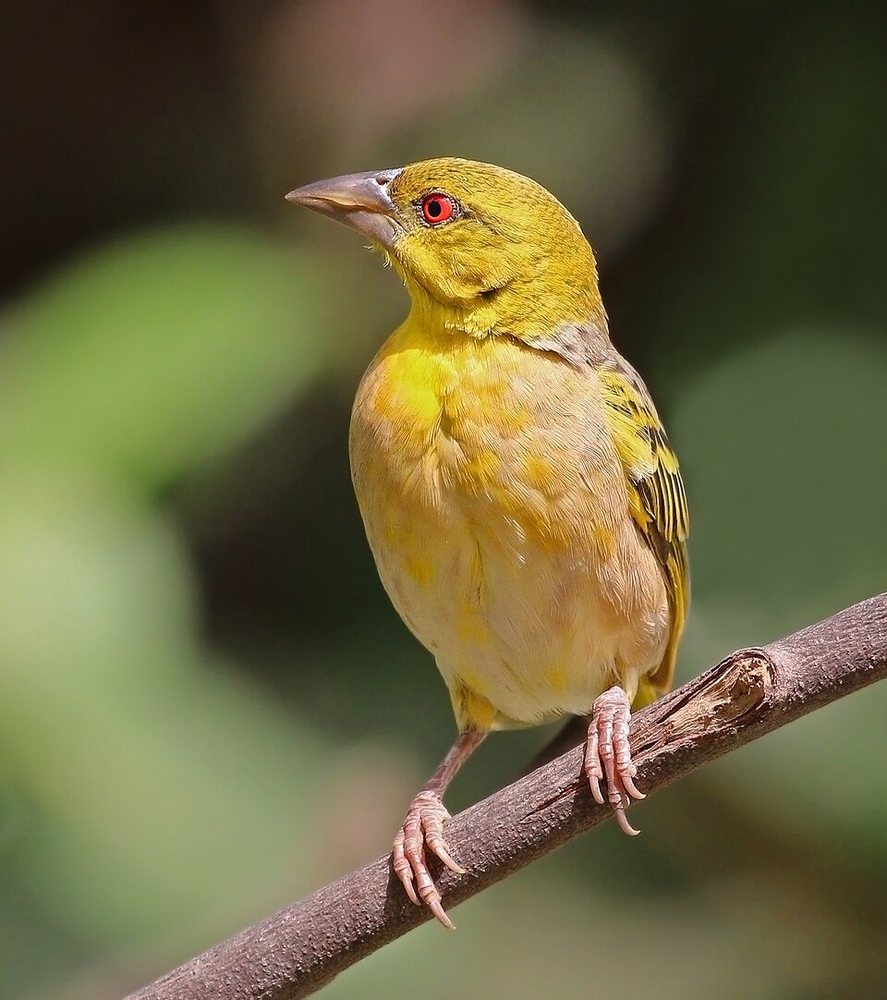
Photo: Charles J. Sharp · CC BY-SA 4.0 (May be cropped or resized)
Ploceus cucullatus
Conservation status: Unknown
The village weaver (Ploceus cucullatus) is also called the spotted-backed weaver or black-headed weaver, a name sometimes confused with a related species. Introduced populations occur in Portugal and Venezuela, and on Réunion and Mauritius; it has also reached Puerto Rico, Martinique and Hispaniola. It is often abundant in open and semi-open habitats, from woodland to human settlements, and forms noisy colonies in towns, villages and hotel grounds. Nests are large, coarse grass-and-leaf structures suspended from branches, with entrances pointing downward. (Wikipedia, general species account)
A nest usually holds two or three eggs, and many nests may hang in a single tree because colonies are large. The birds eat mainly seeds and grain and can damage crops, but also take insects readily, especially when feeding young, which partly offsets agricultural losses. (Wikipedia, general species account)
Where to see Village Weaver in Kenya
GBIF records grouped by protected area. They show where the species has been reported, not that it is there now, and they are not population counts.
Recorded in 101 protected areas (1965–2026). The 8 with the most records:
- Masai Mara: 1,021 records (1977–2026)
- Tsavo West National Park: 651 records (1969–2024)
- Mara Triangle: 415 records (1977–2026)
- Watamu Marine National Park: 355 records (1973–2024)
- Arabuko-Sokoke Forest Reserve: 332 records (1965–2024)
- Nairobi National Park: 296 records (1973–2024)
- Lake Nakuru National Park: 275 records (1969–2026)
- Buffalo Springs National Reserve: 269 records (1969–2026)