
 Wildlife
of Kenya
Marsh Widowbird
Weavers, Waxbills & Whydahs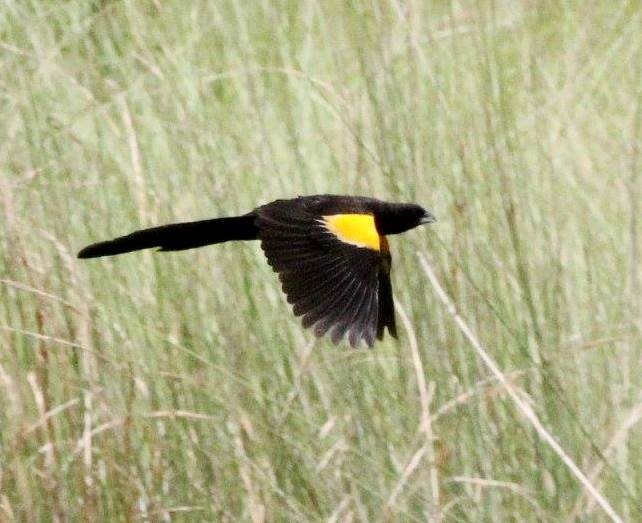
Photo: Maans Booysen, Birding Weto · CC BY-SA 4.0 (May be cropped or resized)
Euplectes hartlaubi
Conservation status: Unknown
Basic stats
Diet
Seeds and insects
Habitat
Wet grassland, marshes and reedbeds
Range
Eastern Africa
Clutch size
2–4
Size
About 16cm; male tail elongated in breeding season
The Marsh Widowbird is a long-tailed African weaver associated with wet open habitats. Breeding males are dark with elongated tails and bright shoulder or collar markings, while females are smaller and streaked brown. It is found in eastern African grasslands, particularly marshes, damp valleys, reedbeds, and nearby cultivated ground. The wet vegetation also supplies cover for its nesting activity. (Wikipedia, general species account)
The species eats grass seeds and some insects, usually in flocks. Males display over territories and construct several woven nests, while females choose among them; the breeding system is polygynous. The documented clutch contains two to four eggs. Nest building is part of the male's courtship display, with woven material gathered from the surrounding grasses. (Wikipedia, general species account) (EltonTraits, Wilman et al. 2014)
Where to see Marsh Widowbird in Kenya
GBIF records grouped by protected area. They show where the species has been reported, not that it is there now, and they are not population counts.
Recorded in 2 protected areas (1977–2022).
- Kagamega Forest: 9 records (1983–2022)
- Saiwa Swamp National Park: 5 records (1977–2022)
Quick answers
- What does the Marsh Widowbird eat?
- Seeds and insects
- What habitat does the Marsh Widowbird live in?
- Wet grassland, marshes and reedbeds
- Where is the Marsh Widowbird found?
- Eastern Africa
- How many eggs does the Marsh Widowbird lay?
- 2–4
- How big is the Marsh Widowbird?
- About 16cm; male tail elongated in breeding season