
 Wildlife
of Kenya
Hairy Slit-faced Bat
Bats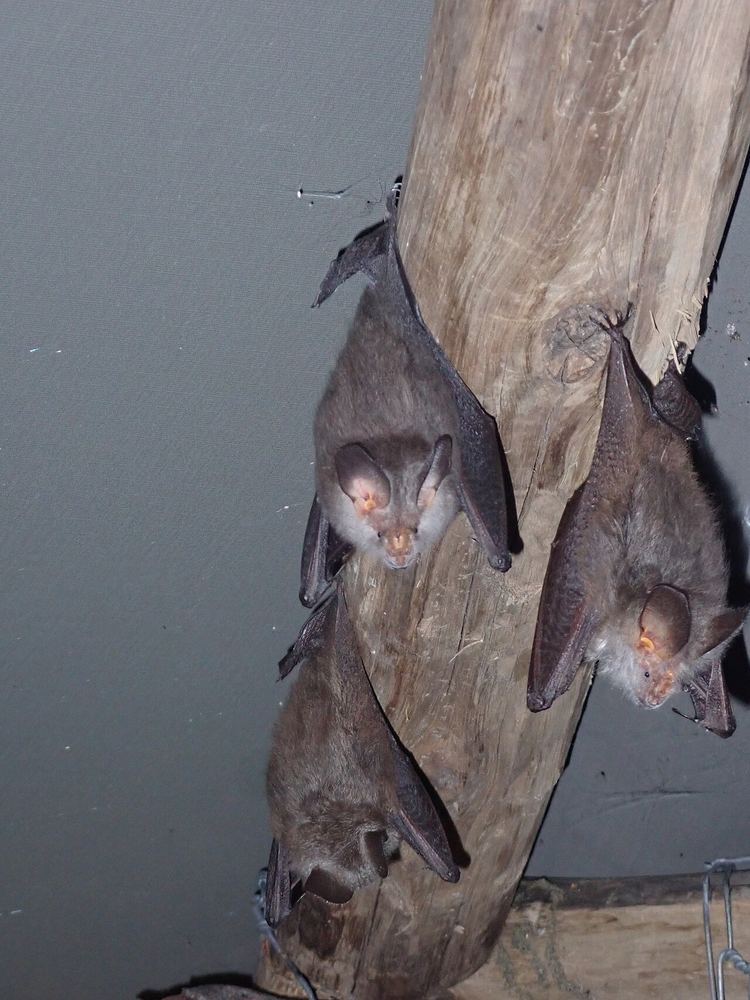
Photo: (c) Robert Taylor, some rights reserved (CC BY) · CC BY 4.0 (May be cropped or resized)
Nycteris hispida
Conservation status: Unknown
Basic stats
Diet
Mainly insects, including moths
Habitat
Miombo woodland, lowland rainforest and forest-savanna mosaic
Range
Tropical Africa, from Senegal to Mozambique
Litter size
One
Size
Forearm 34–44mm
Weight
6–12g
The hairy slit-faced bat is a small Nycteridae with a deep slit along the muzzle that leads to the nostrils and a prominent nose-leaf around it. Its ears are long but shorter than those of some relatives, joined near their bases by a membrane, and its eyes are small. It has broad wings and a long tail with a T-shaped tip made of cartilage. Its fur is long and brown with paler underparts, and its wings and ears are darker. Head and body measure 40–50mm, tail 41–56mm, ear 19–24mm and forearm 34–44mm, with weight 6–12g (Wikipedia, general species account; GBIF description, Nycteridae).
It is widely distributed across tropical Africa, from Mauritania and Senegal in the north-west to Ethiopia, Kenya and Somalia in the north-east, and south to Angola, Botswana, Zimbabwe and Mozambique. It occupies savanna woodland and rainforest but avoids higher ground and semi-arid areas. Groups are usually small, between 2 and 6 individuals, though it also roosts alone; a male and female often share a roost. Births in north-eastern DR Congo have been recorded in April and September, with one young per litter. Its diet is mainly moths and other insects (Wikipedia, general species account; GBIF description, Nycteridae).
Where to see Hairy Slit-faced Bat in Kenya
GBIF records grouped by protected area. They show where the species has been reported, not that it is there now, and they are not population counts.
Recorded in 4 protected areas (1983–2014).
- Masai Mara: 10 records (1983)
- Mara Triangle: 9 records (1983)
- Kagamega Forest: 5 records (2014)
- Amboseli National Park: 4 records
Quick answers
- What does the Hairy Slit-faced Bat eat?
- Mainly insects, including moths
- What habitat does the Hairy Slit-faced Bat live in?
- Miombo woodland, lowland rainforest and forest-savanna mosaic
- Where is the Hairy Slit-faced Bat found?
- Tropical Africa, from Senegal to Mozambique
- What is the litter size of the Hairy Slit-faced Bat?
- One
- How big is the Hairy Slit-faced Bat?
- Forearm 34–44mm
- How much does the Hairy Slit-faced Bat weigh?
- 6–12g