
 Wildlife
of Kenya
Harrison's Giant Mastiff Bat
Bats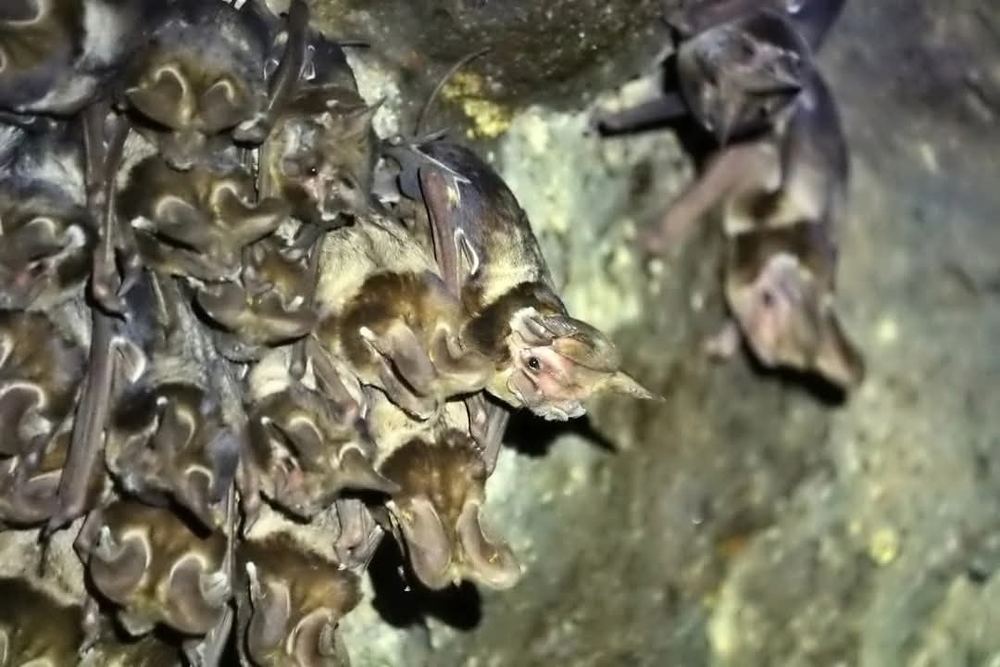
Photo: Rebecca Carter-Whitehead · CC0
Otomops harrisoni
Conservation status: Unknown
Basic stats
Diet
Mainly moths
Habitat
Woodland, shrubland, montane and xeric grassland, and thickets
Range
Yemen, Djibouti, Ethiopia and Kenya, possibly Eritrea
Litter size
One pup
Weight
Males 31.5–45g, females 26.8–45g
Harrison's giant mastiff bat ranks as the biggest in its genus, with the most robust skull of them all. Males weigh between 31.5 and 45g and females between 26.8 and 45g, with forearms of 63.8–74mm and total body lengths of 138–163mm. Its short, velvety fur is dark chocolate brown on the back, set off by a cream-coloured collar around the neck, and paler underneath. Its ears project over the face and meet above the nose. It was described as a new species in 2015 (Wikipedia, general species account).
Its range covers Yemen, Djibouti, Ethiopia and Kenya, and possibly Eritrea, across the eastern part of sub-Saharan Africa. It favours places with at least 20mm of rain in the driest month, altitudes above 1,500m and under 500mm of annual rainfall. Woodland, shrubland, montane and xeric grassland and thickets are used, with roosts in mountain or lava caves by day. The diet is mostly moths, especially those of the Saturniidae, Noctuidae and Geometridae families. Both sexes mature at about one year old and roughly 25g, and females breed once a year, giving birth mainly in December. Each pup is born hairless and helpless, and the species forms colonies of hundreds or even thousands (Wikipedia, general species account).
Where to see Harrison's Giant Mastiff Bat in Kenya
GBIF records grouped by protected area. They show where the species has been reported, not that it is there now, and they are not population counts.
Recorded in 2 protected areas (2016–2019).
- Chyulu Hills: 40 records (2016)
- Mount Suswa Conservancy: 11 records (2019)
Quick answers
- What does the Harrison's Giant Mastiff Bat eat?
- Mainly moths
- What habitat does the Harrison's Giant Mastiff Bat live in?
- Woodland, shrubland, montane and xeric grassland, and thickets
- Where is the Harrison's Giant Mastiff Bat found?
- Yemen, Djibouti, Ethiopia and Kenya, possibly Eritrea
- What is the litter size of the Harrison's Giant Mastiff Bat?
- One pup
- How much does the Harrison's Giant Mastiff Bat weigh?
- Males 31.5–45g, females 26.8–45g