
 Wildlife
of Kenya
Coastal Cisticola
Cisticolas, Warblers & White-eyes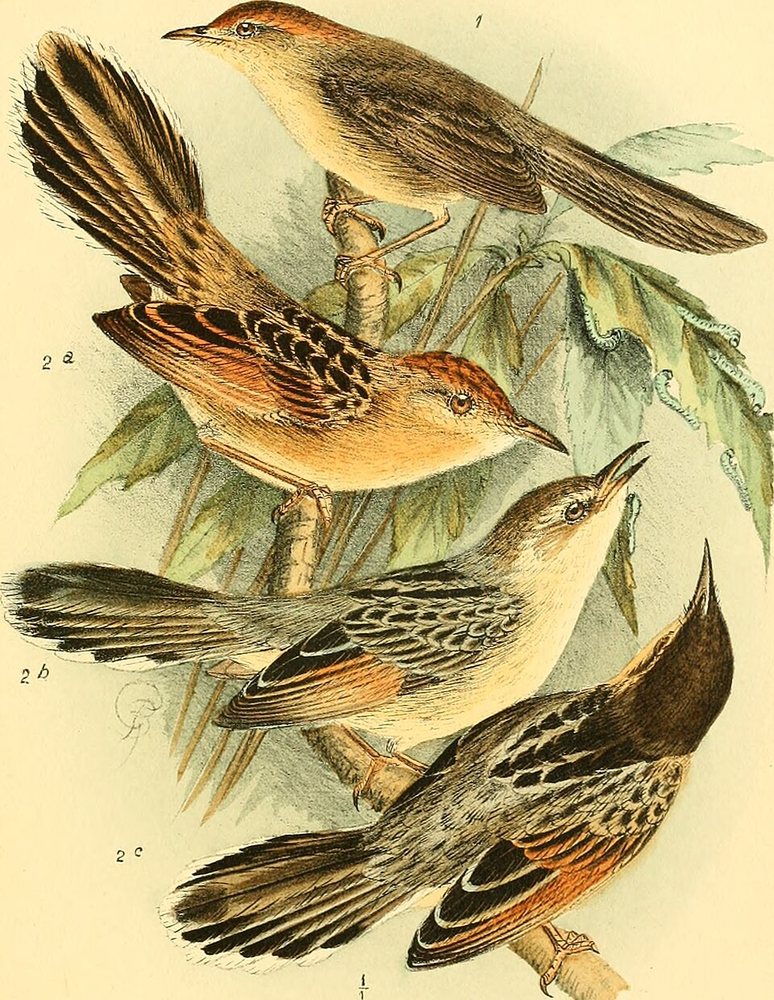
Photo: Bruno Geisler · Public domain
Cisticola haematocephalus
Conservation status: Unknown
Basic stats
Habitat
Seasonally flooded grassland, swamps and marsh edges
Range
Coastal Somalia, Kenya and Tanzania
The Coastal Cisticola, also called the umbabird or Mombasa black-backed cisticola, occurs on East Africa’s coastal plain. Its range extends from southern Somalia to northeastern Tanzania, between about five degrees north and ten degrees south. It inhabits seasonally wet or flooded lowland grassland and swamps. (Wikipedia, general species account)
The bird is about 13 centimetres long and has a dull rufous crown with a creamy-white face. Its voice includes an extra-high, slightly rising shrill trill and a high tuwee-tuwee call. It lives where coarse grasses and taller waterside plants grow near lakes or marshland. Collins lists coastal Somalia, Kenya and Tanzania in its range. (Collins Birds of the World)
Where to see Coastal Cisticola in Kenya
GBIF records grouped by protected area. They show where the species has been reported, not that it is there now, and they are not population counts.
Recorded in 7 protected areas (1982–2024).
- Arabuko-Sokoke Forest Reserve: 173 records (1982–2024)
- Watamu Marine National Park: 98 records (1991–2024)
- Shimba Hills National Reserve: 47 records (1983–2024)
- Tana Delta Community Conservancy: 14 records (2017–2023)
- Mombasa Marine Reserve: 13 records (1998–2024)
- Meru National Park: 4 records (2023)
- Vipingo Ridge Conservancy: 3 records (2021–2024)
Quick answers
- What habitat does the Coastal Cisticola live in?
- Seasonally flooded grassland, swamps and marsh edges
- Where is the Coastal Cisticola found?
- Coastal Somalia, Kenya and Tanzania