
 Wildlife
of Kenya
Blue Whale
Whales, Dolphins & Dugong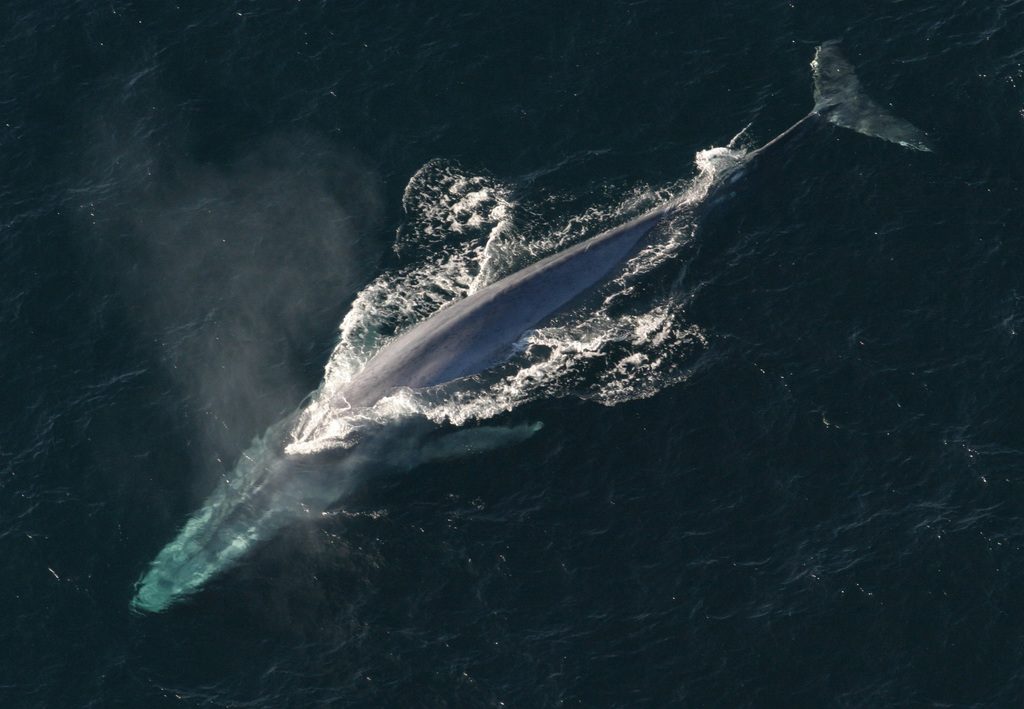
Photo: NOAA Photo Library · Public Domain
Balaenoptera musculus
Conservation status: Unknown
Basic stats
Diet
Almost exclusively krill
Habitat
Epipelagic waters of most ocean basins, plus shelf and oceanic plateau areas
Range
Worldwide, from arctic to tropical waters
Size
Confirmed length 29.9–30.5m
Weight
Up to 190–200t
Blue Whale belongs to baleen whale and the largest marine mammal in the rorqual family Balaenopteridae. Reaching a maximum confirmed length of 29.9–30.5 m (98–100 ft) and weighing up to 190–200 t (190–200 long tons; 210–220 short tons), it is the largest animal known to have ever existed. The blue whale's long and slender body can be of various shades of greyish-blue on its upper surface and somewhat lighter underneath. (Wikipedia, general species account).
There is also evidence of year-round residencies, and partial or age- and sex-based migration. Blue whales are filter feeders; their diet consists almost exclusively of krill. They are generally solitary or gather in small groups, and have no well-defined social structure other than mother–calf bonds. One of the first published descriptions of a blue whale comes from Robert Sibbald's Phalainologia Nova, after Sibbald found a stranded whale in the estuary of the Firth of Forth, Scotland, in 1692. (Wikipedia, general species account).
Quick answers
- What does the Blue Whale eat?
- Almost exclusively krill
- What habitat does the Blue Whale live in?
- Epipelagic waters of most ocean basins, plus shelf and oceanic plateau areas
- Where is the Blue Whale found?
- Worldwide, from arctic to tropical waters
- How big is the Blue Whale?
- Confirmed length 29.9–30.5m
- How much does the Blue Whale weigh?
- Up to 190–200t