
 Wildlife
of Kenya
False Killer Whale
Whales, Dolphins & Dugong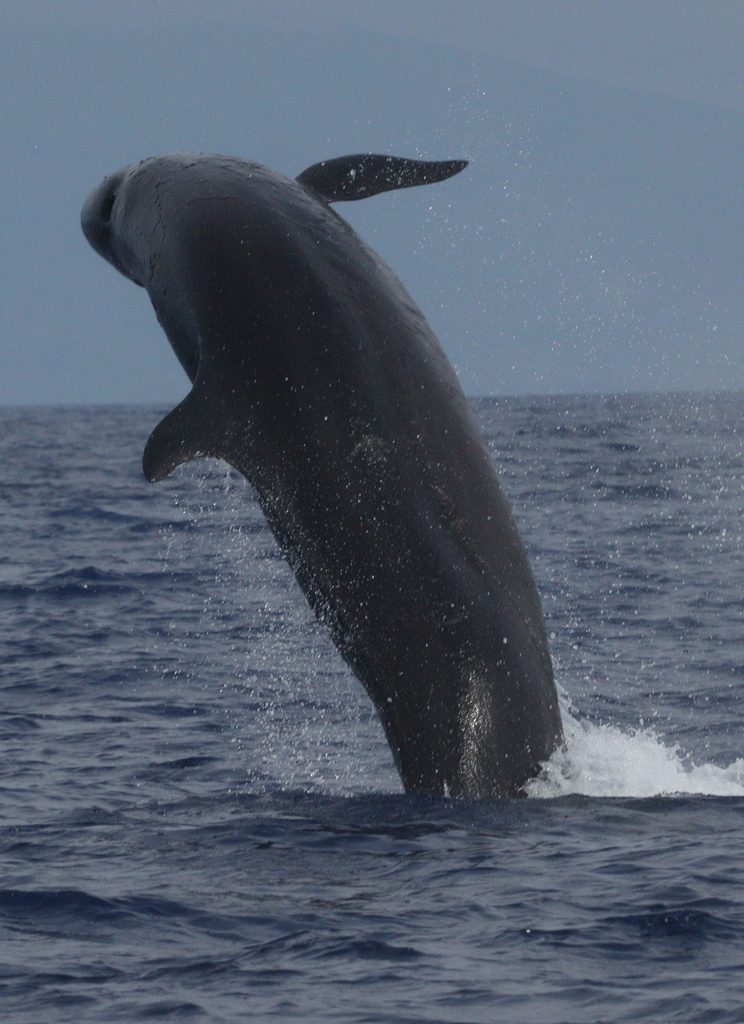
Photo: Jan Ebr & Ivana Ebrová · CC BY 4.0 (May be cropped or resized)
Pseudorca crassidens
Conservation status: Unknown
Basic stats
Diet
Mainly squid and fish, occasionally other dolphins
Habitat
Mainly warm, deep offshore waters
Range
Oceans worldwide, mostly tropical
Gestation period
About 15 months
Size
Up to 6m long
Weight
Females up to 1200kg, males up to 2200kg
False Killer Whale belongs to oceanic dolphin that is the only extant representative of the genus Pseudorca. It received its first scientific description in 1846 as a species of porpoise based on a skull, which was revised when the first carcasses were observed in 1861. The name "false killer whale" comes from having a skull similar to the orca or killer whale (Orcinus orca). The false killer whale reaches a maximum length of 6 m (20 ft), though size can vary around the world. (Wikipedia, general species account).
Its recorded distribution includes oceans worldwide but mainly in tropical regions. Still, individuals in populations around the world can have different skull structure and vary in average length with Japanese false killers found to be 10–20% larger than South African ones. In one population, calving was at 7-year intervals; calving can occur year-round, though it usually occurs in late winter. As a toothed whale, a false killer can echolocate to navigate and find prey, using its melon organ in the forehead to create sound. (Wikipedia, general species account).
Quick answers
- What does the False Killer Whale eat?
- Mainly squid and fish, occasionally other dolphins
- What habitat does the False Killer Whale live in?
- Mainly warm, deep offshore waters
- Where is the False Killer Whale found?
- Oceans worldwide, mostly tropical
- How long is the gestation period of the False Killer Whale?
- About 15 months
- How big is the False Killer Whale?
- Up to 6m long
- How much does the False Killer Whale weigh?
- Females up to 1200kg, males up to 2200kg