
 Wildlife
of Kenya
Black-winged Bishop
Weavers, Waxbills & Whydahs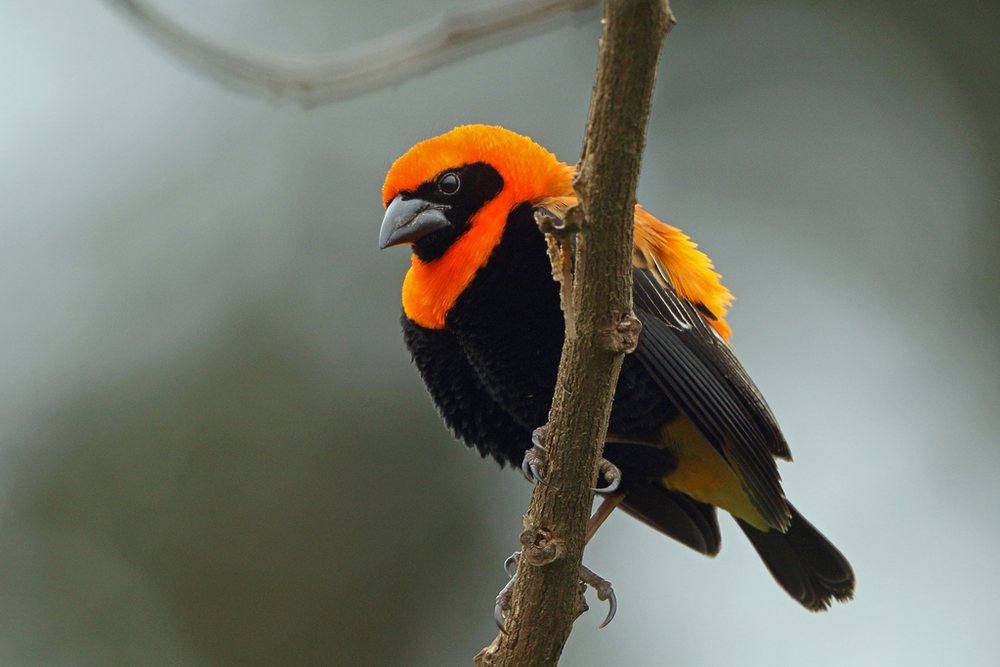
Photo: (c) Nigel Voaden, some rights reserved (CC BY) · CC-BY (May be cropped or resized)
Euplectes hordeaceus
Conservation status: Unknown
Basic stats
Diet
Seeds and insects
Habitat
Grassland, marshes, reedbeds and agricultural wetlands
Range
Sub-Saharan Africa
Clutch size
2–4
Size
About 13cm
The Black-winged Bishop is a small weaver of African open country. The male in breeding plumage is strongly patterned in black and warm tones, while females and nonbreeding birds are brown and streaked. It occupies grassland and wet places such as marshes, reedbeds, and fields, with local movements between wetter and drier habitats. Seasonal wetland use is characteristic of its ecology. (Wikipedia, general species account)
Seeds form the core of its diet, supplemented by insects, and birds often feed in groups. Males display and build woven nests among grasses or reeds; published accounts record two to four eggs per clutch. The nest is placed within the vegetation used by feeding flocks. (Wikipedia, general species account) (EltonTraits, Wilman et al. 2014)
Where to see Black-winged Bishop in Kenya
GBIF records grouped by protected area. They show where the species has been reported, not that it is there now, and they are not population counts.
Recorded in 10 protected areas (1969–2024). The 8 with the most records:
- Arabuko-Sokoke Forest Reserve: 20 records (1983–2024)
- Ruma National Park: 17 records (1989–2023)
- Mombasa Marine Reserve: 8 records (1998–2016)
- Shimba Hills National Reserve: 8 records (1972–2012)
- Masol Community Conservancy: 6 records (1969–2001)
- Watamu Marine National Park: 5 records (1977–2024)
- Masai Mara: 4 records (2022)
- Pellow Community Conservancy: 4 records (1998)
Quick answers
- What does the Black-winged Bishop eat?
- Seeds and insects
- What habitat does the Black-winged Bishop live in?
- Grassland, marshes, reedbeds and agricultural wetlands
- Where is the Black-winged Bishop found?
- Sub-Saharan Africa
- How many eggs does the Black-winged Bishop lay?
- 2–4
- How big is the Black-winged Bishop?
- About 13cm