
 Wildlife
of Kenya
Black-faced Waxbill
Weavers, Waxbills & Whydahs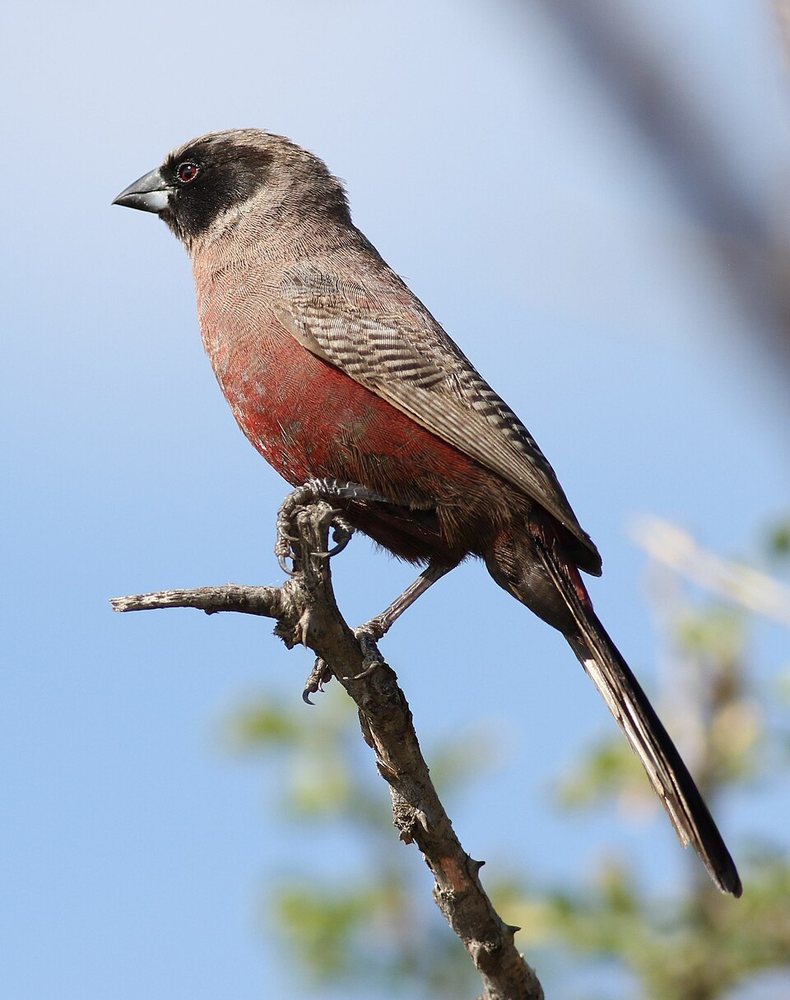
Photo: Derek Keats from Johannesburg, South Africa · CC BY 2.0 (May be cropped or resized)
Brunhilda erythronotos
Conservation status: Unknown
Basic stats
Diet
Seeds and some insects
Habitat
Dry shrubland and open country
Range
Southern Africa and eastern Africa
Weight
About 9g
The Black-faced Waxbill is a small estrildid finch distributed across southern Africa, with its range extending into eastern regions. It is a granivorous bird with a compact build and long tail typical of waxbills. It occurs in open, dry country across its regional range, frequenting scrubby vegetation and grassland. Its small size makes it a delicate member of the finch family. (Wikipedia, general species account)
Its food is dominated by seeds, alongside smaller contributions from insects and nectar. It searches for food close to the ground, using open scrub and grassland edges where scattered vegetation provides cover. The dark face gives this species its familiar name. As with related waxbills, it feeds mainly on seeds and supplements them with small invertebrates. (Wikipedia, general species account)
Where to see Black-faced Waxbill in Kenya
GBIF records grouped by protected area. They show where the species has been reported, not that it is there now, and they are not population counts.
Recorded in 29 protected areas (1972–2024). The 8 with the most records:
- Nairobi National Park: 363 records (1972–2024)
- Amboseli National Park: 64 records (1977–2024)
- Maanzoni Conservancy: 37 records (2014–2024)
- Masai Mara: 30 records (1981–2023)
- Mbirikani common grazing area Conservancy: 27 records (2008–2024)
- Chyulu Hills: 23 records (2008–2024)
- Kitengela triangle unformal conservation area: 23 records (1999–2024)
- Swara Plains Conservancy: 23 records (1990–2024)
Quick answers
- What does the Black-faced Waxbill eat?
- Seeds and some insects
- What habitat does the Black-faced Waxbill live in?
- Dry shrubland and open country
- Where is the Black-faced Waxbill found?
- Southern Africa and eastern Africa
- How much does the Black-faced Waxbill weigh?
- About 9g