
 Wildlife
of Kenya
Bates's Slit-faced Bat
Bats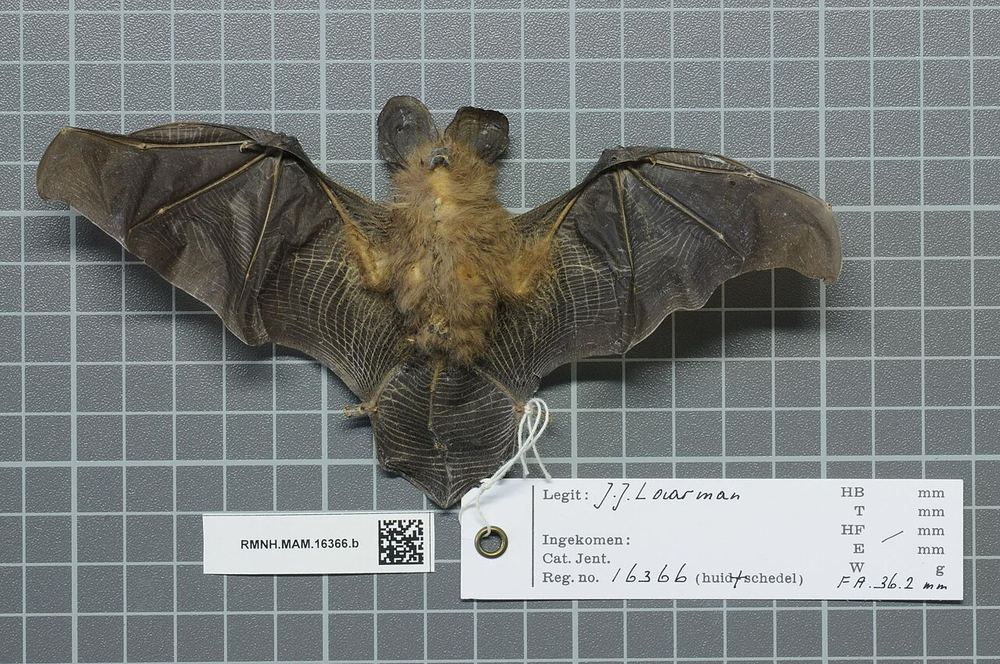
Photo: Wikimedia Commons contributor · CC0
Nycteris arge
Conservation status: Unknown
Basic stats
Diet
Insects
Habitat
Tropical lowland forest, including montane and swamp forest
Range
Central and West Africa
Litter size
One
Size
Head and body 50–65mm
Weight
6–11g
Bates's slit-faced bat is a small Nycteridae with a deep median furrow running down its face, large rounded ears and a particularly large brain for an insectivorous bat. It is often confused with Nycteris major and has 32 teeth. Its coat is shaggy, darkish reddish-brown to grey-brown above and a touch paler below, and its wing membranes are dark brown and almost hairless. Head and body measure 50–65mm, tail 42–61mm, ear 25–34mm, forearm 39–46mm and weight 6–11g (Wikipedia, general species account; GBIF description, Nycteridae).
It is found throughout Central and West Africa, with records across the region from Angola to Uganda, and it occurs in lowland areas. It mostly occupies undisturbed forest, though it can enter agroforestry plantations. It roosts singly or in groups of 2–4 individuals, often a male and female together. Pregnant and lactating bats have been caught at different times of year, suggesting there is no single breeding season, and litter size is one. Its echolocation call is multiharmonic with a steep frequency sweep (Wikipedia, general species account; GBIF description, Nycteridae).
Quick answers
- What does the Bates's Slit-faced Bat eat?
- Insects
- What habitat does the Bates's Slit-faced Bat live in?
- Tropical lowland forest, including montane and swamp forest
- Where is the Bates's Slit-faced Bat found?
- Central and West Africa
- What is the litter size of the Bates's Slit-faced Bat?
- One
- How big is the Bates's Slit-faced Bat?
- Head and body 50–65mm
- How much does the Bates's Slit-faced Bat weigh?
- 6–11g