
 Wildlife
of Kenya
Cape Serotine
Bats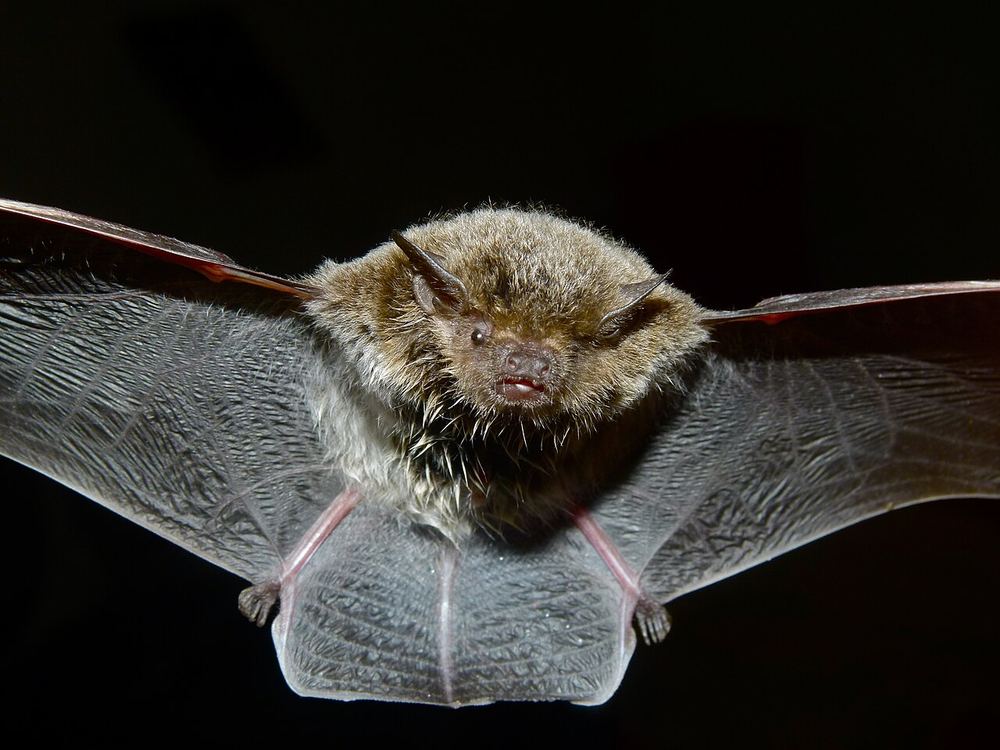
Photo: Bernard DUPONT from FRANCE · CC BY-SA 2.0 (May be cropped or resized)
Laephotis capensis
Conservation status: Unknown
Basic stats
Diet
Beetles, lacewings, moths, mosquitoes and other flying insects
Habitat
Dry and moist savanna, grassland, bushveld and Acacia woodland; absent from deserts
Range
Sub-Saharan Africa
Litter size
1–4 young, once a year
Size
Forearm 29–38mm; total length about 85mm
Weight
4–10g
The Cape serotine, Laephotis capensis, is a vesper bat found across Sub-Saharan Africa, and its name serotine comes from the Latin for of the evening. It is small and brownish with a greyish underbelly and relatively untidy fur, and its colour varies by region. It has a small snout and mouth and a dome-shaped forehead. Its wing membranes are dark, its forearm is 29–38mm, its total length is about 85mm, and its weight is 4–10g. Its flight while foraging looks quite playful (Wikipedia, general species account).
It occurs in many countries from Angola and Botswana to Zambia, Zimbabwe, Kenya, Ethiopia and Nigeria, among others. It favours dry and moist lowland forest, dry and moist savanna, grassland, bushveld and Acacia woodland, and it is absent from desert areas. Small groups of up to about 20 roost under tree bark, in hollow trees, in wall cracks, or under house eaves and roofs, and will readily use a bat house. It gives birth once a year to between one and four young in October and November. Its diet is beetles, lacewings, moths, mosquitoes and other flying insects (Wikipedia, general species account).
Where to see Cape Serotine in Kenya
GBIF records grouped by protected area. They show where the species has been reported, not that it is there now, and they are not population counts.
Recorded in 5 protected areas (1968–2014).
- Loldaiga Hills Conservancy: 59 records (2014)
- Meru National Park: 7 records (2012–2013)
- Buffalo Springs National Reserve: 6 records (2013)
- Lake Bogoria National Reserve: 6 records (1968–2014)
- Amboseli National Park: 5 records (2012)
Quick answers
- What does the Cape Serotine eat?
- Beetles, lacewings, moths, mosquitoes and other flying insects
- What habitat does the Cape Serotine live in?
- Dry and moist savanna, grassland, bushveld and Acacia woodland; absent from deserts
- Where is the Cape Serotine found?
- Sub-Saharan Africa
- What is the litter size of the Cape Serotine?
- 1–4 young, once a year
- How big is the Cape Serotine?
- Forearm 29–38mm; total length about 85mm
- How much does the Cape Serotine weigh?
- 4–10g